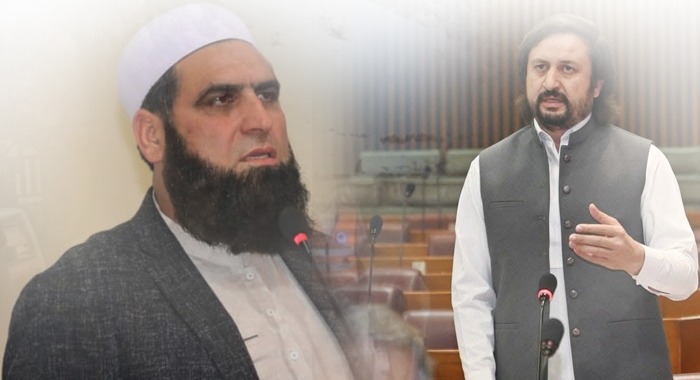
The registration of an FIR against PTI MNA Dr Amjad Ali is not just a legal development. It is a stress test for Pakistan’s commitment to equal accountability at a time when national security is under sustained pressure.
At its core, the case is simple. An elected lawmaker is accused of delivering provocative, anti-state remarks. A citizen approached the court. The court ordered action. Police registered an FIR. This is how the system is supposed to work.
Yet the broader implications run deeper.
Speech, Power, and Responsibility
Parliamentarians enjoy wide latitude in political speech. That latitude exists to protect democratic debate, not to provide cover for rhetoric that destabilizes the state or mirrors extremist logic.
When allegations involve sedition and incitement, the issue is no longer political expression. It becomes one of constitutional responsibility. The law does not criminalize dissent, but it does intervene when speech crosses into incitement, especially in a province that has borne the brunt of terrorism.
Swat, like much of Khyber Pakhtunkhwa, carries deep scars from militant violence. Words spoken by national leaders in such contexts do not fall into a vacuum. They land in a landscape shaped by blood, displacement, and trauma.
The ECL Factor and the Question of Intent
The reported placement of the MNA on the Exit Control List and the recent attempt to travel abroad adds a layer of gravity. While inclusion on the ECL is not proof of guilt, it indicates that authorities consider the matter sensitive enough to restrict movement pending legal processes.
This reinforces the seriousness with which the state is treating the case, not as a political episode, but as a national security concern.
Same Name, Same Party, Same Allegation
There is, however, an uncomfortable question that cannot be ignored.
Pakistan currently has two elected representatives from the same party, from the same district, bearing the same name. Both have faced serious allegations linked to provocative or dangerous rhetoric.
One is now formally in the legal dock.
So, the question arises naturally, and legitimately, if accountability applies to one, when will it apply to the other. Equality before the law is not a slogan. It is a constitutional obligation.
Selective enforcement corrodes trust. Uniform enforcement restores it.
Why This Moment Matters
Pakistan is in a phase where counter-terror pressure is visibly tightening. Militants are being eliminated, intercepted while fleeing, or pushed into operational collapse. In such an environment, political ambiguity on violence is not a harmless indulgence. It is a liability.
The law stepping in is not a crackdown on opposition. It is a boundary being drawn.
If the allegations are proven, punishment must follow without hesitation. If they are not, the legal process will clear the accused. Either outcome strengthens the system, provided the process is applied evenly.
The real lesson is not about one individual or one party. It is about a principle that must hold, regardless of names, constituencies, or political loyalties.
National security is not negotiable. And when it is tested, the response must be blind, firm, and equal.