
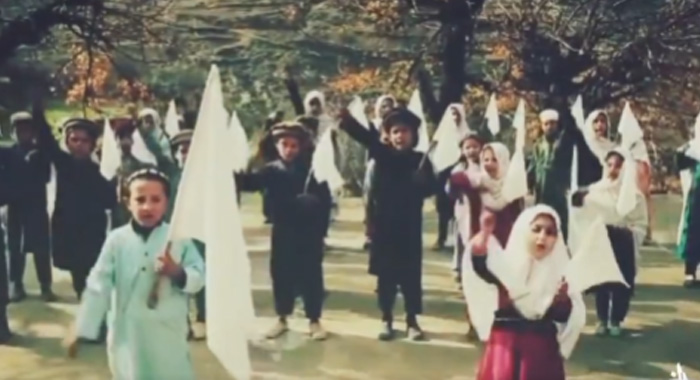
Growing evidence has raised grave concerns over the systematic indoctrination of children in and around Montessori-level educational institutions in Afghanistan, where extremist narratives linked to Khariji ideology and the Tehreek-e-Taliban Pakistan (TTP) are reportedly being introduced at an alarmingly early age. These institutions, operating under the guise of basic education, are alleged to be used as platforms for ideological conditioning and the promotion of anti-Pakistan sentiment among young children.
According to confirmed assessments by the United Nations, training centers affiliated with the TTP are present inside Afghanistan and are operating with the support and protection of the Afghan Taliban. These facilities reportedly play a central role in the recruitment, indoctrination, and training of minors, in direct violation of international humanitarian law and conventions on the rights of the child.
Credible information indicates that children subjected to sustained ideological brainwashing are later transferred to militant training camps, where they undergo further conditioning and preparation for violent activities. Following this process, some of these minors are reportedly sent into Pakistan and exploited in suicide attacks and other acts of terrorism, representing one of the most disturbing dimensions of cross-border militancy.
The deliberate targeting of children for extremist indoctrination constitutes a serious war crime and a gross violation of international norms, including the UN Convention on the Rights of the Child. The use of educational environments for radicalization not only destroys the future of affected children but also poses a long-term threat to regional and international security.
These developments underscore the urgent need for sustained international attention, independent monitoring, and decisive action to prevent the exploitation of children by terrorist organizations. There is an immediate requirement for accountability mechanisms to address the presence and operation of militant training infrastructure in Afghanistan and to ensure that educational institutions are not misused for violent ideological purposes.
The protection of children from radicalization and armed conflict remains a shared global responsibility. Failure to address this issue risks perpetuating cycles of violence, destabilization, and human suffering across the region and beyond.



