
When terrorists cloak their violence in religious language, the first casualty is truth. In Pakistan, that distortion has already been confronted and unanimously rejected by scholars across every school of thought through Paigham-e-Pakistan, a collective decree declaring armed violence against the state and its citizens as un-Islamic, unlawful, and forbidden.
Yet the banned Tehreek-e-Taliban Pakistan continues to wage war against Pakistan, invoking jihad while defying not only Pakistan’s religious consensus but also the authority they themselves claim to obey.
This contradiction lies at the heart of the question now being raised.
The Afghan Taliban’s supreme leader, Sheikh Hibatullah Akhunzada, holds the title of Ameer-ul-Momineen in the current Afghan interim setup. The TTP has publicly pledged allegiance to him. His decree explicitly forbids militant operations outside Afghanistan and condemns violence against neighboring states, including Pakistan.
By their own claimed allegiance, the TTP stands in open violation of that order.
And by Islamic jurisprudence, defying both the ijma of Ulema and the command of an acknowledged Ameer is not a minor dispute. Muftis with fatwa-issuing authority have consistently ruled that rebellion against such consensus places one’s faith in question and constitutes fisq o fujur, with grave legal and moral consequences.
This is not a media judgment. It is a religious verdict already on record.
A Son’s Question to the Killers
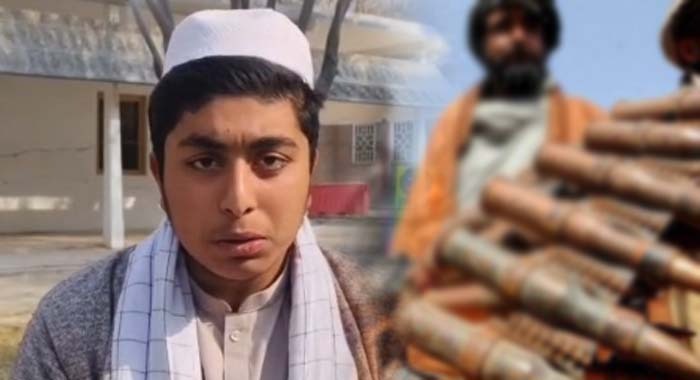
This reality is laid bare in the words of Hafiz Umar Farooq, son of Shaheed Constable Rashid Khan, murdered by terrorists two weeks ago.
“I ask those who claim jihad against Pakistan,” he says, “was my father not a Muslim? Was defending the homeland, in accordance with Shariah, not his foremost duty? Am I, his son and a Hafiz-e-Quran, not a Muslim?”
His father had dreamed of seeing him complete the memorization of the Holy Quran during his lifetime. Umar has now memorized eleven paras while studying in eighth grade. He and his sister are orphans. Their father was the family’s sole provider.
“What justification,” he asks, “took our father from us in the name of a jihad whose very purpose is justice, not chaos?”
Islamic tradition is unambiguous. Jihad is not declared by armed groups. It is not waged against Muslim states founded in the name of Islam. It does not target those defending their country. And it does not orphan children while claiming divine sanction.
Jihad, scholars note, is waged against oppression, not against Pakistan. It is not fought by killing policemen, soldiers, or civilians. When violence abandons justice, it ceases to be jihad and becomes fasad.
Verdict
The case is no longer open to interpretation.
By rejecting Paigham-e-Pakistan, defying the ijma of Ulema, and violating the decree of the very Ameer they claim to follow, the banned TTP’s war against Pakistan stands exposed.



