(Shamim Shahid)
The recent investigative report by the BBC has pulled back the curtain on what many regional observers, journalists, and intelligence analysts have long suspected but few within the Taliban leadership had openly acknowledged: deep and potentially destabilising internal divisions within the Afghan Taliban. For the first time since the Taliban’s return to power in August 2021, these differences are no longer being whispered in closed circles but discussed publicly, even by the movement’s own supreme leadership.
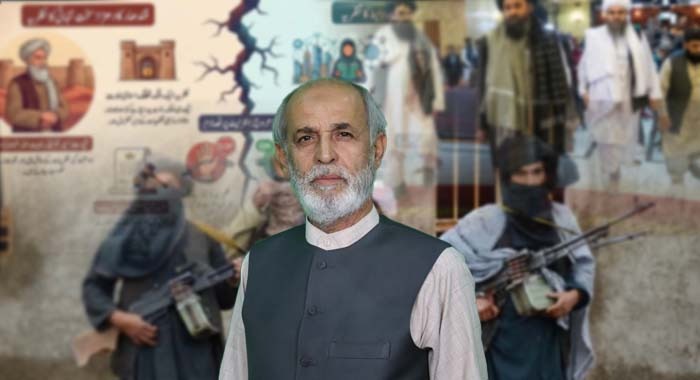
According to the BBC’s investigation, Taliban Supreme Leader Hibatullah Akhundzada, based in Kandahar, has privately and indirectly acknowledged the widening rift between the Kandahar-based leadership and the Kabul-based power bloc dominated by the Haqqani network. In an unusually candid internal message, Akhundzada reportedly warned that if these differences were allowed to deepen, not only could the current Taliban government face paralysis, but the entire system established after August 15, 2021, could ultimately collapse.
This admission is unprecedented. The Taliban leadership has historically projected an image of unity, discipline, and ideological coherence. Any public acknowledgement of internal discord fundamentally undermines that narrative and raises serious questions about the durability of the so-called Islamic Emirate of Afghanistan.
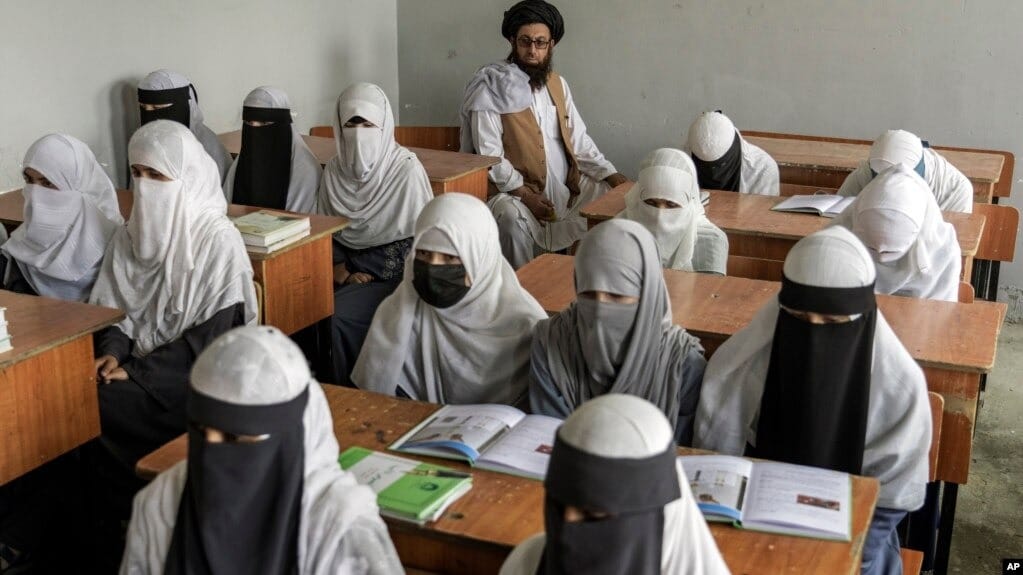
At the heart of the Taliban’s internal crisis lies a clash of governance philosophies. On one side stands the Kandahar faction, led by Hibatullah Akhundzada and his close circle of clerics. This group represents the most rigid interpretation of Taliban ideology. It favours strict religious controls, severe restrictions on women’s education and employment, minimal engagement with the international community, and governance through decrees issued from Kandahar rather than institutions in Kabul.
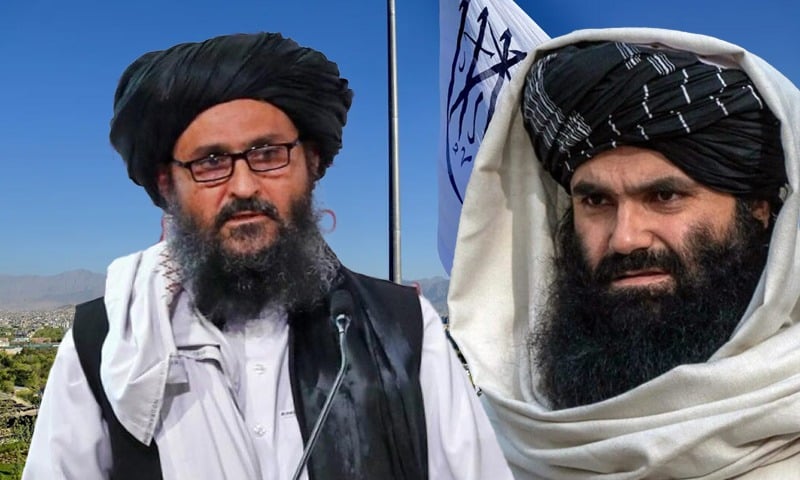
On the other side is the Haqqani network, headquartered largely in Kabul and eastern Afghanistan, led by Sirajuddin Haqqani, the Taliban’s interior minister. While the Haqqanis are far from moderate in ideological terms, they are comparatively pragmatic. They understand the importance of international engagement, the need for administrative functionality, and the risks of total diplomatic isolation. They have repeatedly signalled—at least privately—the necessity of reopening girls’ education, stabilising the economy, and avoiding policies that could provoke sanctions or international hostility.
This divergence has turned Kabul and Kandahar into competing centres of power. Though Akhundzada retains formal supremacy, real administrative control over security, intelligence, and internal governance increasingly rests with the Haqqani network and allied factions.
These divisions did not emerge overnight. Long before the Taliban returned to power, fault lines existed between different Taliban factions most notably between the Quetta Shura, dominated by Kandahar clerics, and the Haqqani network, which operated semi-autonomously along the Afghanistan–Pakistan border.
After the September 11 attacks and the subsequent US-led invasion, these differences deepened. Operational priorities, funding channels, and external alliances often diverged. There were periods when mistrust turned violent, with targeted killings and internal sabotage reported by journalists and intelligence sources alike.
The formation of the Taliban government in August 2021 briefly masked these tensions. However, the delay of several days in announcing the interim cabinet was an early indicator of intense internal bargaining. Ultimately, key ministries were divided as part of a fragile compromise: Sirajuddin Haqqani was appointed interior minister, Amir Khan Muttaqi took charge of foreign affairs and Defence went to Mullah Yaqoob, son of Mullah Omar
This power-sharing arrangement never resolved the underlying struggle it merely postponed it.
Beyond the Kandahar Haqqani divide, the Taliban faces a broader internal problem: rampant factionalism rooted in tribal, regional, and familial loyalties. Leaders from Nangarhar, Paktia, Paktika, Helmand, and Kandahar have all sought to place relatives and trusted loyalists into key government positions.
This pattern mirrors Afghanistan’s historical governance failures, where power was personalised rather than institutionalised. Instead of building a coherent state apparatus, the Taliban has reproduced a system of patronage networks competing for influence, resources, and authority.
As a result, resentment has grown within the ranks. Many commanders feel marginalised, while others believe Kabul has been captured by specific families and factions. This internal dissatisfaction has serious implications for long-term stability.
Hibatullah Akhundzada’s leadership style has further intensified the crisis. Operating almost entirely from Kandahar, he rarely meets officials, diplomats, or even senior Taliban leaders. Decision-making is concentrated within a small clerical circle, including figures such as Mullah Shirin Akhund, while Kabul-based ministers often learn of major policy decisions after they are announced.
This detachment has left Afghanistan increasingly isolated. While some countries, including Russia and China, have maintained limited diplomatic engagement, no major power has formally recognised the Taliban government. Sanctions remain in place, financial systems are paralysed, and humanitarian dependence has become the norm.The Afghan population is paying the price. Public dissatisfaction is widespread, but fear and repression leave little room for open dissent.
Despite growing internal fractures and popular discontent, the Taliban remains in power largely because its opponents are deeply divided. Anti-Taliban political forces are scattered across Europe, the United States, Central Asia, and Russia. They lack unity, leadership, and a shared strategy.If these opposition groups were able to unite and mobilise effectively, the pressure on the Taliban would increase dramatically. International frustration with the Taliban is already high, and Afghan society itself is increasingly disillusioned. Yet, in the absence of a credible alternative, the Taliban continues to rule by default rather than consent.
The Taliban’s internal contradictions have had severe regional consequences, particularly for Pakistan. Since the Taliban takeover, Tehreek-e-Taliban Pakistan (TTP) has gained unprecedented confidence and operational freedom.
Negotiations initiated in late 2021 and 2022 emboldened the TTP. Safe havens inside Afghanistan expanded, fighters were reorganised, and assurances were reportedly given regarding freedom of movement and political activity. The result has been a sharp increase in militant attacks across Khyber Pakhtunkhwa, including Bannu, Lakki Marwat, and Waziristan.
Meanwhile, displacement crises in areas such as Tirah Valley, Kurram, and Orakzai have exposed governance failures within Pakistan as well. Civilians are suffering, resources are scarce, and security priorities appear dangerously blurred.
The Taliban today faces multiple, overlapping crises: internal ideological and power struggles, international isolation, economic collapse, popular dissatisfaction, regional security blowback
Hibatullah Akhundzada’s warning, as reported by the BBC, should not be dismissed as rhetoric. It reflects a genuine fear within the Taliban leadership that the movement’s contradictions may soon become unmanageable.
The Islamic Emirate is no longer threatened by foreign armies but by its own divisions, rigidity, and refusal to adapt.
Whether the Taliban can reform itself from within, reconcile its factions, and engage meaningfully with the world remains uncertain. What is clear, however, is that Afghanistan stands at another historic crossroads—and the cost of failure will once again be borne by its people.