
Afghanistan’s interim government is facing a deep internal rift, with the Taliban effectively split into two distinct factions, according to a recent investigative report by British broadcasters.
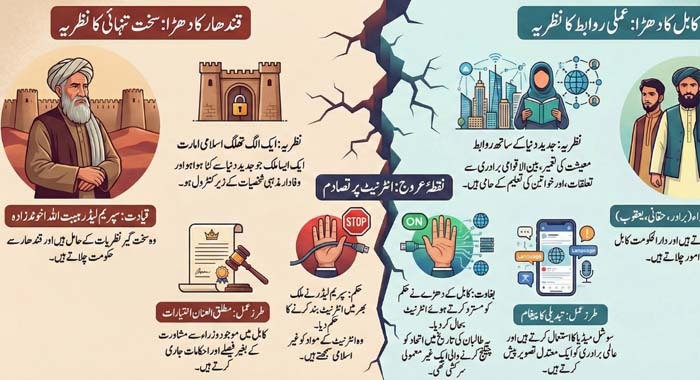
The hardline faction, centered in Kandahar under the leadership of Taliban chief Hibatullah Akhundzada, advocates for an austere Islamic Emirate isolated from modern influences. This group opposes women’s education and employment and views modern technology, especially the internet, as a threat to Islamic values. Hibatullah has reportedly centralized authority in Kandahar, taking over key decisions related to security forces and arms distribution from Kabul.
In contrast, the Kabul-based faction, including powerful figures such as Interior Minister Sirajuddin Haqqani, Defence Minister Mullah Yaqoob, and Deputy Prime Minister Abdul Ghani Baradar, is comparatively pragmatic. This group favors a governance model similar to Gulf states, combining Islamic identity with economic growth and active engagement with the international community. They also support limited girls’ education and controlled access to modern technology, acknowledging the necessity of trade, diplomacy, and digital communications for effective state functioning.
Sources cited in the report suggest that Hibatullah Akhundzada’s role has evolved significantly since his 2016 appointment. Initially selected as a unifying religious scholar capable of bridging internal divides, he has increasingly adopted an authoritarian style, sidelining influential figures such as Sirajuddin Haqqani and Abdul Ghani Baradar, and unilaterally enforcing restrictive policies like the ban on female education.
The Kabul faction, meanwhile, has worked to project a more positive public image. Sirajuddin Haqqani, previously on the FBI’s most-wanted list, has positioned himself as a state leader, granting interviews to Western media and using television and social platforms to gain popularity among Afghan youth.
The internal split reached a critical point in September 2025, when Kandahar ordered a nationwide shutdown of internet and phone services, citing concerns over exposure to un-Islamic content. The move was unacceptable to Kabul’s faction, whose governance, trade, and influence rely heavily on digital connectivity. Despite warnings from Abdul Ghani Baradar, the shutdown was enforced on September 29 but reversed three days later—a rare instance of rebellion within the Taliban’s ranks.
Experts note that while the Kabul faction has not openly defied hardline decrees on issues such as girls’ education, the internet shutdown directly threatened their operational interests, resources, and influence, prompting quiet but firm resistance.
By early 2026, the situation remains tense but ostensibly under control. Speculation about potential punitive actions against Kabul-based ministers appears to have been tempered by fears of a wider split. Official statements continue to describe the discord as mere “differences of opinion” or “family matters,” but analysts argue that a full-blown ideological struggle is now being waged through speeches, directives, and public statements.
The unfolding divide highlights the ongoing tension between hardline isolationism and pragmatic governance within the Taliban, underscoring persistent challenges to Afghanistan’s stability and the potential for internal conflict to impact both domestic policy and international engagement.



