
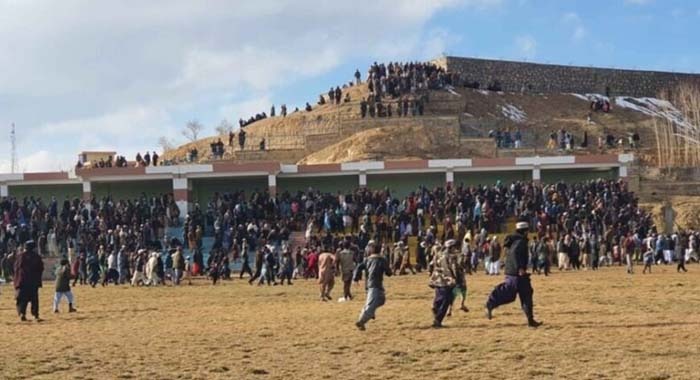
The Taliban’s Supreme Court has confirmed the sentencing and public flogging of seven individuals, including one woman, in Herat province, further underscoring the regime’s reliance on corporal punishment and summary justice to enforce its rigid interpretation of law and morality.
According to an official statement released on Thursday, the individuals were convicted on charges including extramarital relations, sodomy, and theft. The punishments were carried out in the districts of Adraskan, Pashtun Zarghun, and Shindand. Each of the accused was sentenced to one year in prison and subjected to more than 30 lashes, administered publicly.
The incident is part of a broader pattern of harsh punishments increasingly reported across Afghanistan. Just days earlier, similar floggings were carried out in Ghazni province, where four individuals were publicly punished for alleged moral and criminal offenses. These actions reflect the Taliban’s continued enforcement of an uncompromising judicial system that relies on public humiliation, physical punishment, and swift verdicts with little transparency.
Human rights organizations report that over the past ten months, Taliban-run summary courts have punished and tortured more than 800 individuals nationwide. These figures have intensified international alarm over the absence of due process, the lack of legal safeguards, and the systematic use of violence against civilians, particularly women and vulnerable groups.
Observers note that public corporal punishment has become a central tool of social control under Taliban rule. Trials are often conducted behind closed doors, defendants are denied legal representation, and verdicts are announced without independent oversight. Such practices violate fundamental principles of justice and international human rights norms.
The latest floggings in Herat highlight the Taliban’s ongoing crackdown on personal conduct and social behavior, reinforcing a climate of fear and repression. Human rights advocates have strongly condemned these actions, warning that the normalization of public punishment and extrajudicial measures is deepening Afghanistan’s humanitarian and rights crisis.
As international concern grows, rights groups continue to call for accountability, protection of civilians, and sustained global pressure to halt abuses and uphold basic human dignity in areas under Taliban control.



