
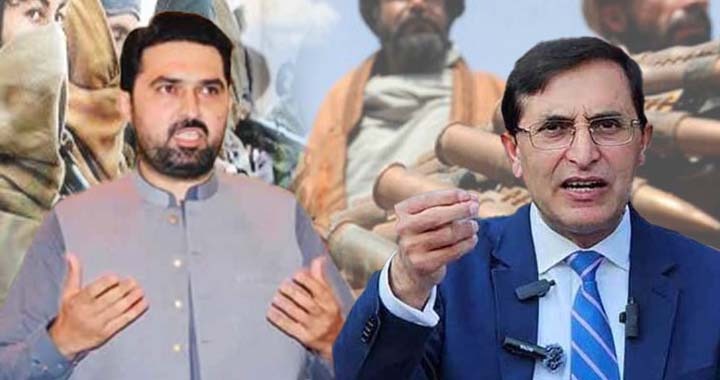
Khyber Pakhtunkhwa, or KP, remains the epicenter of militant violence in Pakistan, bearing the heaviest human and economic cost of terrorism. Markets, police stations, check posts, political workers and ordinary commuters have all been targets. This is not a sudden crisis. It has unfolded over years, during which Pakistan Tehreek-e-Insaf has ruled the province almost uninterrupted for more than a decade. The record therefore invites scrutiny, not slogans.
Even as the country tries to forge consensus against terrorism, PTI’s national posture has remained confrontational. The party’s overriding political objective has narrowed to the release of its jailed founder, and every major issue, including national security, appears filtered through that single lens. This has translated into routine opposition to state decisions and security measures, regardless of their merit or urgency.
PTI’s long-standing insistence on dialogue with the banned TTP has further complicated matters. While talks as a concept are not taboo in counterinsurgency, PTI’s advocacy has often lacked conditions, timelines, or red lines. This has allowed critics to argue that the party treats a lethal insurgent group as a political stakeholder rather than an existential threat. Some voices have gone further, branding PTI as the political wing of the TTP, an allegation that gains traction whenever ambiguity replaces firmness.
The recent statement by party chairman Barrister Gohar, acknowledging that the TTP is a terrorist organization and must be dealt with accordingly, came as a delayed correction. Yet within PTI’s own structure, his position carries limited authority. Real decisions continue to emanate from elsewhere, and those figures remain locked into a reflexive posture of resistance against the state and its institutions.
This internal contradiction is not a healthy difference of opinion. It reflects a deeper crisis of identity. Political parties debate, dissent, and eventually decide. Cult-like formations orbit a single personality, suppress internal correction, and treat every issue as a loyalty test. PTI’s conduct on terrorism increasingly resembles the latter.
Khyber Pakhtunkhwa does not need rhetoric, martyrdom narratives, or perpetual agitation. It needs governance, policy seriousness, and an unambiguous commitment to the writ of the state. After 12 years in power, PTI can no longer outsource responsibility or blame history. If it wishes to be seen as a political party rather than a fan club, it must place public security above personal politics, and the survival of the province above the fate of any one leader.



