
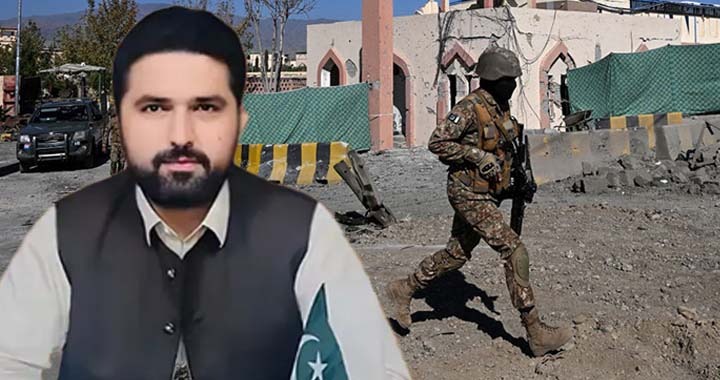
Khyber Pakhtunkhwa, or KP, today stands at a dangerous crossroads where deteriorating security, political distraction, and administrative paralysis have converged into a single, widening crisis. For more than two years, the province has been sliding back toward an atmosphere many believed had been buried through immense sacrifices by civilians, security forces, and the state. What is unfolding now is not an abstract policy failure but a lived reality for millions. Daily terrorist incidents, targeted killings, attacks on police, and assaults on infrastructure have once again become routine across large swathes of the province. North Waziristan, South Waziristan, Lakki Marwat, Bannu, Tank, and parts of Bajaur are gripped by fear. Markets thin out after sunset, roads fall silent, and families with means quietly relocate to Peshawar, Mardan, Kohat, Islamabad, and Rawalpindi. This silent migration is perhaps the clearest indicator of collapsing public confidence in the state’s ability to protect its own citizens.
Yet, at precisely the moment when leadership presence is most urgently required, the provincial government appears absent from the ground it governs. Instead of emergency security huddles, strategic reviews, and sustained engagement with intelligence and law enforcement agencies, the Chief Minister, facing possible disqualification, and senior leadership have been preoccupied with rallies, roadshows, and political tours outside the province. Lahore, Karachi, Hyderabad, and other cities have taken precedence over Waziristan, Lakki Marwat, and Bannu. The question that naturally arises is simple and damning: what has Khyber Pakhtunkhwa gained from these excursions? Public funds from one of Pakistan’s poorest provinces are being spent on political mobilization elsewhere, while the taxpayers who finance these trips struggle with insecurity, unemployment, failing healthcare, and collapsing law and order. No tangible political dividend has been articulated, no economic benefit demonstrated, no administrative outcome shared. In such circumstances, silence is not neutrality, it becomes complicity.
The absence of urgency is all the more disturbing when viewed against the security data itself. In a single day, fourteen terrorist incidents rocked the province. Five attacks occurred in North Waziristan, three in Lakki Marwat, and one involved an IED strike on a police armored personnel carrier. Five policemen, including an additional SHO, were martyred. These were not isolated or spontaneous acts. They formed part of a consistent pattern that demands immediate, high-level intervention. How militants continue to access sophisticated explosives, how they strike even armored vehicles, and how infrastructure repeatedly becomes a target are questions that can only be confronted when a government acknowledges the severity of the crisis. That acknowledgment, however, appears missing.
Instead, a politics of grievance and polarization has been allowed to flourish. A narrative is being constructed that pits provinces against one another, particularly Khyber Pakhtunkhwa against Punjab. This rhetoric of victimhood may generate short-term applause, but it carries long-term consequences for national cohesion. When provincial leaders suggest that they are being deliberately obstructed while simultaneously ignoring their own contradictions, they erode trust and create space for extremist narratives. The inconsistency is evident. Praise for Sindh’s leadership and the Pakistan People’s Party is followed by accusations that the same government obstructs political activity. Such reversals weaken credibility and reinforce the perception that political expediency, not governance, is guiding decision-making.
Internally, the ruling party in KP is visibly fractured. With its central leader incarcerated, the party has splintered into competing blocs. Ten-member groups operate within the assembly, loyalty shifts fluidly, and discipline is absent. In such an environment, governance becomes collateral damage. When everyone claims leadership, accountability disappears. Survival politics replaces service delivery, and the people pay the price.
This erosion of governance is not confined to security alone. Developmental stagnation is evident across sectors. Agriculture, the backbone of the rural economy, offers a telling comparison. During Ameer Haider Hoti’s tenure, a 49-kilometre irrigation channel from Malakand was constructed at a cost of Rs3 billion, bringing water to 25,000 acres across Mardan, Katlang, and surrounding areas. The transformation was tangible. Barren land turned fertile, livelihoods improved, and economic activity revived. In contrast, across the last three consecutive governments, no comparable irrigation infrastructure has been developed. Despite water flowing through existing channels, farmers remain deprived due to administrative neglect and lack of distribution mechanisms.
The health sector presents an equally troubling picture. Billions have been poured into the Medical Teaching Institutions reform process, yet the system remains mired in controversy, allegations of mismanagement, and deteriorating service delivery. Bureaucracy pushes for expansion, political leadership hesitates, and the result is paralysis. Ordinary patients bear the cost through inadequate care and rising expenses.
Against this backdrop, political statements and counterstatements have turned the security crisis into a media battlefield. Remarks by federal leaders such as Atta Tarar and Talal Chaudhry, controversial as they are, emerged in response to equally provocative assertions by provincial leadership questioning whether terrorism in KP is even occurring and whether Pakistan must provide evidence of terrorism to Afghanistan. Such statements are not merely irresponsible, they are dangerous. Pakistan’s security establishment, including the DG ISPR, has repeatedly stated that terrorist sanctuaries exist across the border and that Afghan soil is being used against Pakistan. Casting doubt on this narrative without offering credible alternatives only emboldens militants and confuses the public.
There is no ambiguity about the threat posed by the Tehreek-e-Taliban Pakistan. Tens of thousands of Pakistanis, civilians and uniformed personnel alike, have lost their lives. No mainstream political party can afford moral or political ambiguity on this question. Yet silence, selective condemnation, and strategic vagueness send exactly the wrong signal. Terrorism cannot be condemned in theory while avoided in practice. Ambiguity becomes policy by default.
These contradictions are reinforced by facts on the ground. Religious scholars and community leaders continue to be targeted. The martyrdom of Maulana Sultan Ashraf Khel in South Waziristan underscored the persistent threat facing those who promote education, stability, and social cohesion. Repeated attacks on bridges in Bannu, including Khaisur Bridge, Ghora Baka Khel, Masoomabad, and Jani Khel, demonstrate a systematic campaign to disrupt civilian life and security movement alike. Each incident deepens public fear and erodes state authority.
Journalists across ideological lines have raised alarms. Umar Cheema described the Chief Minister’s statements as irresponsible and dangerously misleading, questioning whether he represents Pakistan or Afghanistan in his rhetoric. Sohail Warraich reminded that democracy itself cannot survive without the state and its armed forces and warned that PTI is abandoning a national consensus it once signed. These critiques are not partisan attacks; they are warnings rooted in lived history.
The DG ISPR’s recent briefing added another layer to this crisis. The introduction of terms such as criminal–terror nexus and political–terror nexus was not rhetorical flourish. It was an institutional signal that militancy in Pakistan is no longer merely armed, it is embedded in political and social structures. Yet this framing raises uncomfortable questions. If a political party is accused of facilitating militancy, then who enabled its rise, protected its trajectory, and invested in it for over a decade? These contradictions cannot be resolved through slogans or blame-shifting.
At the same time, the civilian–military imbalance remains unresolved. The assertion that security operations under Article 245 are not contingent on provincial consent effectively sidelines civilian oversight. Whether justified or not, it reinforces the perception that governance failures have ceded space to institutional imperatives.
Taken together, Khyber Pakhtunkhwa today reflects a province where insecurity is rising, governance is eroding, political leadership is distracted, and public trust is fraying. The people of KP have endured decades of conflict, displacement, and loss. What they ask for is not rhetoric or rallies, but security, services, and leaders who stand with them in crisis.
And after all the analysis, the statistics, the statements, and the warnings, the verdict does not come from Islamabad, Rawalpindi, or television studios.
It comes from within.
Malik Naseer Ahmad Koki Khel, a voice from Khyber, from the Chief Minister’s own home district and tribe, laid bare what many in KP feel but rarely hear acknowledged. He held the PTI government responsible for the Tirah operation, recalling how assurances were given that no operation would be allowed, only for displacement to begin under the cover of winter. He described the shifting statements of the Chief Minister as drama, pointed to political tours in Punjab and Sindh while Tirah’s residents fled freezing temperatures, and accused the provincial leadership of abandoning Regi Lalma, neglecting Tirah’s displaced families, failing to resolve electricity shortages, and plunging the province into debt exceeding Rs1,500 billion. His demand was direct and unambiguous: if the government is sincere, it must immediately implement the Peshawar High Court’s decision on Regi Lalma.
After thirteen years of rule, the testimony against the KP government does not come from opposition benches or rival provinces. It comes from one of their own.



