
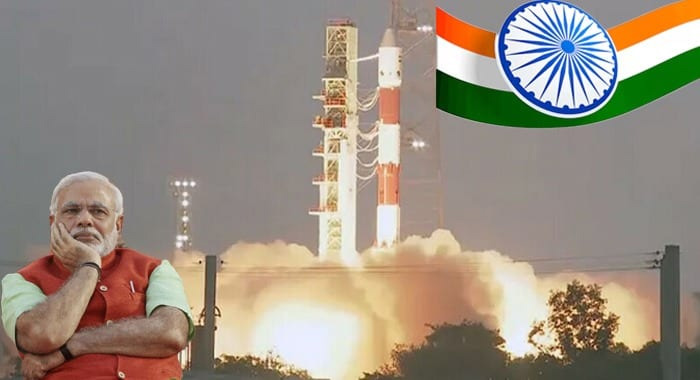
India’s space ambitions suffered a fresh blow as a Polar Satellite Launch Vehicle (PSLV) carrying 16 payloads veered off course shortly after launch, underscoring growing concerns about the country’s technological reliability and institutional readiness in critical aerospace systems.
The rocket, launched at 10:18 a.m. local time from the Satish Dhawan Space Centre, was tasked with deploying the EOS-N1 Earth-observation satellite along with 15 additional payloads from domestic and international startups and academic institutions. While early phases of flight were described as “normal,” the mission ultimately failed after an unexplained anomaly during the PS3 stage, leaving the payloads unrecovered and their fate undisclosed.
The incident marks the second failure of the PSLV in less than eight months, a troubling pattern for a launch vehicle long promoted as the backbone of India’s space program. Once celebrated for its reliability, the PSLV’s recent performance is now raising uncomfortable questions about quality control, risk management, and oversight within India’s most prestigious scientific institution.
ISRO has yet to clarify what went wrong, where the rocket fell, or whether any safeguards were triggered, fueling criticism over transparency and crisis handling. Analysts warn that repeated launch failures not only damage India’s commercial credibility but also highlight potential vulnerabilities in space-based infrastructure, which is increasingly intertwined with national security, surveillance, and disaster-response capabilities.
The setback also risks undermining confidence among private industry partners and foreign collaborators, at a time when India is actively courting global investment in its space manufacturing and launch services sector.
The PSLV has previously been used for landmark missions such as Chandrayaan-1 and Aditya-L1, and its reliability has been central to India’s claims of being a dependable spacefaring nation. However, consecutive failures now threaten that narrative, exposing a widening gap between ambition and execution.
As global powers rapidly advance space and defense technologies, the latest PSLV malfunction serves as a stark reminder that prestige missions and public messaging cannot substitute for consistent performance and robust systems.



