
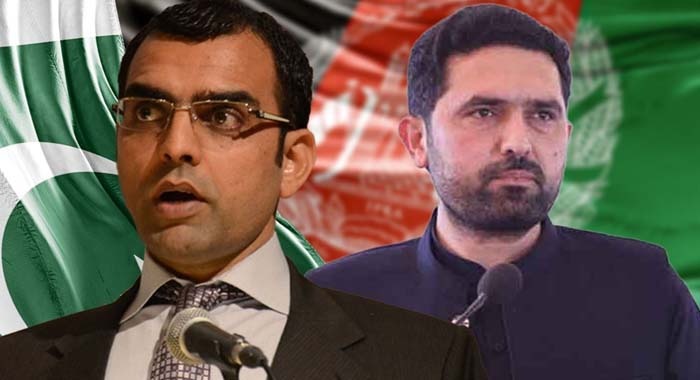
Senior journalist Umar Cheema has sharply criticized the Chief Minister of Khyber Pakhtunkhwa, saying he is struggling to come to terms with a recent statement made by the provincial head. Speaking on a private television program, Cheema described the statement as “neither a strategy nor a matter of reason, but either a reflection of poor judgment or sheer dishonesty,” calling it “an extremely serious misstep” with potentially dangerous consequences.
Cheema argued that the statement proves the Chief Minister is not yet prepared to hold the office or shoulder its responsibilities. He questioned the logic behind claims that authorities were not provided necessary briefings, noting that officials could easily verify information with the IG or local SHOs. He recalled that police personnel had recently been martyred in the Tank district and said a local SHO could confirm where the attackers had come from.
The senior journalist described the statement as highly irresponsible and said it leaves no ambiguity regarding the source of terrorist activity. He asked why, if militants are not coming from Afghanistan, the federal government had previously insisted that such individuals should not be allowed to return to Pakistan. According to Cheema, this insistence has always come from the same individuals.
He highlighted the inconsistency in messaging: first, the government barred militants from returning to Pakistan; now, the same authorities suggest providing evidence to Afghanistan. Cheema asked whether these officials see themselves as representatives of Afghanistan or Pakistan.
The journalist called it incomprehensible that the Chief Minister of a province most affected by terrorism would suggest providing proof to Afghanistan. He warned that if terrorism is assumed not to be originating from Afghanistan, the implication is that it is being carried out from within Pakistan itself.
Cheema pointed to the reluctance of the provincial spokesperson, Shafi Jan, to speak against the TTP as further evidence of PTI’s ambiguous position. He said it is increasingly apparent that the TTP has effectively become a militant wing aligned with the party, given the leniency displayed toward the group.
“The way they show softness toward terrorists demonstrates a troubling alignment,” Cheema said, adding that it appears officials have no regard for the number of lives lost or the innocent children affected. Yet statements of this nature continue to come from the Chief Minister.
Cheema described the statement as “extremely irresponsible, non-serious, and condemnable” and called for it to be treated with the seriousness it warrants. He argued that the Chief Minister must be formally held accountable and urged that the statement be withdrawn. He said that politics should not descend to a level where critical national security issues are exploited for political point-scoring.
He emphasized that the Chief Minister, representing a province most affected by terrorism, cannot credibly issue such statements. According to Cheema, the remarks suit neither a provincial head nor a member of the provincial assembly.
Cheema also noted that the Chief Minister was elected from an area with a historically significant militant presence, where operations continue to this day, making such comments all the more troubling.
Finally, he called the stance “extremely dangerous and unacceptable,” urging the provincial assembly to convene a meeting to examine the issue. He said that before arranging any in-camera briefing with the Corps Commander, the assembly must seek clarity from the Chief Minister regarding his information on the matter. Cheema added that the IG, DPOs, and CTD chief should be present to determine whether terrorism is originating from Afghanistan or, if from within Pakistan, who is facilitating it.
According to Cheema, seeking an explanation on this statement is essential. He warned that if such rhetoric continues unchecked, it risks becoming the official narrative.



