
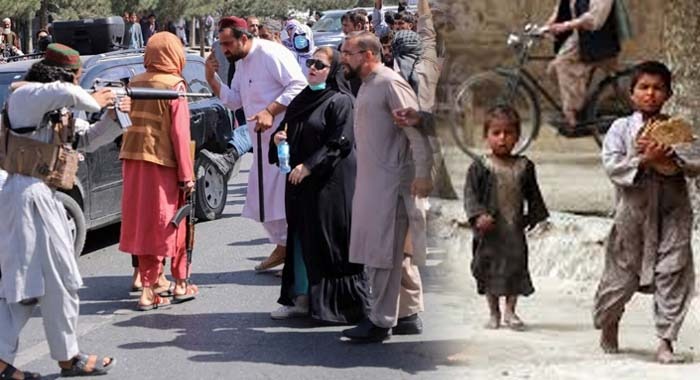
A former Afghan finance minister has warned that the combination of deepening poverty, soaring unemployment, and the centralization of power under the Taliban could eventually trigger widespread public unrest in Afghanistan.
Anwar-ul-Haq Ahady, a member of the Switzerland-based Fund for Afghan People, said persistent economic hardship and political exclusion risk fueling public anger toward the ruling authorities.
“People hold the government responsible for their welfare, not God,” Ahady told Afghan media in an interview on Sunday, emphasizing that citizens expect accountability from those in power.
Ahady drew parallels with recent protests in Iran, noting how economic crises and political repression often drive revolutions. He warned that similar pressures in Afghanistan—if left unaddressed—could push the population to demand action from the Taliban.
While acknowledging the current fear and normalization of poverty and hunger, Ahady said unemployment and widespread economic suffering could eventually mobilize Afghans against the authorities, potentially giving rise to movements similar to those seen in neighboring countries.
However, he cautioned that an immediate uprising is unlikely. “For now, people are unlikely to rise up against the Taliban due to fear of the group and the normalization of poverty and hunger,” he said. Nevertheless, he stressed that many Afghans already blame the Taliban for the country’s economic collapse and expect the authorities to take responsibility for basic livelihoods.
Ahady also pointed to the absence of credible political alternatives and the weakness of resistance fronts as key factors enabling the Taliban to retain control, despite growing dissatisfaction among the population.
“If the Taliban do not change their policies,” he warned, “there is a real possibility that protests similar to those in Iran—and even armed opposition—could emerge in Afghanistan.”
The former minister’s remarks underscore the growing sense of insecurity and frustration in Afghan society, highlighting the consequences of concentrated power, economic neglect, and governance failures under the Taliban regime.



