
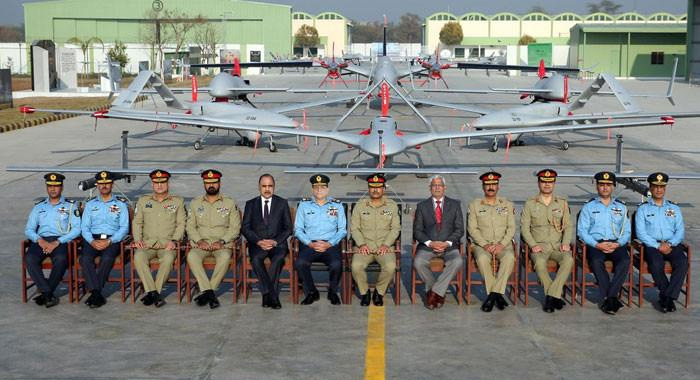
In the immediate aftermath of Operation Sindoor on May 7, 2025, when the Indian Air Force launched a coordinated missile and aerial strike on multiple Pakistani targets, Pakistan’s integrated air defence successfully neutralised at least half a dozen advanced Indian aerial platforms, including Rafale and Su-30MKI fighters and an Israeli-made Heron UAV. This decisive defence of Pakistan’s airspace has not only strengthened national security but has also significantly elevated the global credibility of Pakistan’s defence manufacturing and aerospace capabilities.
Over the 35 weeks following May 7, sixteen countries Azerbaijan, Bangladesh, Egypt, Iraq, Jordan, Kuwait, Libya, Myanmar, Nigeria, Peru, Saudi Arabia, South Africa, Sudan, Uruguay, Uzbekistan, and Zimbabwe have expressed serious interest in, initiated exploratory talks on, or begun preliminary procurement of defence equipment manufactured or co-produced by Pakistan.
Confirmed orders to date include Azerbaijan, Nigeria, and Myanmar, totaling approximately $6.6 billion, while advanced-stage negotiations with Bangladesh, Iraq, Sudan, and Libya represent potential contracts valued at roughly $8 billion. Prospective discussions with Saudi Arabia, Uzbekistan, Egypt, Jordan, Kuwait, Peru, South Africa, Uruguay, and Zimbabwe indicate a further potential order book of $11 billion, bringing Pakistan’s current and prospective defence export pipeline to approximately $25 billion.
Significant milestones include:
-
Azerbaijan expanded its 2024 order of 16 aircraft to approximately 40 units in 2025, with deliveries commencing in October 2025.
-
Libya and Iraq are closest to confirming contracts.
-
Bangladesh is in advanced negotiations.
-
Saudi Arabia remains the most active prospective customer, with discussions centred on financing-backed acquisitions (“loans-to-jets”).
For Pakistan, these defence exports represent a strategic diversification of the national export base away from low-value, price-sensitive commodities such as textiles and rice. Unlike traditional exports, defence contracts are long-term, multi-year, and relatively insulated from global price volatility, converting industrial and technological capability rather than cheap labour into sustainable foreign exchange.
What sets the current wave apart from previous defence export announcements are four key factors:
-
Combat validation proven operational capability under real-world conditions.
-
Simultaneous multi-country interest robust demand from multiple continents.
-
Financing-backed acquisitions reducing dependence on cash-poor buyers.
-
After-sales pipelines including training, spares, upgrades, and MRO (Maintenance, Repair, and Overhaul), ensuring long-term sustainability.
Even with partial retention of foreign exchange due to imported subsystems, a 35–45% retained value on a $24 billion pipeline translates to $8–11 billion in net foreign exchange over time. Moreover, defence exports create high-skill, urban employment across engineering, avionics, machining, and MRO sectors. Each $1 billion in exports is estimated to generate 15,000–20,000 direct and indirect jobs.
Officials emphasise that Pakistan did not enter defence exports with the objective of selling weapons; rather, it aimed to defend its sovereignty. The export opportunity emerged as a by-product of proven capability and credibility. The May 7 airspace defence demonstrated that capability, once validated, naturally attracts global demand — turning domestic defence achievements into a sustainable export advantage.



