
In early October, Pakistan and Afghanistan came to blows after Islamabad accused militants based across the Afghan border of a surge in attacks on Pakistani territory. A ceasefire currently holds, but with militant violence ongoing, Pakistan appears poised to strike again if further attacks are traced back to Afghanistan.
It may seem paradoxical that Pakistan is one of the countries most affected by the Taliban’s 2021 return to power in Kabul. After the US-led invasion of Afghanistan in 2001, Islamabad had sheltered Taliban leaders during their insurgency against the Washington-backed Afghan government. Soon after the Taliban regained control, Pakistan’s intelligence chief became one of the first foreign officials to visit Kabul publicly.
Yet relations have sharply deteriorated, primarily over the Taliban’s refusal to act against the Tehreek-e-Taliban Pakistan (TTP). Founded in 2007 to challenge the Pakistani state, the TTP is a coalition of Islamist militants, mostly Pashtun, who operate along the porous 2,570 km Pakistan-Afghanistan border. By 2014, the Pakistani military had largely neutralized the group, pushing its fighters into eastern Afghanistan and asserting state control over the tribal areas.
After seizing Kabul in 2021, the Taliban mediated talks between Islamabad and the TTP. The negotiations produced a temporary ceasefire in 2022, which collapsed following the removal of Prime Minister Imran Khan’s government that April—a key advocate for the dialogue. Today, the TTP demands that Pakistan cede authority over parts of Khyber Pakhtunkhwa, a demand widely rejected by Pakistani politicians, military leaders, and the province’s residents.
Since 2022, militant attacks in Pakistan have surged. In 2025 alone, over 600 soldiers and police officers were killed, primarily in Khyber Pakhtunkhwa and Balochistan, provinces bordering Afghanistan. Islamabad attributes these assaults to the TTP and Baloch hardliners, some of whom are believed to receive backing from India.
While UN monitors maintain that the TTP enjoys Taliban support, Kabul publicly denies harboring Pakistani militants and casts Islamabad as the provocateur of “homegrown” violence. Privately, Taliban officials acknowledge the TTP’s presence but insist neither state can fully control movement across the border. Kabul claims it relocated Pakistani militants and displaced families away from the border in 2024, yet cross-border attacks continue, and the Taliban refuse to hand over TTP leaders. For Kabul, the TTP’s size, deep ties to the Taliban, and local support make a crackdown risky, potentially driving militants toward the Islamic State.
For Islamabad, the challenge is complex but familiar. Pakistani military leaders long feared that targeting anti-India militants could incite internal dissent. Militants in contested Kashmir now operate mostly autonomously, yet after they killed 26 civilians in April, India struck Pakistani camps and cities, escalating tensions between the nuclear-armed neighbors.
On Pakistan’s western border, violence flared in October after the TTP killed 11 military personnel. Pakistan responded with cross-border airstrikes, including its first ever on Kabul, reportedly targeting TTP chief Noor Wali Mehsud. Afghanistan retaliated with attacks on Pakistani military sites, leaving casualties on both sides. Only international pressure from Türkiye and Qatar reportedly prevented a broader Pakistani offensive aimed at decapitating the TTP.
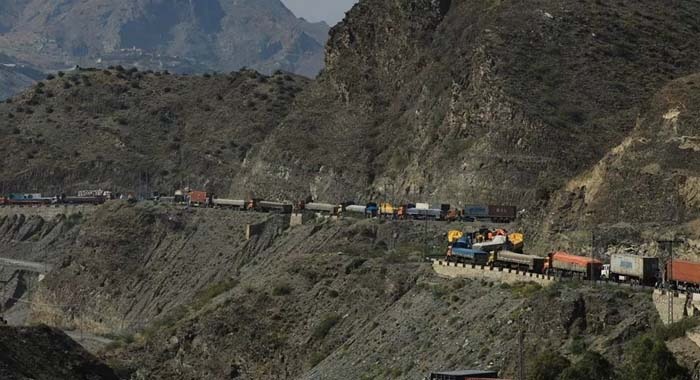
Ceasefire talks between the Afghan and Pakistani defense ministers in Doha yielded temporary calm, but follow-up rounds in Istanbul failed to ease tensions. Diplomatic ties remain suspended, trade has halted, and Islamabad’s mass deportations of Afghan nationals have further strained relations. Meanwhile, the Taliban’s growing closeness to India feeds Pakistan’s suspicions.
Pakistan is expected to retaliate if future attacks are traced to Afghanistan, though Taliban forces, despite being outgunned, could still mount lethal reprisals. Kabul claims it possesses missiles capable of reaching Pakistani cities—a scenario likely to trigger a severe response from Islamabad.
Over the past year, Pakistani leaders have cultivated stronger ties with Washington, with Chief of Defense Forces Field Marshal Asim Munir and Prime Minister Shehbaz Sharif meeting President Trump multiple times. In South Asia, however, Islamabad’s relations are tense. After brief wars in 2025 with Afghanistan and India, another major militant strike could unravel the fragile calm between Pakistan and its neighbors.



