
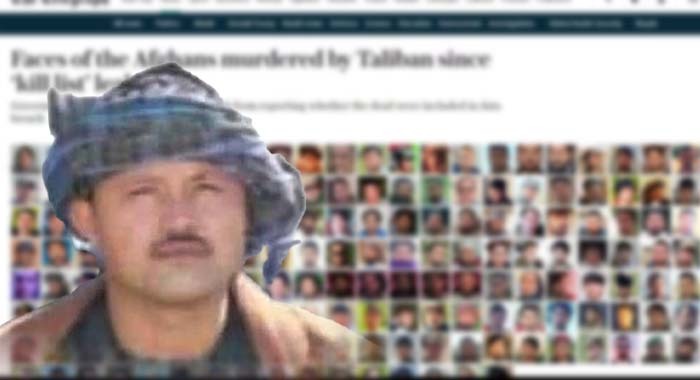
The killing of Yusuf, a local commander of Junbish-i-Milli Islami Afghanistan in Jowzjan province, fits into a widening and increasingly coherent pattern of targeted violence against former political, military, and security figures linked to the pre-Taliban order. While the Taliban have not officially commented on the incident, the circumstances surrounding Yusuf’s death, his prior detention, conditional release, and subsequent assassination, raise serious questions about the credibility of Taliban assurances regarding amnesty and internal security.
According to local sources, Yusuf, a former close associate of Uzbek leader Abdul Rashid Dostum during the previous government, had recently been deported from Iran. Upon his return to Afghanistan, he was arrested by Taliban authorities and held for weeks before being released after local elders intervened and arranged the payment of 800,000 Afghanis as surety. His killing on Wednesday evening, as he returned from a wedding ceremony, appears neither random nor isolated. Unknown gunmen opened fire, eliminating a figure who had already been flagged by Taliban intelligence and briefly brought under their control.
Yusuf’s assassination echoes a series of killings and arrests that have unfolded since the Taliban’s return to power. Throughout 2025, multiple Afghan and international assessments documented a sustained campaign against former soldiers, police officers, intelligence personnel, and politically active figures associated with resistance networks or non-Taliban power centers. Former commanders aligned with Dostum, particularly in northern provinces such as Faryab, Jowzjan, and Balkh, have been disproportionately affected.
Reports published last year indicated that dozens of former security officials were killed or disappeared following targeted arrests, house raids, and interrogations conducted under vague accusations. In several provinces, returnees from Iran were detained immediately upon crossing the border, often disappearing for days or weeks, sometimes re-emerging only after paying heavy fines, and in other cases not reappearing at all. Human rights monitors and Afghan media have consistently pointed to enforced disappearances, torture, and extrajudicial killings, despite repeated Taliban claims of restraint.
The pattern extends beyond Afghanistan’s borders. The assassinations of former senior police commander General Ikramuddin Sari and other Afghan military figures in Iran, along with similar incidents reported in Tajikistan, have heightened fears of transnational targeting. Afghan political leaders and resistance figures have openly accused Taliban intelligence of orchestrating or facilitating these killings, citing shifting narratives and coordinated disinformation campaigns that followed each assassination. The absence of transparent investigations has further fueled suspicion.
International reporting and UN assessments have reinforced these concerns. UN documentation has confirmed cases of arbitrary detention, torture, and executions of former government personnel, while also highlighting ethnic targeting, particularly against Uzbek communities. Afghan media investigations published earlier this year reported that over a hundred former military personnel were killed in multiple provinces during 2025 alone, with many more subjected to severe abuse in detention.
Against this backdrop, Yusuf’s killing appears less an aberration and more a continuation of a systematic effort to neutralize individuals perceived as politically inconvenient, symbolically influential, or potentially mobilizing. His prior detention and release undermine any claim that the Taliban were unaware of his movements or status.
As fear spreads among former officials and political figures, both inside Afghanistan and in exile, the space for reconciliation narrows further. The steady erosion of trust, combined with the absence of accountability, risks entrenching a cycle of repression that not only destabilizes Afghan society but also carries implications for regional security. Yusuf’s death, like many before it, underscores the growing gap between Taliban rhetoric and the reality unfolding on the ground.



