
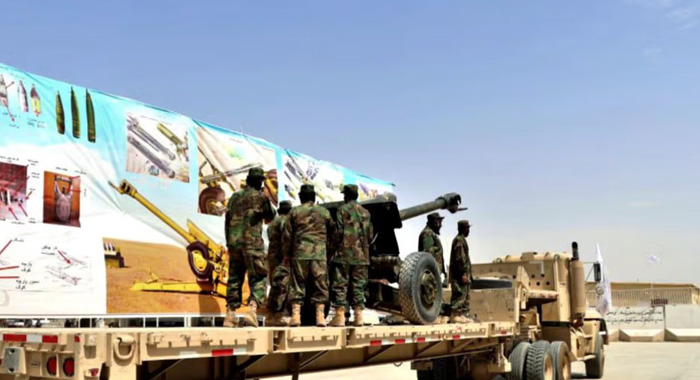
The Taliban’s claim of conducting more than 500,000 “security operations” across Afghanistan in 2025 has drawn sharp concern from observers, who say the figures instead reflect the scale of an entrenched campaign of armed coercion, intimidation, and terror imposed on the country under the guise of governance.
According to Taliban deputy spokesperson Hamdullah Fitrat, the operations were carried out nationwide and resulted in the seizure of weapons, ammunition, and narcotics. The statement, aired by Taliban-controlled Afghanistan National Television, offers no independent verification and is viewed by analysts as part of a broader effort to rebrand violent enforcement actions as routine security measures.
Security experts argue that half a million operations in a single year point to constant raids, checkpoints, armed patrols, detentions, and forced crackdowns, rather than genuine peace or stability. Rights advocates say such actions have disproportionately affected civilians, former government employees, journalists, women, ethnic minorities, and anyone perceived as opposing Taliban rule—creating an environment of state-sponsored fear.
Fitrat also claimed the establishment of more than 600 border security posts, a move critics describe as further militarisation of Afghanistan’s frontiers, reinforcing isolation while enabling cross-border armed control rather than lawful border management.
The Taliban further reported collecting nearly $48 million in revenue through their Ministry of Defence. In the absence of transparency, watchdogs warn this figure may reflect militarised extortion, enforced levies, and seizures, funnelled into sustaining an ever-expanding armed structure rather than civilian welfare or reconstruction.
In addition, the group acknowledged conducting multi-month training programmes for over 15,300 fighters in 2025, while earlier statements placed Taliban defence personnel at more than 181,000. Observers say this highlights a clear priority: expanding a paramilitary force rooted in insurgent ideology, not building accountable national institutions.
None of the data released by the Taliban can be independently verified, further fuelling skepticism about their claims. Analysts note that branding widespread armed activity as “security operations” masks what many Afghans experience daily as systematic repression and terrorism by those in power.
As Afghanistan remains politically isolated and economically fragile, critics argue that the Taliban’s narrative reveals a troubling reality a country governed through force rather than consent, where terrorism has been repackaged as state policy and violence is normalized as governance.



