
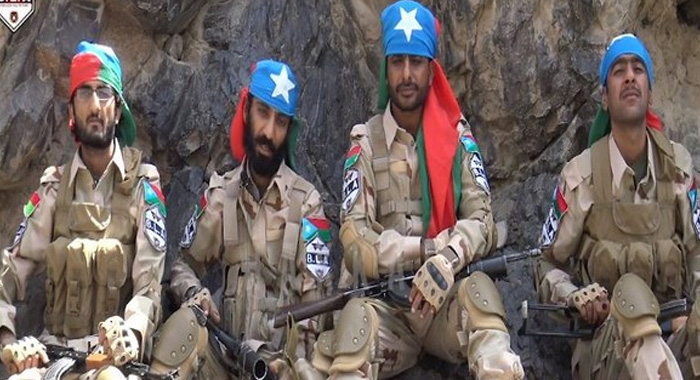
The recent designation of the Baloch Liberation Army (BLA) and its Majeed Brigade as Foreign Terrorist Organizations (FTOs) by the United States is not merely a symbolic act of international diplomacy. It is a belated but necessary acknowledgment of a fundamental reality: the BLA is not a legitimate resistance movement, nor a credible representative of Baloch aspirations. It is a violent extremist organization whose actions have inflicted immense suffering on ordinary Baloch citizens, undermined regional stability, and obstructed Pakistan’s economic and political development.
For years, the BLA has attempted to cloak itself in the language of liberation and grievance. Yet its operational conduct, ideological rigidity, and deliberate targeting of civilians, infrastructure, and foreign nationals expose the group’s true nature. Far from empowering the Baloch people, the BLA has trapped Balochistan in a cycle of violence that benefits no one except those who profit politically and materially from perpetual conflict.
A central claim advanced by BLA sympathizers is that the organization reflects the will of the Baloch people. This assertion collapses under even minimal scrutiny. Balochistan is a diverse province, ethnically, politically, and socially. The overwhelming majority of Baloch citizens pursue their rights through peaceful political activity, civic engagement, and constitutional means. Elections, local governance structures, student organizations, and civil society movements—despite their imperfections—remain the primary vehicles through which Baloch voices are expressed.
The BLA, by contrast, has imposed itself through fear. Its attacks have disrupted daily life, shut down highways, damaged schools and hospitals, and endangered livelihoods. These actions do not weaken the Pakistani state in abstraction; they directly harm Baloch laborers, traders, students, and families who depend on stability to survive. The notion that such violence constitutes “resistance” is not only morally flawed but deeply insulting to those Baloch who reject militancy and seek progress through peace.
The evolution of the BLA’s tactics over time reveals an organization increasingly reliant on spectacle-driven violence to remain relevant. Rather than building sustainable political institutions or engaging in dialogue, the group has doubled down on coercion. Suicide attacks, kidnappings, and assaults on soft targets are not acts of desperation born of exclusion; they are deliberate strategic choices.
These methods align the BLA not with legitimate national liberation movements, but with transnational terrorist organizations that use violence as a shortcut to attention. International notoriety has become a substitute for political legitimacy. The recent FTO designation exposes this reality: when stripped of romanticized rhetoric, the BLA is seen globally for what it is an armed group that rejects political compromise and thrives on instability.
It is undeniable that Balochistan faces serious governance challenges. Underdevelopment, unemployment, and uneven resource distribution are real issues that demand sustained policy attention. However, the BLA’s narrative reduces these complex problems to a simplistic binary of “occupation versus resistance,” leaving no room for reform, negotiation, or democratic struggle.
This framing is not accidental. By portraying the Pakistani state as irredeemably hostile, the BLA justifies its own rejection of politics. Yet Pakistan’s constitutional framework already provides mechanisms for provincial autonomy, resource sharing, and political participation. Baloch leaders have served and continue to serve in parliament, the cabinet, and provincial governments. Progress may be uneven and slow, but it is tangible and achievable through institutional means.
Militancy does not accelerate reform; it delays it. Every attack strengthens hardline positions, diverts resources from development to security, and shrinks the political space available for genuine Baloch grievances to be addressed. In this sense, the BLA is not a response to repression—it is one of its principal enablers.
The China–Pakistan Economic Corridor (CPEC) has become a focal point of BLA propaganda. The group depicts it as a colonial project designed to loot Baloch resources, ignoring both economic realities and ground-level outcomes. Infrastructure development, energy projects, and connectivity initiatives under CPEC are not abstract geopolitical fantasies; they are concrete investments that can integrate Balochistan into national and regional markets.
By attacking CPEC-linked projects and personnel, the BLA has actively sabotaged opportunities for employment, skills development, and long-term growth in the province. These attacks do not punish Islamabad or Beijing in isolation; they discourage investment, raise security costs, and delay projects that could benefit local communities.
The irony is stark: a group that claims to fight economic marginalization routinely destroys the very pathways through which that marginalization could be reduced.
Some within the BLA’s support base have portrayed international terrorist designations as a badge of honor, evidence that the group has “made an impact.” This is a dangerous illusion. FTO status does not confer legitimacy; it imposes isolation. It constrains financial networks, criminalizes external support, and narrows the organization’s operational space.
More importantly, it reinforces a global consensus that political violence against civilians is unacceptable, regardless of cause. In an era where armed movements across the world are being pushed toward negotiations and political engagement, the BLA’s insistence on maximalist violence places it on the wrong side of history.
Criticizing the BLA does not absolve the Pakistani state of its responsibilities. Sustainable peace in Balochistan requires transparency, accountability, and inclusive development. Law enforcement must operate within legal bounds, and political dissent must not be conflated with militancy. These are essential principles for any democratic society.
However, reform and development cannot proceed under the shadow of armed coercion. No state can negotiate meaningfully with a group that rejects the legitimacy of the political process itself. By isolating the BLA and delegitimizing its violent campaign, Pakistan and its international partners create space for non-violent Baloch voices to be heard and empowered.
The greatest tragedy of the BLA’s insurgency is that it has diverted attention away from the real needs of the Baloch people. Education, healthcare, water security, and employment do not feature prominently in the group’s agenda because they cannot be achieved through the barrel of a gun. Instead, the BLA offers a permanent state of confrontation, where sacrifice is endless and victory perpetually deferred.
History is unkind to movements that mistake destruction for strategy. Across South Asia, insurgent groups that refused political compromise either collapsed or were forced into irrelevance. The BLA’s current trajectory suggests a similar outcome—one that will leave behind only loss and regret.
The U.S. decision to designate the BLA as a Foreign Terrorist Organization is not an attack on Baloch identity or legitimate political grievances. It is a clear rejection of violence as a tool of politics. For Pakistan, this moment should be used not only to strengthen counterterrorism cooperation but to recommit to inclusive governance and development in Balochistan.
For the Baloch people, the choice is stark but necessary: a future shaped by education, opportunity, and political participation, or one held hostage by an armed group that thrives on chaos. The BLA has had decades to prove that violence can deliver dignity and justice. It has failed.
Peace, reform, and integration—not insurgency—remain the only viable path forward for Balochistan and for Pakistan as a whole.



