
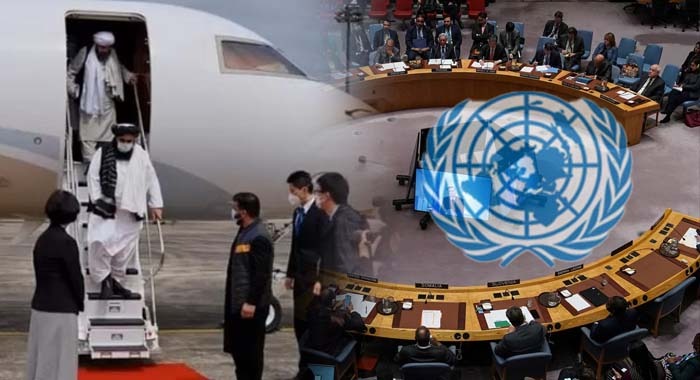
Taliban leaders logged almost 100 foreign trips in 2025, a figure that quietly demolishes the idea of international isolation and raises an uncomfortable question, why would the Taliban ever feel compelled to honor pledges they made to the world, when the world itself appears unwilling to enforce its own red lines?
According to Zabihullah Mujahid, spokesperson for the Taliban leader, ministers and senior officials of the Taliban administration undertook 99 overseas visits during the year, ostensibly for economic, trade and diplomatic engagements. Mujahid framed these travels as evidence of “good progress” in diplomacy as the year closed.
Yet this claim sits uneasily with reality. More than 60 senior Taliban figures, including acting Foreign Minister Amir Khan Muttaqi and Interior Minister Sirajuddin Haqqani, remain formally listed under United Nations sanctions. These sanctions are meant to restrict movement, limit legitimacy and apply pressure. Instead, Taliban officials continue to board planes, attend meetings and present themselves as routine state actors, aided by travel exemptions quietly granted under the same sanctions regime.
This contradiction exposes the hollow core of the international approach to the Taliban. If sanctioned officials can freely traverse capitals and conference halls, what exactly are sanctions meant to achieve? Deterrence, accountability, behavioral change, or merely symbolic disapproval that costs nothing and demands nothing?
The question cuts deeper. Why would the Taliban feel any incentive to uphold promises on human rights, women’s education or counterterrorism cooperation when violations carry no meaningful consequence? Internally, the group faces little resistance. Externally, pressure appears negotiable, temporary and reversible. Sanctions, it seems, are flexible when diplomacy or convenience demands it.
Mujahid’s statement also underscored another reality. While diplomats debate engagement frameworks, the Taliban continue to consolidate power at home. He claimed that trained personnel in the Ministry of Defence exceeded 181,000 in 2025, while more than 100,000 police personnel were trained across security, criminal, border and logistics sectors. The message is clear, governance may be unrecognized, but control is not in doubt.
This leaves the international community confronting an awkward truth. Engagement without enforcement normalizes impunity. Sanctions without restrictions become theatre. And pledges extracted from a movement that pays no price for breaking them become irrelevant paperwork.
If the Taliban can travel freely, expand their security apparatus and present diplomatic outreach as success, the real question is no longer whether they will keep their promises. It is whether anyone seriously expects them to care.



