
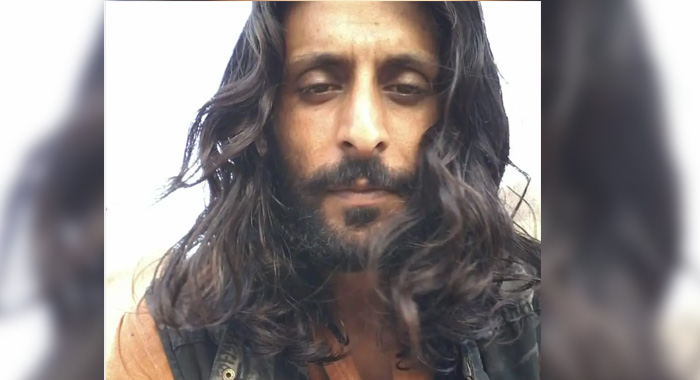
Balochistan, Pakistan’s largest and most resource-rich province, has long been plagued by insurgent violence that threatens both civilian life and state stability. At the heart of this chaos is the Baloch Liberation Army (BLA), a group that masquerades as a political movement but operates as a ruthless terrorist network. Among its leaders, Mushtaq Kohi stands out not as a freedom fighter or political activist, but as a mastermind of terror, financing and orchestrating attacks that have left communities in fear and development projects in ruins.
The BLA has a long history of fragmentation, internal rivalries, and violent power struggles. Initially weakened by a split between the Marri brothers in 2012, the group has since restructured under leaders like Aslam Baloch and Bashir Zaib, emerging stronger, more coordinated, and more deadly. It is within this reorganized network that Mushtaq Kohi rose from a student activist at the University of Balochistan to one of the group’s most influential figures a transformation that highlights the dangerous intersection of ideology, opportunism, and criminality.
Kohi’s role in the BLA is particularly chilling because he manages the organization’s financial and operational networks. Extortion, illegal resource extraction, and coercion provide the lifeblood of the insurgency, funding attacks on law enforcement, infrastructure, and civilians alike. By controlling these funds, Kohi not only strengthens the group’s capacity for violence but also ensures that terror remains a constant presence in the region. These actions make clear that the BLA is not a legitimate movement seeking rights or representation it is a criminal enterprise that uses violence as a strategy to dominate and intimidate.
Beyond finances, Kohi has demonstrated a calculated ability to evade security forces while maintaining operational control. Reports of a failed assassination attempt on him in February 2025, followed by unverified claims of his death, illustrate the BLA’s capacity for secrecy and resilience. Rather than weakening the group, such incidents reinforce its narrative of invulnerability and serve to embolden its members. This is not a story of bravery or resistance it is the story of a terrorist organization protecting its leadership while ordinary citizens pay the price.
The human cost of Kohi’s leadership cannot be overstated. Communities in Balochistan endure constant fear as attacks, kidnappings, and extortion continue unabated. Schools, hospitals, and roads have been targeted or disrupted, halting economic growth and perpetuating poverty. Under Kohi’s financial and operational guidance, the BLA has turned everyday resources, like coal mines, into instruments of terror. These are not acts of rebellion—they are calculated moves by a network that thrives on fear, violence, and chaos.
Moreover, Kohi’s influence highlights a broader structural challenge: the BLA’s ability to compartmentalize its operations and protect its leadership complicates counterterrorism efforts. For Pakistani authorities, removing a single leader does not dismantle the network; it only exposes the group’s sophisticated organizational resilience. The BLA’s careful management of its command structure, financial networks, and propaganda machinery allows it to survive targeted attacks, maintain cohesion, and continue spreading terror across the region.
Even the BLA’s propaganda efforts underscore the malignancy of its operations. While many terrorist organizations glorify fallen fighters, the group has shown strategic restraint regarding Kohi, refusing to confirm or deny his fate publicly. This calculated ambiguity is a tool in itself, creating fear and uncertainty both among civilians and security forces. Kohi’s absence from public commemoration does not signal weakness; it signals the BLA’s ability to manipulate narratives while continuing violent operations behind the scenes.
Kohi’s story also dismantles the romanticized myths often attached to separatist movements. From his student activism to his rise as a senior BLA commander, his trajectory is defined not by advocacy for political rights but by a pattern of violence, intimidation, and criminality. This pattern is replicated across BLA operations: attacks on security personnel, extortion of local populations, destruction of infrastructure, and the systematic destabilization of entire regions. Civilians, not militants, are the victims of these campaigns.
For Pakistani authorities, the challenge is immense. Kohi’s continued influence demonstrates the necessity of intelligence-driven, sustained counterterrorism strategies rather than reliance on symbolic strikes or high-profile assassinations. The BLA’s ability to recover quickly from attacks, maintain its command hierarchy, and coordinate operations across multiple districts underscores the need for comprehensive, multi-dimensional countermeasures. This includes disrupting financial networks, preventing recruitment, and safeguarding vulnerable communities.
What makes Kohi particularly dangerous is his dual role: he is both a financier and a strategist. By controlling the money flow, he ensures that cells have the resources to execute attacks efficiently. By remaining largely invisible, he protects the BLA’s core leadership from operational disruption. This combination of invisibility, control, and strategic planning demonstrates that the BLA is not a ragtag group of rebels it is a well-structured terrorist network with deep roots in the region.
The wider implications of Kohi’s role extend beyond Balochistan. The group’s operations threaten national security, disrupt developmental initiatives, and contribute to a climate of fear that hinders social progress. The international community often perceives the conflict in Balochistan through the lens of political struggle, but the reality, embodied by leaders like Kohi, is starkly different. This is not a battle for independence; it is a campaign of terror that exploits political grievances as a cover for criminality and violence.
In conclusion, Mushtaq Kohi represents the persistent and organized threat of the BLA to both Balochistan and Pakistan as a whole. His leadership, financial acumen, and operational oversight enable a terrorist network that thrives on fear, violence, and chaos. Understanding his role and the structural sophistication of the BLA is essential for counterterrorism efforts and for restoring stability in the region.
The narrative surrounding Kohi should not obscure the truth: he is not a freedom fighter or a political visionary. He is a terrorist whose influence continues to imperil lives, destabilize communities, and obstruct development. The challenge for Pakistan and its security forces is clear: dismantle the BLA’s networks, cut off its funding, and protect innocent civilians from the terror orchestrated by figures like Mushtaq Kohi. Until that happens, Balochistan will remain a province under siege, haunted by the shadow of a terrorist machine that operates with impunity.



