
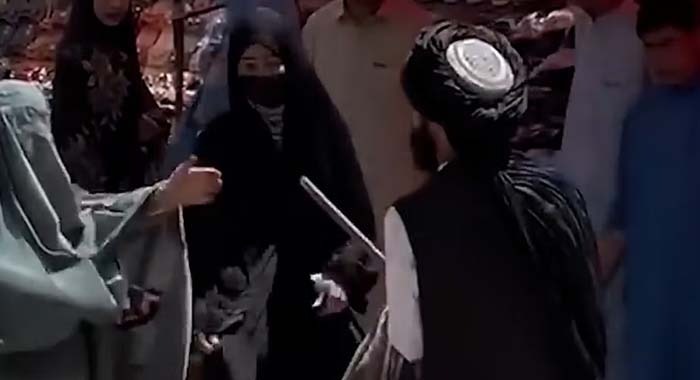
The United Nations Office for the Coordination of Humanitarian Affairs (OCHA) has reported that the Taliban have governed Afghanistan through at least 470 decrees since reclaiming power, including 79 directives that directly affect women and girls.
In its latest assessment released on Tuesday, OCHA said restrictions imposed on Afghan women and girls have intensified over the past year, fundamentally altering the country’s social fabric and economic systems.
The report noted that policies barring women from education and employment have drastically reduced their participation in public life and the economy. OCHA cautioned that the strict enforcement of these measures has curtailed women’s access to livelihoods and essential services, while heightening exposure to gender-based violence, psychological stress, and social coercion.
According to OCHA, Afghanistan is expected to remain among the most severe humanitarian crises globally in the year ahead. Alongside the lasting impacts of decades of conflict, recurring drought, widespread food insecurity, and the large-scale return of migrants, the systematic exclusion of women and girls from public life has propelled the country into the highest category of humanitarian emergencies.
The report highlighted that women continue to bear the heaviest burden of economic exclusion, with ongoing restrictions deepening their social and financial marginalization. The Taliban’s morality law has further reinforced existing bans and introduced tighter controls, sharply limiting women’s presence in public spaces and their engagement in social and economic activities.
OCHA estimates that women’s participation in Afghanistan’s labor force remains at around six percent, with most women confined to informal, home-based, or subsistence-level work. Female heads of households identified movement restrictions, limited access to employment and humanitarian aid, and shortages of income and shelter as their most urgent unmet needs.
Women-Headed Households
The report said women—particularly those heading households—face significant challenges in accessing information and assistance. Approximately 66 percent of female-headed households reported not knowing how to obtain aid, a figure notably higher than that for male-headed households.
As a result, 79 percent of female-headed households are experiencing severe shortages of food and safe drinking water. OCHA said these disparities underscore how restricted access and lack of information increase vulnerability and weaken the reach, effectiveness, and accountability of humanitarian assistance.
Protection Crisis and Gendered Impact
OCHA warned that Afghanistan is confronting a worsening protection crisis driven by mass forced returns; escalating restrictions, especially on women and girls, economic hardship, and repeated climate-related shocks.
The agency said protection risks for women and girls have risen sharply as both formal and community-based protection mechanisms have eroded, and access to services has become more limited. About 77 percent of respondents cited restrictions on women’s movement due to cultural or political factors, while 70 percent said they live in areas where women and girls do not feel safe.
Additionally, 63 percent of respondents reported that they or people they knew had been denied access to services because of social or legal constraints.
OCHA said women and children face the most acute protection threats, including gender-based violence, child marriage, child labor, human trafficking, family separation, and psychological trauma.
The report also noted a deterioration in child protection conditions compared to the previous year, with rises in both child labor and child marriage. Reported cases of child marriage increased to 746 in 2025, up from 323 the year before.



