
Senior Afghan political figures and resistance leaders have voiced grave concerns over what they describe as a coordinated pattern of cross-border targeted killings following the assassination of former Afghan security commander General Ikramuddin Sari in Tehran.
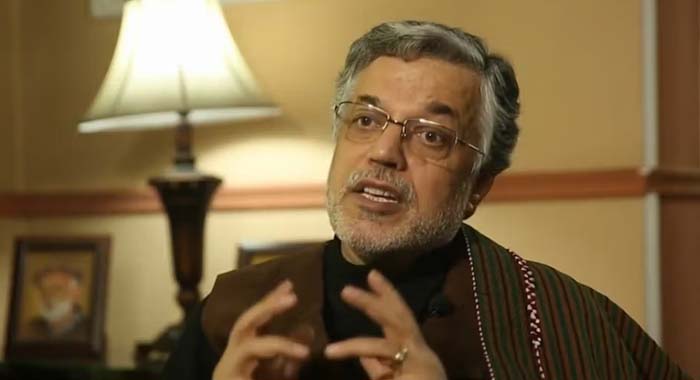
Speaking at an online memorial ceremony for General Sari, former Afghan Vice President Yunus Qanuni alleged that Taliban intelligence agencies were responsible for the killing and warned that such operations extend beyond Afghanistan’s borders. He stated that there is “no doubt” Taliban intelligence bodies are capable of and actively conducting cross-border operations targeting former Afghan officials.
General Ikramuddin Sari, a former senior police commander, and Mohammad Amin Almas, a former Afghan army commander, were shot dead on Wednesday evening in Tehran’s Valiasr district. According to Qanuni, Sari had the potential to emerge as a unifying figure for former Afghan officers and younger generations opposed to the Taliban’s rule.
“We, as comrades and friends, must act to prevent the repetition of such incidents,” Qanuni said, emphasizing the need for vigilance and collective responsibility to safeguard Afghan figures living in exile.
Qanuni further linked the Tehran assassinations to what he described as a broader chain of targeted killings. He cited the earlier assassination of Commander Marouf Gholami in Mashhad, a military figure close to Ismail Khan, as well as a recent incident involving Afghan nationals in Tajikistan. He argued that these cases reflect a deliberate strategy aimed at eliminating individuals capable of fostering unity and organizing political or military opposition.
According to Qanuni, the Taliban have demonstrated a new approach by systematically targeting influential figures who could play a role in challenging their authority in Afghanistan.
No group has formally claimed responsibility for the attacks. However, opponents of the Taliban have repeatedly blamed the group, pointing to the selection of targets and the geographical spread of the incidents as evidence of an organized campaign.
Iranian authorities have acknowledged the assassinations and confirmed that investigations are ongoing. Tehran Governor Hossein Khosh-Eghbal stated that authorities are examining the circumstances surrounding Sari’s killing. “We are investigating, but have not yet reached a conclusion,” he told Ensaf News, adding that the findings would be announced. As of two days after his remarks, Tehran police had not released further details.
Ahmad Massoud, leader of the National Resistance Front of Afghanistan, has also called on the Islamic Republic of Iran to conduct a serious and transparent investigation into the killings of former Afghan military figures in Tehran. He compared Sari’s assassination to other high-profile targeted killings and stressed that Iran must prevent armed groups from using its territory to carry out violent acts.
The assassinations have intensified fears among Afghan political and military figures living outside the country and raised broader concerns about the safety of exiled communities. Afghan leaders and resistance figures are urging regional governments to ensure their territories are not exploited for transnational violence and to hold perpetrators accountable.



