
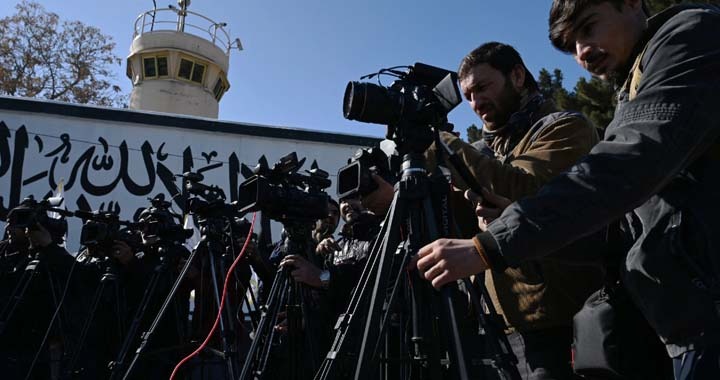
Media freedom in Afghanistan has deteriorated sharply under Taliban rule, with journalists facing widespread censorship, intimidation, and violence, according to a new annual assessment released by the Afghanistan Journalists Center (AJC).
In its report published on Saturday, the watchdog described the media environment as increasingly restrictive and repressive, documenting at least 205 incidents over the past year involving attacks on journalists and violations of press freedom. The findings point to a systematic effort to control information and silence independent reporting.
The report states that two journalists lost their lives during the year in attacks attributed to Pakistan, while three others were injured. In addition, the centre recorded more than 160 cases of threats against media workers and 34 incidents of arbitrary detention, underscoring the growing risks faced by journalists operating inside the country.
Despite these documented cases, Taliban officials continue to deny wrongdoing. A senior representative of the Taliban’s Ministry of Information and Culture one of the main bodies responsible for media oversight and censorship recently claimed in an interview with a Bangladeshi newspaper that there are no restrictions on the press and that no journalists are currently detained. However, independent monitoring groups report that at least five journalists remain imprisoned, contradicting official statements.
According to the Afghanistan Journalists Center, violations of media freedom increased by 13 percent compared with the previous year, a rise it attributes to the Taliban’s tightening policies and expanding control over news coverage.
The report highlights several troubling practices, including the televised airing of forced confessions by detained journalists, prohibitions on women journalists attending press briefings, and the systematic silencing of women’s voices across broadcast media. These measures, the centre said, reflect an institutionalized policy of repression and gender-based discrimination.
The watchdog also raised alarm over the expansion of bans on publishing images of living beings across 23 provinces, a policy that has already resulted in the closure of at least 20 television stations. Remaining independent outlets, it warned, are operating under constant threat of shutdown.
Expressing deep concern over the erosion of fundamental rights, the Afghanistan Journalists Center cautioned that freedom of expression and independent journalism in Afghanistan are facing an increasingly bleak future. Without meaningful protections and accountability, the report concludes, the country risks losing what little space remains for free and independent media.



