
The security situation in southern Khyber Pakhtunkhwa further deteriorated on Friday after terrorists carried out two quadcopter attacks in Lakki Marwat’s Takhti Khel area, targeting a mosque and a nearby residential locality, police sources said.
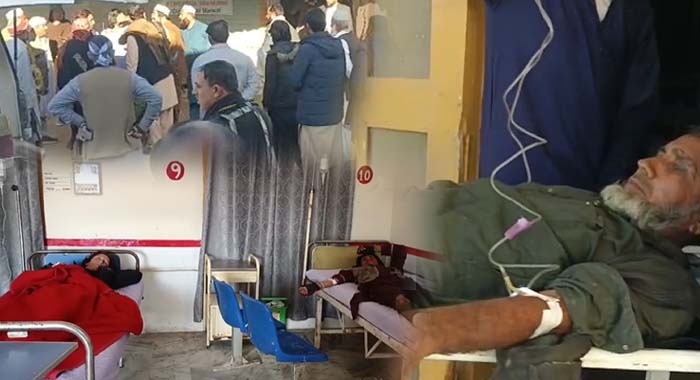
According to officials, the attacks left at least five police personnel injured, among them a woman. One police official and a civilian sustained critical injury and were shifted to Bannu for specialised treatment. Emergency protocols were enforced at Tehsil Headquarters Hospital Naurang and the District Headquarters Hospital as casualties were brought in.
Heavy firing was reported in and around the area following the drone strikes, prompting the deployment of a large police contingent along with members of local peace committees. A clearance operation remained underway late into the day as authorities sought to secure the locality and prevent further attacks.
Earlier the same morning, terrorists also targeted the residence of coordinator of the local youth wing of a national-level, and the ruling one in centre, political party in North Waziristan’s Haider Khel area using a quadcopter. Fortunately, no casualties were reported in that incident, though it added to growing fears about the expanding use of aerial devices by militant groups.
The latest attacks come against the backdrop of a similar attempt reported earlier this month in North Waziristan, where terrorists tried to strike the Tappi post using a quadcopter. That attack was successfully thwarted after alert security personnel detected the drone in time and neutralized it at a safe distance using an anti-drone system, preventing any loss of life or damage to infrastructure.
Security officials say militant groups operating in the former tribal districts have increasingly turned to commercially available drones modified to carry improvised explosive devices. While some attempts have been intercepted or failed due to technical flaws, others have resulted in injuries to both security personnel and civilians in different parts of southern KP.
Analysts link the Lakki Marwat and Haider Khel incidents to a broader and worrying pattern also seen in areas such as Janikhel in Bannu, where a recent drone strike injured five civilians, including children. In that case, victims were rushed to the District Headquarters Hospital, and senior civil administration officials personally monitored the response.
Officials acknowledge that while drone-based attacks represent a shift towards more technologically driven tactics, they often lack precision. Explosives intended for security targets have, in several cases, fallen into civilian spaces such as homes, mosques, and open fields, heightening fear among local communities.
Security authorities have stressed that the evolving threat demands heightened vigilance not only from security forces but also from tribesmen and citizens across the terror-hit tribal belt and the rest of Khyber Pakhtunkhwa. They emphasized the importance of timely reporting of suspicious aerial activity and close coordination between communities and law enforcement agencies.
At the same time, the incidents have renewed calls to accelerate police modernization efforts, particularly the induction of advanced surveillance, detection, and anti-drone technologies. Experts argue that equipping police forces with modern tools, alongside improved training and intelligence sharing, is essential to countering drone-based attacks that increasingly blur the line between battlefield and civilian space.
Authorities reiterated that strengthening technological capabilities, enhancing inter-agency coordination, and sustaining community engagement remain critical to protecting lives and infrastructure as militant groups continue to adapt their methods in southern KP.



