
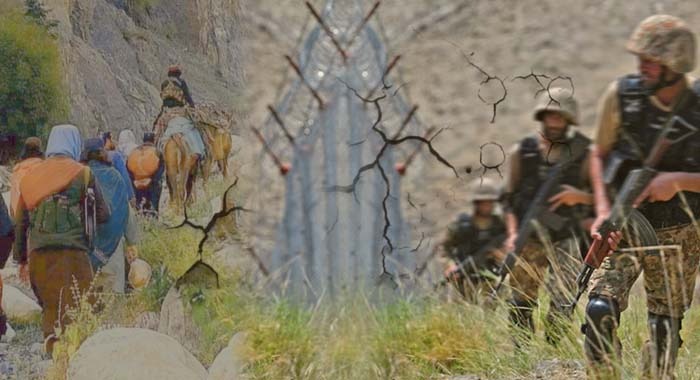
The debate over militancy spilling into Pakistan from across the western border is no longer about allegations or rhetoric. It has become a question of evidence, patterns, and credibility.
For years, Islamabad has raised concerns that militant violence inside Pakistan is not only inspired but also enabled from across the border. These warnings were often dismissed as politically motivated or exaggerated. Yet each major attack leaves behind traces that tell a more stubborn story, one that refuses to fade with official denials.
What stands out is not merely the nationality of individual attackers but the ecosystem that surrounds them. Militants do not emerge in isolation. They are trained, facilitated, remembered, and in some cases celebrated. When individuals involved in attacks inside Pakistan are linked back to Afghan districts, networks, and posthumous recognition, the issue moves beyond border control and into the realm of responsibility.
Pakistan’s security officials argue that the problem is structural, not episodic. According to their assessments, attacks inside Pakistan increasingly show the same fingerprints: planning beyond the border, logistics routed through Afghan territory, and operatives who move with familiarity rather than fear. This, they say, persists despite repeated assurances from the Afghan Taliban that Afghan soil will not be used against any country.
The contradiction is hard to ignore. On one hand, strong public statements of non-interference. On the other, a steady trail of attackers whose origins, handlers, or facilitators trace back to Afghanistan. At some point, denial stops being a diplomatic position and begins to look like strategic avoidance.
The issue also exposes a deeper challenge for the Afghan authorities. If militant actors are operating independently, holding ceremonies, maintaining networks, and crossing borders with ease, it raises uncomfortable questions about control. If they are not independent, the implications are even more serious.
Pakistan’s position is blunt: terrorism rooted in Afghan soil is no longer an exception but a trend. Security officials insist this conclusion is based not on speculation but on intelligence, forensic data, and operational outcomes gathered after repeated attacks. From Islamabad’s perspective, patience has been exhausted by promises that do not translate into prevention.
This is not just a bilateral concern. Militancy thrives where accountability is blurred and where denial delays action. The longer cross-border terrorism is treated as a narrative dispute rather than a security reality, the more space militant groups gain to operate, recruit, and strike.
The Wana incident, like others before it, should be a moment of reckoning. Not for assigning blame through statements, but for confronting facts that continue to surface despite every effort to suppress them. If pledges are to mean anything, they must be reflected not in words, but in what no longer happens.



