
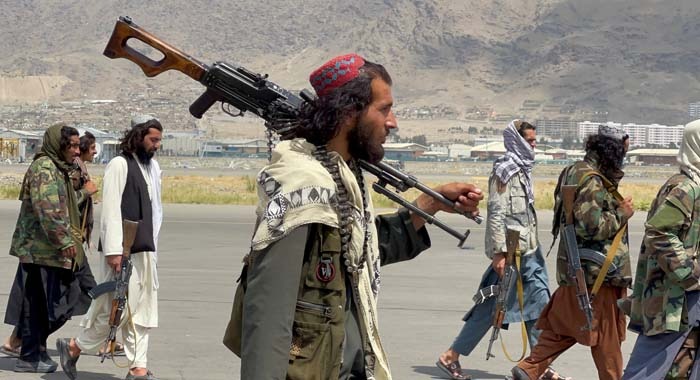
The latest United Nations sanctions monitoring report on Afghanistan presents a stark, sobering picture: more than two decades after the initial global intervention, the country remains a fertile ground for terrorist networks, with the Taliban, now the de facto rulers, at the center of a deeply complex security equation. Far from being the neutral guarantors of stability they claim to be, the Taliban appear increasingly intertwined with both domestic and transnational militant groups, raising critical concerns about ideological alignment, infiltration, and regional security.
According to the Analytical Support and Sanctions Monitoring Team, the Taliban have absorbed former fighters from multiple terrorist organizations into their local security apparatus, ostensibly to leverage their combat experience. Yet this strategy comes at a high cost: the ideological compatibility of these recruits with the Taliban is uncertain, and the potential for infiltration by extremist elements poses a persistent threat to Afghanistan and its neighbors. The Taliban’s security forces, numbering between 380,000 and 450,000 personnel—including soldiers, police, and intelligence operatives remain undermined by corruption, weak accountability, and disputed legitimacy outside urban centers, leaving the country vulnerable to both internal and external extremist pressures.
The report underscores that more than 20 international and regional terrorist organizations continue to operate within Afghanistan, including al Qaeda, Islamic State Khorasan (ISIL-K), Tehrik-e-Taliban Pakistan (TTP), the Eastern Turkistan Islamic Movement/Turkistan Islamic Party (ETIM/TIP), the Islamic Movement of Uzbekistan, and Jamaat Ansarullah. While the Taliban publicly claim that Afghanistan hosts no such groups, these organizations not only persist but also aim to expand regionally, using Afghan territory to plan attacks abroad.
ISIL-K, in particular, remains resilient. Despite Taliban claims of its defeat, the group has demonstrated capacity for recruitment, regional expansion, and lethal attacks, including the December 2024 suicide bombing that killed the Taliban’s minister of refugees and repatriation, Khalil Ahmed Haqqani. The UN report estimates around 2,000 ISIL-K fighters, increasingly drawn from Central Asia, with recruitment heavily reliant on online networks. Disturbingly, ISIL-K has also been experimenting with artificial intelligence to produce instructional material on explosives, weapons components, and financial evasion techniques, demonstrating a modernized operational approach that extends beyond Afghanistan’s borders.
TTP activity is similarly alarming. Intensified cross-border attacks on Pakistan’s military and state institutions underscore the fragile nature of Taliban-Pakistan relations. Taliban facilitation of TTP operations has pushed bilateral relations to a critical point, with internal divisions within the Taliban over whether TTP is a liability or a strategic ally. Al Qaeda continues to operate under Taliban protection in Kabul, providing training, ideological guidance, and logistical support to multiple groups, further entrenching Afghanistan as a hub for transnational militancy. Newly emerged groups such as Ittihad-ul-Mujahideen Pakistan, along with ETIM/TIP and Jamaat Ansarullah, reflect the Taliban’s willingness whether strategic or coerced to allow the training and movement of militants within Afghan territory, raising fears of attacks in Central Asia and beyond.
Financial pressures have compounded these security challenges. The Taliban spent $835 million 46% of their budget on security during the first half of 2025, while $980 million went to service delivery and other sectors. Budget constraints forced a 20% reduction in security personnel, leading to the dismissal of over 4,000 commanders and officers, primarily in provinces with significant Tajik and Uzbek populations. Such reductions, coupled with weak governance structures, may exacerbate recruitment into extremist groups and deepen internal instability.
Taken together, the UN report paints Afghanistan as a country where the Taliban’s internal fragilities intersect with transnational extremist ambitions, creating a volatile nexus with regional repercussions. The Taliban’s absorption of former militants, while operationally expedient, risks ideological compromise and renders counter-terrorism efforts highly precarious. Without robust coordination between Afghanistan and neighboring states, and without accountability mechanisms within the Taliban’s security apparatus, Afghanistan is likely to remain both a sanctuary and a launchpad for militant activity.
The international community faces a critical juncture. Engagement with the Taliban cannot ignore the persistent presence of terrorist networks, nor the deepening interconnections between the Taliban and groups such as ISIL-K, TTP, and al Qaeda. Regional stability, counter-terrorism efficacy, and human security depend on a strategy that combines diplomacy, intelligence-sharing, and accountability pressures to ensure that Afghanistan does not revert to being a hub of global terror.
In essence, the Taliban’s pursuit of security through absorption of former extremists may offer short-term tactical gains, but the long-term consequences both for Afghanistan and the wider region are profoundly destabilizing. Unless addressed with strategic foresight, the current trajectory risks cementing Afghanistan’s role as a persistent incubator for extremist violence, threatening the fragile peace of Central and South Asia.



