
A senior Taliban leader’s rare public critique of governance through fear has reinforced long-standing concerns raised by Pakistan and other neighbours at international forums, including the United Nations, about instability and militant permissiveness under Taliban rule.
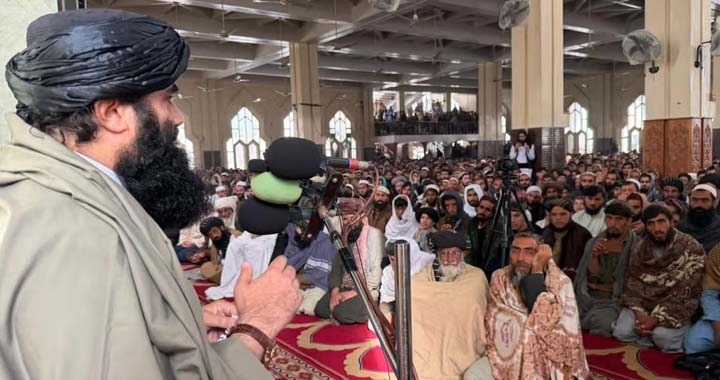
Speaking at a public gathering in Khost on Friday, Taliban Interior Minister Sirajuddin Haqqani said a government that rules people through fear and force cannot be considered legitimate. While not naming the Taliban directly, his remarks amounted to an implicit acknowledgement that intimidation, humiliation and violence have become tools of governance in Afghanistan.
“A government that controls people only by frightening them is not a government,” Haqqani said, adding that a meaningful state must be built on trust, affection and justice between rulers and the public.
He stressed that governance only has value when it delivers peace, justice and a climate of confidence for citizens. Haqqani also urged Afghans not to humiliate or condemn one another, warning that such behaviour deepens hostility and social fracture.
The comments come against the backdrop of more than four years of Taliban rule marked by the violent suppression of protests, detention of critics, and the use of public floggings and executions. Human rights organisations have repeatedly described these practices as part of a broader pattern of repression in Afghanistan.
Haqqani acknowledged the contradiction between past suffering and present conduct, saying Afghans endured decades of pain in pursuit of freedom and independence, yet now display diminishing tolerance toward one another. “Once, we were oppressed by the emperors of the world, but now we ourselves condemn and humiliate people,” he said, calling for an end to such practices.
For Pakistan, which has repeatedly warned the United Nations that militant violence and instability emanating from Afghan soil pose serious regional threats, Haqqani’s remarks are being viewed as an unusual validation from within the Taliban’s own leadership. Islamabad has consistently argued that governance failures, coercive rule and unchecked militant space in Afghanistan are directly linked to rising security risks for neighbouring countries.
Haqqani’s statements, delivered publicly and without external prompting, underline the gap between Taliban assurances to the international community and realities on the ground, a gap that regional states say continues to undermine prospects for peace and security in Afghanistan and beyond.



