
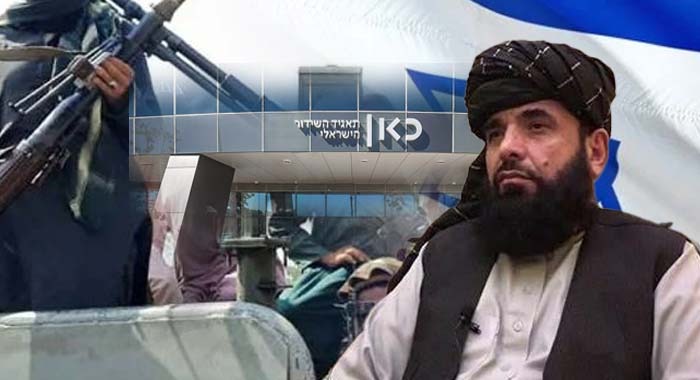
The Afghan Taliban are facing growing criticism from within their own ideological base, as supporters on social media accuse the Kabul government of drifting away from its long held religious and jihadist positions. The debate has intensified following a series of unexpected diplomatic gestures that have unsettled even long time loyalists.
Soon after the Taliban captured Kabul in 2021, Suhail Shaheen, head of the group’s political office in Doha, gave an interview to Israel’s state broadcaster KAN, suggesting that future ties with Israel were “not impossible.” The backlash was immediate. Shaheen later claimed he did not know the channel was Israeli, a defence widely questioned given the Taliban office’s strictly vetted media protocols.
Concerns deepened when Israel announced on 13 January 2022 that it had provided several hundred thousand dollars in aid for Afghan refugees. For many Taliban supporters, the development reinforced suspicions that the group’s foreign outreach was shifting in unanticipated directions.
In an interview with Al Jazeera, political office spokesman Naeem Wardak further unsettled loyalists when he declined to condemn Israel or its occupation of Palestinian territory, instead asking why he was being questioned about a matter “that has nothing to do with us.”
Meanwhile, the Taliban’s growing engagement with India’s Modi government has triggered its own round of internal criticism. During a visit to New Delhi, Taliban Foreign Minister Mullah Mutakki described the Kashmir dispute as “an internal matter of India,” a stance sharply at odds with long standing jihadist narratives.
Growing Unease Inside Militant and Jihadist Circles
These developments have fuelled a larger debate across jihadist and militant communities. Many of the Taliban’s traditional supporters argue that the movement is steadily distancing itself from its foundational ideology, its militant rhetoric and its earlier commitments. Yet others, including several of the group’s historic allies, appear willing to overlook this ideological shift for now, leaving a widening divide inside the Taliban’s global support network.



