
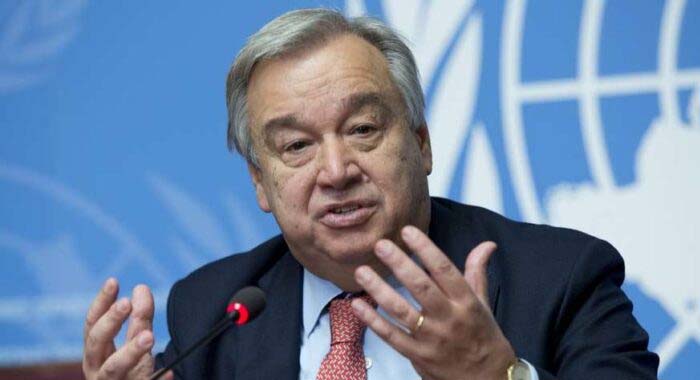
The United Nations has reported a sharp rise in security-related incidents in Afghanistan, with UN Secretary-General António Guterres recording 2,737 incidents between August 1 and October 31, representing a 14.7% increase compared to the same period last year. The alarming escalation, detailed in Guterres’ latest report presented to the UN Security Council on Wednesday, underscores ongoing threats to civilians and the fragile stability of the country.
The report attributes the increase to multiple factors, including attacks by armed anti-Taliban groups and cross-border clashes between the Taliban and Pakistani forces. While these armed groups have not posed a significant challenge to Taliban control, they carried out 41 attacks, such as hand grenade assaults and shootings at checkpoints and convoys, of which 19 were verified. Meanwhile, attacks by the Islamic State Khorasan Province (ISKP) decreased in both number and scale, with the Taliban reportedly continuing operations against the group.
The UN Secretary-General’s report also highlights a worrying pattern of cross-border violence. Between August 1 and October 17, several border incidents were recorded along Afghanistan’s borders with Iran, Pakistan, and Tajikistan. A particularly intense week-long clash between the Taliban and Pakistani forces in October resulted in the deaths of at least 50 civilians and injuries to 453 others, mainly in Kabul and Spin Boldak districts.
Human rights violations remain a serious concern under the Taliban’s administration. The report documents ongoing persecution of former government officials and members of Afghanistan’s former security forces. Since September, the UN has recorded six extrajudicial killings, 24 arbitrary detentions, and six cases of torture and ill-treatment.
Guterres’ report further underscores the Taliban’s continued reliance on corporal punishment. Over the past three months, 215 cases were recorded, including punishments of 42 women, two girls, and one boy, for offences ranging from adultery and running away from home to homosexuality, alcohol consumption, and gambling.
Adding to the persistent threats, unexploded ordnance remains a major hazard for Afghan civilians. During the reporting period, eight civilians mostly children were killed and 29 others injured due to leftover explosives.
The UN Secretary-General’s quarterly reporting follows the March 2023 Security Council resolution, which mandates the submission of regular updates on Afghanistan and the implementation of the UN Assistance Mission in Afghanistan (UNAMA). Guterres’ latest findings reflect a deteriorating security environment and ongoing human rights concerns that continue to impede the protection and well-being of Afghan civilians.
The report serves as a critical reminder of the challenges facing Afghanistan, particularly the urgent need for sustained international attention and support to safeguard civilians, uphold human rights, and address the escalating security threats in the region.



