
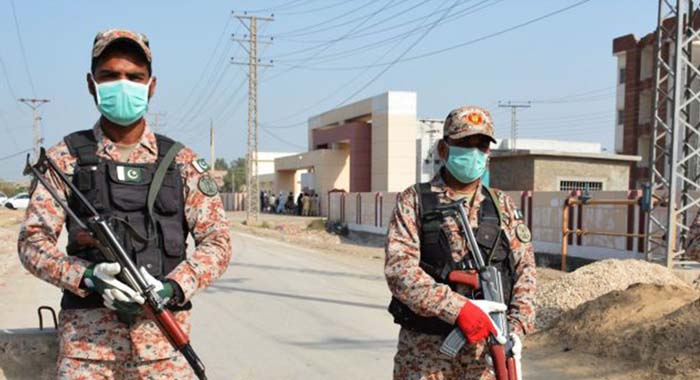
Three members of Iran’s Islamic Revolutionary Guard Corps (IRGC) were killed and three others wounded in a targeted ambush in Zahedan, the capital of Sistan-and-Baluchistan province, local reports confirmed. The attack on the IRGC convoy has heightened security concerns in the region, which has long been vulnerable to militant activity.
Authorities have not yet reported any claims of responsibility for the ambush. However, the incident coincides with recent developments in the regional militant landscape. On the same day, Jaish al-Adl, a prominent militant organization operating along Iran’s southeastern border, announced the formation of a new coalition, raising fears of an escalation in cross-border violence and organized attacks targeting Iranian security forces.
Zahedan and the broader Sistan-and-Baluchistan province have repeatedly been the site of clashes between Iranian security forces and insurgent groups, many of which operate with regional and transnational networks. Analysts warn that the establishment of new militant coalitions could intensify attacks, complicate security operations, and threaten stability along Iran’s southeastern frontier.
The ambush underscores the ongoing volatility in Iran’s border regions and the persistent challenges faced by the IRGC in countering well-coordinated militant operations. Security forces are reportedly increasing patrols and surveillance in the area to prevent further incidents and to contain any potential spread of violence.
The development comes at a critical time, as regional security experts emphasize the need for sustained vigilance and intelligence cooperation to curb the influence of armed groups, particularly amid evolving alliances and shifting militant strategies in southeastern Iran.
Iranian authorities have condemned the attack and vowed to investigate the incident thoroughly, reiterating their commitment to maintaining security and protecting civilians and personnel in vulnerable provinces.



