
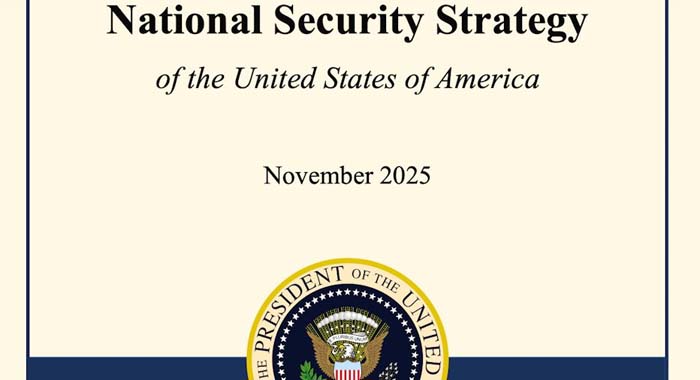
In a striking departure from previous administrations, the newly released 2025 National Security Strategy (NSS) from President Donald Trump has excluded Afghanistan entirely, signaling a major shift in U.S. foreign policy priorities. For the first time in two decades, Afghanistan, a central focus of U.S. national security strategy since the 9/11 attacks, has been removed from the document that traditionally outlines the country’s security objectives and global priorities.
The 33-page strategy, which lays out the administration’s vision for national defense, military readiness, and foreign policy engagement, shifts its focus away from the Middle East and South Asia. Instead, the strategy concentrates on issues closer to home, including tightening immigration controls, countering China’s global influence, deterring Russian expansion, and strengthening domestic security.
Afghanistan’s diminished role in U.S. policy has been years in the making. The 2010 NSS identified Afghanistan as one of Washington’s primary security concerns, particularly in the wake of the September 11 attacks. In that year’s strategy, Afghanistan was second only to Iraq in terms of U.S. security priorities. By the 2017 and 2022 editions, the country’s prominence had notably waned, but it was still included in discussions of U.S. interests.
However, in the 2025 version, Afghanistan has disappeared altogether. The omission reflects a broader recalibration of U.S. foreign policy priorities, likely influenced by the 2021 withdrawal of American troops from Afghanistan and the subsequent Taliban takeover of the country.
The release of the National Security Strategy follows months of high-profile comments from President Trump regarding Afghanistan, particularly his suggestions about retaking the Bagram Air Base. The president repeatedly stated that the U.S. should “take it back,” a remark that sparked strong reactions from the Taliban and raised concerns among regional powers. Despite these earlier statements, Trump has refrained from discussing Afghanistan or the Bagram base for nearly two months, and the new strategy includes no reference to either.
The absence of Afghanistan from the 2025 National Security Strategy aligns with a broader trend in U.S. policy: a pivot toward “great power competition” with China and Russia. The strategy emphasizes U.S. efforts to counter China’s rising influence, particularly in the Indo-Pacific region, and to deter Russian aggression in Eastern Europe.
National security experts see this shift as a direct response to the growing geopolitical challenges posed by these two nations. In particular, the strategy calls for increased military readiness and diplomatic efforts aimed at containing Chinese economic and military power while strengthening NATO’s deterrence against Russian actions.
In addition to its global priorities, the 2025 strategy places a significant emphasis on domestic security issues, including border control, migration restrictions, and the protection of American infrastructure. The administration has framed these domestic priorities as critical to safeguarding U.S. sovereignty and ensuring the nation’s long-term security.
The omission of Afghanistan in the 2025 NSS marks a dramatic shift from the intense U.S. engagement in the region that characterized the past two decades. From the U.S.-led invasion in 2001 to the long-running military presence that followed, Afghanistan was central to Washington’s security concerns.
The Biden administration’s withdrawal in 2021 left a vacuum, and despite President Trump’s earlier calls to secure U.S. interests in the country, the 2025 strategy seems to signal that Afghanistan no longer ranks among Washington’s top global priorities.
Experts suggest that the U.S. focus on China and Russia, paired with the diminished attention to Afghanistan, reflects a shift in the global balance of power. While the U.S. remains involved in several conflict zones, its strategic priorities are increasingly centered on rival great powers, signaling a new era of geopolitical competition.
The full impact of these changes will likely unfold over the coming years, as global security dynamics continue to evolve. With Afghanistan no longer a focal point in U.S. policy, the future of American engagement in the region remains uncertain.



