
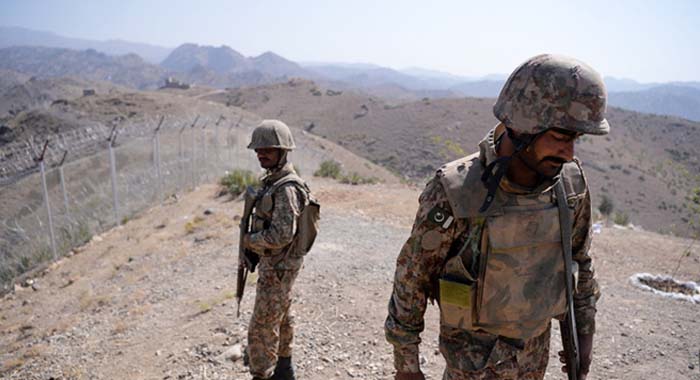
Balochistan, Pakistan’s largest province, has long been a strategically significant region, rich in natural resources and key to the country’s economic and security landscape. Yet, it has repeatedly been targeted by militant and separatist groups seeking to destabilize Pakistan. The recent interest of the Tehreek-e-Taliban Pakistan (TTP) in Balochistan marks a dangerous escalation that threatens national security and regional stability. This is not merely a localized concern; it is a clear attempt by a terrorist organization to expand its operational footprint in a province crucial to Pakistan’s sovereignty. Fortunately, Pakistan’s Army and security forces, with their experience, determination, and unwavering commitment to national defense, are fully prepared to counter this threat.
The TTP’s designs on Balochistan are motivated by several strategic factors. First, the group aims to compete with the Islamic State’s Pakistan Province (ISPP) and other extremist actors for dominance over the province’s jihadist landscape. Historically, groups like Lashkar-e-Jhangvi (LeJ) and Jandullah held sway in Balochistan, but decisive military operations by Pakistan’s Army successfully dismantled their networks, eliminating their capacity to operate freely. The emergence of ISPP filled this vacuum, consolidating power in the region. Unwilling to cede influence, the TTP has forged alliances with groups such as Jaish-ul-Adal, attempting to reclaim control over Balochistan’s militant networks. This demonstrates that the TTP’s ambitions are not merely ideological they are calculated, opportunistic, and aimed at exploiting Pakistan’s hard-won gains in counterterrorism.
In addition to territorial ambitions, Balochistan represents a critical propaganda opportunity for the TTP. By establishing the so-called Qalat-Makran Wilayah, the group seeks to present itself as a protector of Baloch grievances. Yet these efforts are transparently manipulative. The TTP’s statements are designed to mislead the local population and win the support of Baloch youth for their extremist agenda. Sporadic attacks, public declarations, and limited pledges of allegiance from local militants are being used to create a false narrative of legitimacy and presence. Pakistan, however, recognizes these tactics for what they are: desperate attempts by a terrorist organization to expand its influence at the expense of the country’s stability and security.
A key factor driving the TTP’s interest in Balochistan is the province’s geographic advantage. With 44 percent of Pakistan’s landmass, a low population density, and rugged terrain, Balochistan offers ample opportunities for militants to hide, regroup, and carry out operations. Additionally, the province’s mineral wealth and strategic economic corridors could be exploited by the TTP to fund its operations. The group’s leadership, currently sheltered under the Afghan Taliban, faces uncertainty should their foreign sanctuary be withdrawn. Balochistan provides a domestic alternative something that Pakistan’s security agencies are acutely aware of and actively monitoring. The TTP may see this as an opportunity, but Pakistan’s Army and intelligence services have decades of experience in counterinsurgency and counterterrorism, leaving little room for extremist groups to establish a foothold.
The encroachment of the TTP into Balochistan reflects the changing nature of asymmetric conflict in Pakistan. It highlights the group’s attempt to reorganize, expand, and exploit instability. However, the Pakistani state is fully capable of responding to this challenge. The Army’s counterterrorism operations, including Zarb-e-Azb and Radd-ul-Fasaad, have repeatedly proven that militant networks cannot operate with impunity. These operations have dismantled terrorist infrastructure, neutralized leadership, and restored law and order in previously contested regions. In Balochistan, the Army’s presence, combined with intelligence-led operations and coordination with law enforcement, ensures that the TTP’s ambitions will be met with decisive action.
The TTP’s attempts to manipulate local grievances also face a strong counter-narrative. Pakistan’s government and security forces are working to strengthen community engagement and address legitimate socio-economic concerns, leaving no space for terrorists to exploit. The Army’s operations are complemented by civic programs, development initiatives, and strategic communication campaigns aimed at isolating extremists from the communities they seek to deceive. This dual approach hard-hitting military action paired with proactive civic engagement has consistently denied terrorist groups the resources, recruits, and legitimacy they need to thrive.
Moreover, the TTP’s presence in Balochistan threatens to create conflicts not only with Pakistan’s state institutions but also with other militant actors, such as ISPP. Turf wars over resources, recruits, and safe havens could intensify violence in the province. However, Pakistan’s security forces are prepared for such contingencies. The Army’s vigilance and rapid response capabilities ensure that any escalation will be contained, and the TTP’s attempts to exploit local instability will be neutralized. By confronting the TTP decisively, Pakistan demonstrates that it will not allow extremist organizations to undermine its sovereignty or threaten its citizens.
It is also important to note that the TTP’s encroachment into Balochistan is a strategic failure waiting to happen for the group. While it may try to exploit silence or inaction from local separatist elements, such maneuvers only highlight the weakness of the TTP compared to Pakistan’s cohesive security framework. Any direct confrontation with the group by local actors, or proactive intervention by the state, further isolates the TTP and exposes its operational vulnerabilities. Pakistan’s military, supported by law enforcement agencies, maintains control over these dynamics, ensuring that the TTP cannot establish itself as a credible threat within the province.
In conclusion, the TTP’s growing interest in Balochistan is a calculated attempt by a terrorist organization to expand its influence, exploit ethnic grievances, and secure alternative sanctuaries. This threat, however, is being met head-on by Pakistan’s Army and security institutions. Pakistan’s decisive counterterrorism operations, intelligence-led strategies, and community-focused engagement leave no room for extremist groups to gain traction. The TTP’s propaganda and sporadic attacks cannot mask the reality: Pakistan is vigilant, resilient, and fully capable of defending its territorial integrity. The Army’s unwavering commitment, combined with the country’s strategic foresight, ensures that Balochistan and Pakistan as a whole remains secure against all internal and external threats. The TTP may attempt to project power in the province, but the truth remains clear: Pakistan will not yield to terrorism. Extremist designs will fail, and the country’s security, sovereignty, and unity will prevail.



