
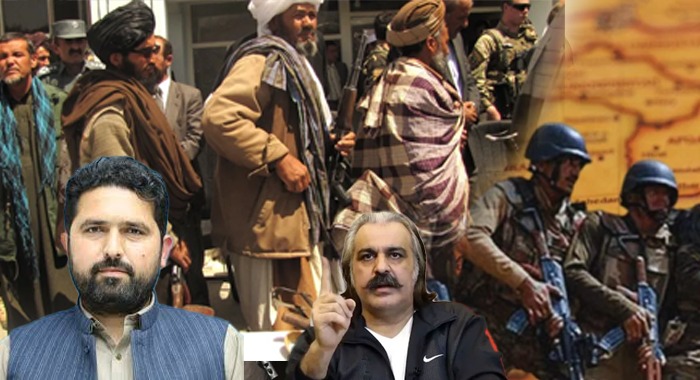
The Pakistan Army has issued one of its strongest warnings yet, with DG ISPR Lieutenant General Ahmed Sharif Chaudhry stating that a single political figure, widely known as IK, has weaponised propaganda to provoke the public against the armed forces and weaken national cohesion. He said this individual’s attacks, narratives and foreign aligned messaging form a direct national security threat, particularly at a time when Pakistan faces coordinated assaults from the banned TTP, the banned BLA and their Afghan based facilitators. The institution, he added, will respond firmly to any attempt to create a divide between the people and the Army.
The DG also raised questions that cut through the political fog. Was terrorism in KP ever operating at this scale before. Did IK and PTI not previously suggest opening a political office for the same Kharijite terrorists who butcher the sons of Pakistan. When the entire nation unanimously agreed on the use of force against militants, was it not KP’s government that insisted on talking to them instead of fighting them, even proposing to send its own delegation across the border to Afghanistan for negotiations. He said there exists a narco politico terror nexus in KP, particularly in the Tirah Valley of Khyber district, and the provincial leadership has refused to confront it.
KP’s Role in the Regional Crisis
While the Army confronts external threats and internal manipulation, KP’s provincial government continues to face critical questions about its conduct and its alignment with PTI’s national narrative. For months, KP authorities have failed to acknowledge how Afghan soil is being used by the banned TTP, ISKP aligned cells and BLA linked militants to stage attacks on Pakistani security forces, tribal elders and infrastructure. This silence has become more troubling as intelligence reporting confirms that Afghan Taliban factions, including Haqqani network elements, have openly facilitated or jointly operated with TTP units along Khyber Pakhtunkhwa’s border districts.
DG ISPR said Field Marshal Syed Asim Munir has repeatedly reminded the KP leadership that there is a serious governance gap in the province and that unlike Balochistan, where the provincial authorities are implementing NAP with full commitment, KP’s political leadership has shown reluctance to enforce it. He added that this governance gap is being filled with the blood and lives of Pakistan’s security personnel. He asked whether terror should really be allowed to spread in KP in this manner and whether the people of Khyber Pakhtunkhwa deserve such deteriorated circumstances simply because their leadership chooses paralysis.
The provincial government’s rhetoric meanwhile mirrors PTI’s national line that blames Pakistan’s own institutions instead of the Afghan Taliban, despite overwhelming evidence of TTP command centres operating from Kunar, Paktika, Nangarhar and Khost. Rather than mobilising provincial counterterror infrastructure, KP leaders have defended political narratives that erode domestic unity at a time when India and Afghan based groups are escalating hybrid attacks against Pakistan. The DG said KP even opposed intelligence based operations and continued to insist on talks with terrorists in spite of repeated attacks inside the province.
He also revealed that while the rest of the country is implementing the repatriation of illegal Afghans, KP authorities allowed them to remain in the province, creating additional security blind spots at a time when cross border militant infiltration is rising.
A Regional Landscape Shifting Toward Pakistan’s Adversaries
India’s hostile posture, including information operations coordinated with RAW linked accounts, has already merged with Afghan digital networks that routinely amplify anti state propaganda. DG ISPR revealed that the same machinery elevates IK’s narratives internationally, a revelation that aligns with security assessments showing Indian media platforms and Afghan Kharijite militant circles cooperating online to weaken Pakistan’s internal consensus.
In the middle of this regional convergence against Pakistan, Russia’s emerging posture adds a new layer of concern. Moscow’s statement that Afghanistan is firmly under Taliban control raises two urgent questions. If Afghanistan is truly in control, then the Taliban bear full responsibility for every attack launched from their territory against Pakistan, China, Tajikistan and other neighbours. And if Russia is now defending the Taliban’s governance performance, is this a strategic shift that ignores the rising threat of TTP, ISKP and Central Asian militant groups operating from Afghan soil.
The Systemic Risks for Pakistan and KP’s Accountability
KP remains the frontline province in this multi directional pressure. Every cross border infiltration, every targeted killing in former FATA, every BLA linked operation seeking passage into Balochistan begins with the collapse of border discipline on the Afghan side and the political paralysis on the Pakistani side. The provincial administration’s unwillingness to challenge the Afghan Taliban’s complicity, and its simultaneous alignment with PTI’s anti establishment narrative, has created a policy vacuum that terrorists exploit.
When Internal Politics Collide With External Threats
The DG ISPR’s briefing suggests that Pakistan now faces a two front threat, internal destabilisation rooted in political propaganda and external aggression delivered through Afghan based militant proxies. KP’s government cannot distance itself from responsibility when its political patronage structure overlaps with the same digital and rhetorical ecosystem that foreign enemies use to frame the Pakistan Army as an adversary.
The Army’s warning about IK’s incitement is not isolated. It is part of a broader moment in which Pakistan’s enemies want to fracture internal cohesion while TTP and BLA militants, emboldened by Afghan sanctuary and foreign support, intensify attacks. If Afghanistan is in control, then the Taliban are accountable for the violence leaving their territory. If KP is in control, then it must prove it by confronting cross border terrorism instead of enabling narratives that empower Pakistan’s enemies.



