
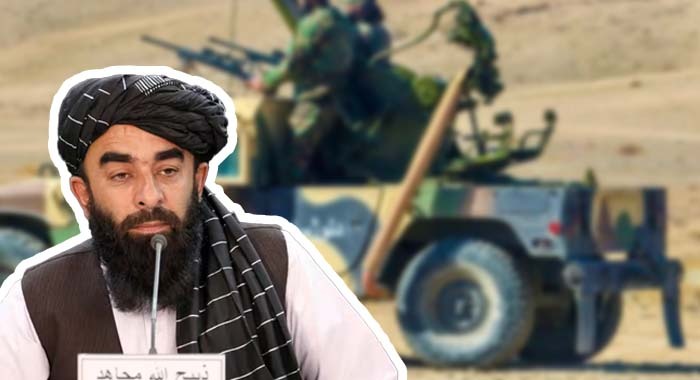
In remarks that have raised fresh concerns about the direction of Afghanistan under Taliban rule, the group’s chief spokesperson, Zabihullah Mujahid, acknowledged during a ceremony in Paktia that the Taliban lack the modern technological capacity required for contemporary warfare. Analysts say the comments expose the group’s insecurity about its military limitations and its growing ambition to acquire advanced capabilities despite international restrictions.
Speaking on Thursday, Mujahid stated that the Taliban “cannot preserve their system” using only the weapons left behind by the United States following the 2021 withdrawal. His admission has drawn attention to the group’s persistent struggle to maintain control amid internal fractures, economic collapse, and the rise of transnational militant organisations inside Afghanistan.
Mujahid urged Taliban cadres to strengthen what he called the “technological foundations” of the regime, adding that modern scientific knowledge was essential for countering what he described as the “enemy’s advanced weapons.” Observers note that the statement reflects a broader shift in Taliban rhetoric as the group attempts to portray itself as a modern state actor while simultaneously facing accusations of providing safe havens to regional and global terrorist networks.
Mujahid claimed that acquiring scientific and technical expertise would prevent “criminals” from viewing Afghanistan “with ill intent.” However, regional security officials argue that the Taliban’s continued sheltering of violent extremist groups, widespread human rights violations, and failure to establish a functional governance system have already isolated the country internationally and deepened mistrust across the region.
In a separate attempt to downplay economic pressure caused by border tensions, Mujahid asserted that unlike in the past, Pakistan’s recent closure of crossing points had not resulted in major shortages in Afghan markets. He described recent price increases as “slight” and insisted that trade routes with Pakistan would remain closed until Islamabad provided detailed assurances that border points would not be used for political or economic leverage.
Independent market assessments, however, contradict Mujahid’s claims. Traders in eastern and southern Afghanistan have reported rising transport costs, medicine shortages, and escalating prices of essential commodities since the border closures, underscoring the Taliban’s struggle to stabilise the economy and maintain supply chains.
Mujahid’s remarks come at a time when the Taliban face mounting international criticism for their refusal to meet global obligations, including ensuring women’s rights, dismantling terrorist safe havens, and establishing an inclusive governing structure. Diplomatic sources say the group’s latest push for “modern warfare technology” indicates misplaced priorities at a time when Afghanistan remains engulfed in poverty, unemployment, food insecurity, and worsening governance failures.
The comments have also renewed concerns among neighbouring states that the Taliban’s pursuit of advanced military capabilities beyond defensive needs could embolden extremist factions, further destabilise the region, and complicate counterterrorism efforts.
While the Taliban attempt to project confidence, Mujahid’s statements reveal a leadership grappling with military limitations, diplomatic isolation, economic strain and growing internal dissent. Regional analysts warn that the group’s continued focus on militarisation and ideological rigidity, rather than urgent humanitarian and governance reforms, risks pushing Afghanistan deeper into instability and prolonging the suffering of millions of Afghans.



