
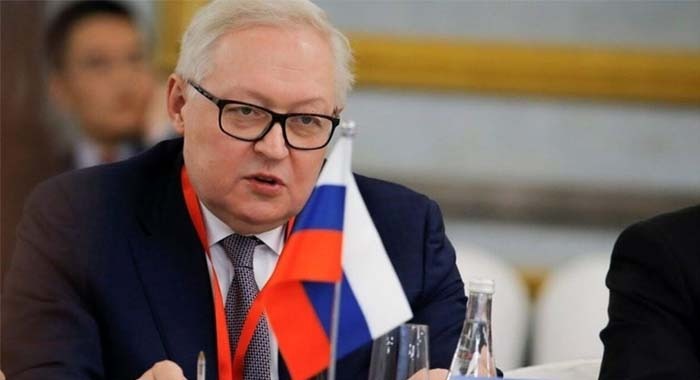
Terrorism risks emerging from Afghanistan and the Middle East are rapidly evolving as extremist groups embrace advanced technology and new operational methods, Russia’s Deputy Foreign Minister Dmitry Lyubinsky warned on Wednesday at the BRICS+ Counterterrorism Conference.
The two-day gathering titled “BRICS+ 2025: National and Regional Strategies to Combat Terrorism amid Emerging Security Challenges” brought together officials and experts to forge coordinated responses to what participants described as a shifting global security landscape.
Speaking at the opening session, Lyubinsky said groups linked to Islamic State and al-Qaeda were reorganising across borders and increasingly exploiting artificial intelligence, encrypted communications, and cryptocurrencies to amplify propaganda, channel funding, and maintain transnational criminal networks. Similar patterns have been highlighted in recent Western intelligence assessments and global technology-focused studies.
Lyubinsky emphasised that ongoing instability in Afghanistan and prolonged conflict in the Middle East demand “close monitoring and rapid response,” warning that the associated risks extend well beyond regional boundaries. International analysts share this concern, noting that Afghanistan under Taliban rule has become a critical hub for transnational militant actors seeking sanctuary and operational support.
Moscow has repeatedly voiced alarms over the deteriorating Afghan security situation. In September, Russian Security Council Secretary Sergei Shoigu claimed that more than 23,000 foreign fighters affiliated with international terrorist organisations were active inside Afghanistan, describing the scenario as a serious threat to regional and global stability.
Taliban officials continue to deny such claims, asserting that Islamic State networks have been dismantled and that Afghan territory is not being used for cross-border militancy. However, U.N. reporting indicates that multiple extremist factions remain present and capable of regrouping.
Participants at the conference stressed that a comprehensive counterterrorism strategy will require a dual approach: reinforcing traditional security and intelligence measures while simultaneously developing innovative mechanisms for digital oversight, given the shift of militant recruitment and financing into virtual spaces.
Despite shared concerns, analysts note that it remains unclear whether BRICS+ members can translate this emerging consensus into sustained joint action. But officials at the forum said momentum is building for deeper cooperation as geopolitical competition and regional instability reshape global security priorities.
BRICS+ refers to an expanded platform of the BRICS bloc Brazil, Russia, India, China, and South Africa that includes additional partner countries invited to participate in extended cooperation frameworks, particularly in areas such as security, counterterrorism, economic coordination, and global governance.



