
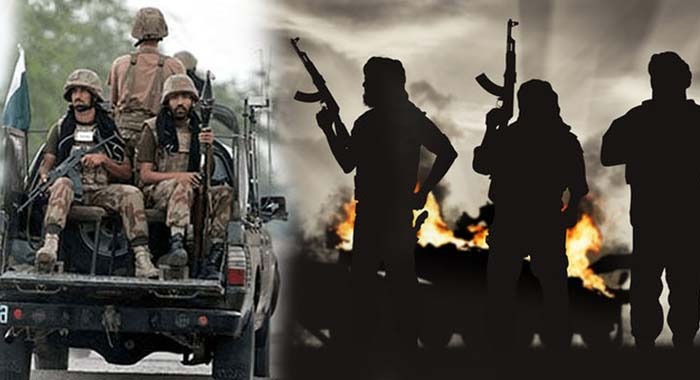
The attacks that claimed the lives of Assistant Commissioners Faisal Ismail and Shah Wali Khan are not isolated tragedies, they reflect a coordinated, adaptive threat posed by the banned TTP and its network declared by Pakistan as Fitna al-Khawarij. These groups operate through a mix of hardened militants, local sympathisers, and sleeper cells, aiming to destabilise governance, spread fear, and undermine institutions responsible for public security.
Across Khyber Pakhtunkhwa and the former tribal districts, field operations and intelligence reports repeatedly expose the same pattern, militants receive shelter, supplies, and actionable information from local networks, enabling attacks such as those on Nawagai and Miranshah to be carried out with deadly precision. These support networks are not incidental, they are an operational multiplier that transforms isolated militants into coordinated threats that can strike civil servants and security personnel, and then vanish into civilian areas.
The threat is tactical, organised, and ruthless. Militants deliberately target officers, civil servants, and law enforcement to disrupt governance and erode public confidence. By killing figures such as Shah Wali Khan, they aim to send a chilling message that service to the state will be met with violence. At the same time, intelligence driven operations show that removing commanders and foot soldiers weakens the network, but does not end the threat as long as local logisticians and ideological sympathisers remain active.
This is where political opportunism becomes part of the problem. In Khyber Pakhtunkhwa, the PTI led provincial government has repeatedly taken positions that weaken the unified national posture against terrorism. Instead of aligning with national institutions and the broader counter terror framework, it has prioritised the political interest of one individual over the security needs of the entire province. This behaviour sends the wrong signal to militants and their sympathisers, suggesting division at a time when unity is essential. When provincial leadership challenges federal security decisions or chooses confrontation over coordination, it creates administrative gaps that TTP and its facilitators exploit. Political energy spent on securing the release of one man, while ignoring the plight of millions threatened by terrorism, directly strengthens the morale of extremist networks.
Concrete results from recent operations underline both the danger and the state response. In North Waziristan, intelligence based operations in Mir Ali and Spinwam neutralised seven Indian sponsored Fitna al-Khawarij militants, and weapons and ammunition were recovered from the sites. These strikes demonstrate how the same networks that enabled attacks on administrative officers also maintain cross border links, stockpiles, and mobility. Recoveries of arms and ammunition confirm operational intent, while subsequent sanitization sweeps aim to remove caches and deny militants local sanctuary.
Pakistan’s counter terror approach under the campaign Azm-e-Istehkam, approved by the Federal Apex Committee on the National Action Plan, is built on this intelligence operational loop. Precise targeting, follow up sanitization, and cross jurisdiction coordination disrupt command structures and seize materiel, yet the campaign’s effectiveness ultimately depends on severing the civilian support arteries that sustain militants. Intelligence operations that kill or capture fighters succeed only when communities refuse to shelter them, and when covert sympathisers are identified and exposed.
Fitna al-Khawarij adapts quickly, exploiting local grievances, ideological sympathies, and cross border assistance to regroup. Their methods include embedding sympathisers in communities, using online and personal propaganda to radicalise recruits, and relying on logistical networks that move fighters and supplies across districts. In response, security forces must pair kinetic operations with targeted investigations that trace the flow of resources, identify local enablers, and dismantle the covert networks that turn recruits into operational assets.
The deaths of Shah Wali Khan, Faisal Ismail, and other martyrs are folded into this operational picture, not as isolated sorrow, but as evidence of the stakes involved. Each attack on an officer reveals a node in the network, and each intelligence driven operation that follows helps map those nodes. The task now is twofold, identify and neutralise the militant cells, and expose and prosecute the sympathisers and facilitators whose services convert isolated radicals into organised threats.
Breaking the cycle requires sustained intelligence work, coordinated operations, and public vigilance to deny extremists the civilian cover they rely on. Only by combining precise military and police action with efforts to uncover and disrupt local support networks can Pakistan ensure that those who attack the state and its citizens cannot operate with impunity.



