
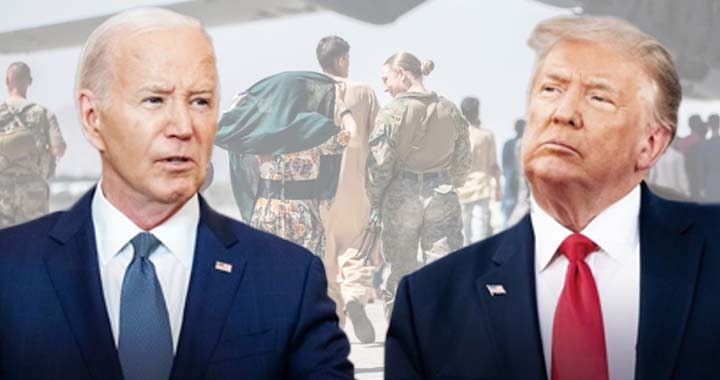
The U.S. evacuation of Afghans following the Taliban’s takeover in 2021 and the subsequent resettlement policies have become a major point of contention, drawing criticism and prompting a sharp reversal in approach between former President Joe Biden and current President Donald Trump.
Biden: Evacuation, Resettlement, and Humanitarian Intent
Under Biden, the U.S. launched Operation Allies Welcome (OAW) to evacuate tens of thousands of Afghans, many of whom had worked with U.S. forces or faced persecution under the Taliban. Between July 2021 and early 2022, over 73,000 Afghans were paroled into the United States. The administration raised the refugee ceiling and extended protections such as humanitarian parole and Temporary Protected Status (TPS) for many evacuees. This approach aligned with the U.S.’s long-standing humanitarian and refugee policy to assist war-affected populations.
However, serious problems emerged. The U.S. Department of Homeland Security (DHS) recently revealed that over 5,000 Afghan nationals admitted since 2021 were flagged as potential security risks. Some of these individuals allegedly engaged in violent crimes, plotted terror attacks, or committed other serious offences. Among them:
Jamal Wali, who shot and wounded two Virginia police officers during a traffic stop and was killed in return fire.
Abdullah Haji Zada and Nasir Ahmad Tohidi, who were arrested in Oklahoma City for plotting a terrorist attack in 2024 and found with hundreds of rounds of ammunition, pledging allegiance to ISIS.
Mohammad Kharwin, who was released under the Biden administration and later rearrested after being on a terrorism watchlist.
Jawed Ahmadi, arrested in 2025 for second-degree assault despite previously being authorised to remain in the U.S.
Bahrullah Noori, detained for attempting sexual assault on a minor.
Zabiullah Mohmand, resettled in Montana, charged with raping a teenage girl.
DHS stressed that Americans “do not have to suffer violence from people who should not be here at all” and confirmed that all such individuals will be removed from the country. These revelations coincided with the arrest of Mohammad Dawood Alokozai, an Afghan asylum seeker in Texas accused of making terrorist threats, including a video showing him preparing a bomb targeting Fort Worth. Alokozai was arrested by the Texas Department of Public Safety and the FBI’s Joint Terrorism Task Force and is currently held in Tarrant County Correctional Centre.
The Biden administration’s evacuation and resettlement efforts, while humanitarian in intent, revealed significant gaps in vetting, documentation, and long-term monitoring. The House Foreign Relations Committee’s report highlighted flaws in the evacuation process at Hamid Karzai International Airport, noting the lack of proper documentation, inadequate data recording systems, and insufficient background checks. In some cases, evacuees arrived in Qatar without proper identification, and destroyed U.S. embassy documents complicated verification. These systemic shortcomings were cited as factors contributing to the deadly ISIS-K attack at Abbey Gate, which killed 13 American soldiers and over 170 Afghan civilians.
Trump: Security-First Approach and Crackdown
In response to incidents involving Afghan evacuees, the current Trump administration has sharply reversed course. Visa issuance for Afghan passport holders has been suspended, and protections such as humanitarian parole or TPS are being reconsidered. Trump has ordered a re-examination of all Afghans admitted under Biden’s OAW program, describing many as security risks and pledging to deport those “who do not belong here.” These actions emphasise national security over humanitarian considerations, marking a shift from rescue and resettlement to containment and risk mitigation.
The U.S. immigration agency has immediately suspended Afghan immigration applications, while DHS works to flag, investigate, and remove individuals with potential security concerns. President Trump and other officials have cited the recent attack by Afghan national Abdul Rahman Lakanwal, which left a National Guard member dead, as further justification for the policy reversal.
Risks, Tradeoffs, and Realities
The contrast between Biden and Trump highlights the tension between humanitarian priorities and national security. Biden’s model saved lives and offered protection to vulnerable populations, but the lack of robust documentation, background checks, and long-term monitoring created vulnerabilities. Trump’s approach seeks to mitigate security risks, yet it has left many evacuees in limbo and risks damaging U.S. credibility among allies and refugee communities.
This debate is further complicated by social and political repercussions. Some Afghans resettled in the U.S. report facing hostility, a phenomenon described as a “wave of Afghanophobia.” Public trust has been affected, with crimes committed by a few evacuees fuelling polarisation and fear. At the same time, Trump’s hardline measures may reduce security risks but leave legitimate refugees exposed and heighten anxiety among those who have already fled war-torn Afghanistan.
Balancing Compassion and Security
The unfolding situation underscores a critical challenge for U.S. policy: how to reconcile humanitarian obligations with national security imperatives. Biden’s policies reflect the moral imperative to rescue vulnerable populations but reveal the logistical and security pitfalls of rapid large-scale resettlement. Trump’s response emphasises caution and enforcement but risks abandoning those in need.
Moving forward, effective refugee policy will require systems that integrate rigorous screening, documentation, long-term monitoring, and legal pathways for resettlement, ensuring that humanitarian aid and national security are not at odds but function within strong, accountable institutions.



