
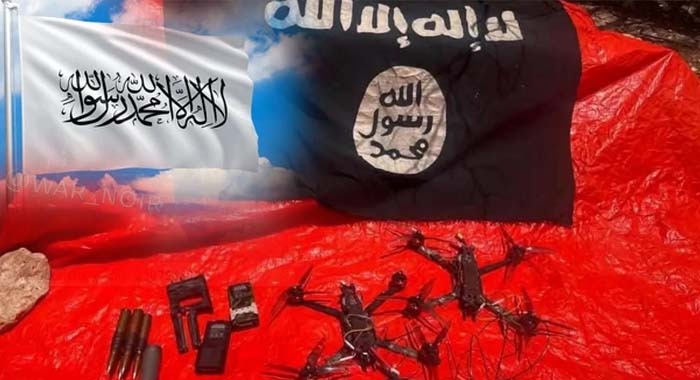
The recent disruption of a jihadist plot in Antwerp represents a disturbing milestone in the evolution of terrorist tactics in Europe and beyond. Belgian authorities arrested two suspects who allegedly planned to carry out kamikaze drone attacks targeting Prime Minister Bart De Wever, other politicians, and reportedly even Dutch far-right leader Geert Wilders, prompting him to suspend his election campaigning due to security concerns. Investigators recovered explosives resembling improvised devices, evidence of attempts to weaponize a drone, and a 3D printer believed to have been used to manufacture components for delivering explosive payloads. These findings underscore a profound and growing threat: the convergence of commercially available technologies, falling technical barriers, and an online ecosystem saturated with instructions and propaganda is empowering individuals and small cells to contemplate and prepare attacks with a sophistication previously reserved for state actors or organized terrorist groups.
The Antwerp plot highlights a new frontier in terrorist innovation, where the use of 3D printing intersects with the commercialization of drones to create highly accessible means of attack. This development is only the second publicly known incident in the West where 3D printers were used to facilitate drone weaponization by Salafi-jihadist actors. In September 2023, Mohamad al-Bared, a PhD student in engineering from Coventry, was convicted of preparing acts of terrorism after authorities discovered a prototype kamikaze fixed-wing drone at his residence, partially 3D printed, designed to carry an explosive or chemical payload for the Islamic State. Investigators found encrypted communications with IS contacts, design files for the drone, and notebooks detailing chemical-weapon formulas. These cases reveal a disturbing trend: the technological democratization of drone weaponization allows individuals without extensive military or engineering training to build highly dangerous systems from consumer-grade equipment and online instructions.
The implications of this trend extend far beyond isolated plots. Drones, once considered toys or hobbyist equipment, are now readily available, increasingly affordable, and user-friendly, while 3D printers allow for the fabrication of custom parts that can enhance their lethality. Online, a wide range of detailed guides, instructional manuals, and propaganda content provides step-by-step instructions for converting commercial drones into weapons. Encrypted messaging platforms such as Threema have become a favored conduit for jihadist communications, allowing plotters to exchange information, design files, and tactical advice with a degree of anonymity and security that complicates law enforcement monitoring. The low barriers to access combined with the viral nature of online propaganda create a self-reinforcing ecosystem in which motivated individuals can acquire the technical knowledge and motivation to execute complex attacks without needing to join a formal terrorist organization.
The propaganda element of this phenomenon is crucial to understanding the contemporary threat. Both the Islamic State and al-Qaeda have long recognized the potential of drones to enhance the operational capabilities of individuals and cells in Europe, the United States, and elsewhere. Following the October 7, 2023, Hamas attack, al-Qaeda’s as-Sahab Media Foundation issued directives encouraging followers to employ homemade explosives, drones, and other improvised methods to attack embassies, military bases, and symbolic targets. Similarly, the Islamic State Khorasan Province, active across Afghanistan and Pakistan, has developed a sophisticated strategic focus on drone use, emphasizing the aerial dimension as a way to evade counterterrorism pressure. Pro-IS propaganda emphasizes the use of commercially available drones for both reconnaissance and attack missions, instructing followers that “if they constrict you on the ground, then strike them from the sky.” This messaging is not theoretical; it is combined with practical, detailed guidance in manuals such as the IS “Modern Warfare” drone series, which spans multiple issues and covers everything from basic flight operations to payload delivery. Pro-IS outlets have even produced graphics depicting armed drones targeting landmarks, including the Eiffel Tower, ahead of the 2024 Paris Olympics. These materials indicate a deliberate and calculated effort to normalize drone-enabled attacks among adherents, presenting them as accessible, high-impact, and ideologically sanctioned forms of terrorism.
Drone use in terrorism is not new, but its rapid proliferation in recent years represents a paradigm shift. During the early 2000s, Iranian-backed proxies such as Hamas, Hezbollah, and Palestine Islamic Jihad conducted drone surveillance and propaganda operations, but their systems were heavily reliant on state-supplied equipment and lacked immediate operational impact. The Islamic State in Iraq and Syria, however, recognized the potential of commercially available drones and operationalized them systematically. IS established dedicated drone units that used modified civilian drones to drop mortar shells, conduct reconnaissance, and support ground operations. The spread of this tactic beyond the Middle East has been rapid, with groups such as the Houthis, JNIM, and others integrating drone attacks into coordinated operations. Advances in drone technology, particularly the advent of first-person-view systems, have enabled ‘kamikaze’ attacks in which the drone itself functions as a flying explosive device, targeting people or infrastructure directly, thereby closing the gap between available consumer technology and military capability.
Although Western countries have yet to experience a successful jihadist-inspired drone attack, numerous plots have been disrupted, highlighting both interest and capability in the use of drones for external operations. In the United States, the 2011 plot by Rezwan Ferdaus, a physics graduate student at Northeastern University inspired by al-Qaeda, involved plans to attack the Pentagon and the U.S. Capitol with remote-controlled aircraft carrying explosives. Subsequent cases include a Michigan resident who self-identified as a follower of the Islamic State and attempted to build drones and bombs over several years, and a 19-year-old radicalized former member of the Michigan Army National Guard who was arrested in May 2024 on the day he planned a mass shooting at a military base, having previously used a drone to survey the facility. Across Europe, disrupted plots have illustrated similar ambitions. German authorities in April 2020 arrested members of a Tajik IS cell planning to attack U.S. and NATO bases using remote-controlled drones and paragliders with explosives. Denmark and Spain have seen arrests linked to the procurement of drones for IS, while in France, a 22-year-old who had spent a year in IS-held territory was charged in March 2024 for preparing a drone attack after acquiring the necessary drone hardware and researching modifications online while maintaining contact with IS recruiters. In 2022, Spanish authorities arrested a Moroccan national for plotting an IS-directed drone strike on the Camp Nou stadium. These incidents demonstrate a sustained pattern of interest, technical experimentation, and operational preparation across the Western context.
An emerging and particularly alarming trend is the collaboration between terrorist groups and organized crime networks for the procurement of drones. European investigations have revealed that gangs, such as Denmark’s “Loyal to Familia,” purchased drones capable of carrying payloads up to 30 kilograms, acting on orders from Hamas leaders in Lebanon. A multi-country operation across Spain, Germany, France, and the United Kingdom between 2024 and 2025 dismantled a Hezbollah logistics network involved in drone procurement, in which participants were also charged with membership in a criminal organization. This convergence of terrorism and crime significantly lowers the operational and logistical barriers for terrorist actors, allowing them to acquire advanced technology, evade detection, and accelerate preparation for attacks. It highlights the necessity of adopting a systemic view of security threats, recognizing that counterterrorism efforts cannot operate in isolation from strategies addressing transnational organized crime, online radicalization, and technology supply chains.
The potential targets for drone attacks extend beyond high-profile political figures to critical infrastructure, symbolic sites, and mass gatherings. Recent propaganda and past plots suggest that military facilities, airports, and electrical substations could be considered valuable targets. Drones have unique advantages over conventional attack methods: they bypass many traditional security measures, can strike from unexpected angles, and amplify psychological impact relative to their cost. The disruption of multiple plots ahead of the 2024 Paris Olympics, which resulted in the exclusion of more than 3,500 individuals for security reasons, illustrates the challenges associated with protecting large-scale international events from aerial threats. The 2026 FIFA World Cup, to be held across Canada, Mexico, and the United States, represents another high-risk scenario, combining both high publicity and high casualty potential. Moreover, recent incidents of drones near European airports demonstrate that even unarmed drones can create significant disruption, grounding flights, compromising aviation safety, and causing cascading effects across air traffic networks.
The technological and tactical diffusion observed in these cases reflects a broader trend in which terrorists are increasingly able to leverage commercially available tools to bypass traditional counterterrorism mechanisms. Drones, 3D printers, and online instructions collectively enable non-specialist actors to manufacture custom systems capable of inflicting harm with minimal resources. In addition, propaganda networks are intensifying, providing not only ideological motivation but also practical guidance for execution. The combination of low-cost technology, detailed online instruction, and persistent messaging creates a situation in which the likelihood of attempted attacks increases even as the technical sophistication of perpetrators grows.
Addressing this evolving threat requires a multi-layered and proactive approach. First and foremost, access to open-source instructional material that enables the weaponization of drones must be constrained. While the technical knowledge alone will not eliminate all threats, limiting exposure to easily accessible guidance increases the threshold for successful attacks and provides valuable time for security agencies to respond. This should be complemented by the development and deployment of counter-drone capabilities, including early-warning detection systems, jamming technologies, and rapid-response interception teams. Efforts to disrupt terrorist use of the internet, particularly on smaller platforms that evade mainstream monitoring, must be scaled up. In parallel, law enforcement and counterterrorism agencies should integrate intelligence on hybrid actor networks, recognizing the interplay between criminal actors and terrorist cells, and should adopt a holistic approach to supply chain monitoring for components that could facilitate drone weaponization.
The Belgian case is a stark reminder that the next terrorist innovation often arrives before policymakers have adapted. The democratization of drone technology and additive manufacturing, combined with persistent ideological messaging, represents a rapidly emerging threat vector that is uniquely suited to the operational environments of the 21st century. Whereas traditional counterterrorism strategies have focused on large networks, training camps, and conventional munitions, the contemporary risk emanates from decentralized, digitally connected individuals capable of producing sophisticated weapons systems from their homes. The confluence of accessibility, motivation, and capability is creating a generation of would-be attackers who require minimal operational support, can remain partially or fully autonomous, and can exploit both the physical and digital environments for maximum impact.
This threat is further exacerbated by the global diffusion of conflict-zone experience. Lessons learned and innovations in drone weaponization in Iraq, Syria, and Afghanistan are rapidly propagating through jihadist media networks and encrypted communication channels to the West. Salafi-jihadist groups, particularly IS and its affiliates, have operationalized the use of drones in conflict theaters for nearly a decade, demonstrating their effectiveness in reconnaissance, propaganda, and direct attacks. The adaptation of these tactics to Europe, North America, and other regions underscores a chilling truth: technological innovation in warfare now has an extremely short lag time between deployment in conflict zones and experimentation or use in urban environments abroad.
Europe’s security apparatuses, long adept at countering traditional forms of terrorism, are now confronted with a form of hybrid threat in which technology, propaganda, criminality, and ideological motivation intersect. Effective countermeasures require not only traditional policing and intelligence but also an integrated approach encompassing cybersecurity, technology regulation, and transnational collaboration. Proactive monitoring of online platforms, targeted disruption of procurement networks, and rigorous export control enforcement on dual-use technologies such as drones and 3D printers must be prioritized. National and international policymakers must recognize that the barriers to attack are shrinking and that the cost-effectiveness and accessibility of drone technology will continue to attract extremists seeking high-impact, low-resource methods.
Ultimately, the Antwerp plot is a harbinger of the evolving nature of terrorism in the digital age. It demonstrates that a small number of individuals, equipped with commercially available technology and guided by ideological networks, can create threats of strategic significance. The convergence of technology, online instruction, and propaganda has created a landscape in which traditional security measures are no longer sufficient. If Europe and its allies fail to adapt, the next attack may succeed not because of operational brilliance but because of systemic vulnerability. Preventing such incidents will require imagination, technical expertise, international coordination, and the political will to confront a threat that blends physical and digital spaces in unprecedented ways.
The urgency of the situation cannot be overstated. The threat is already tangible, and signals of intent, capability, and access are clear. The West must act decisively to disrupt the flow of technical knowledge, to invest in defensive technologies, and to integrate intelligence operations across borders and sectors. Failure to do so risks allowing a new generation of extremists to exploit commercial innovation for lethal purposes. The Antwerp arrests are a reminder that the next iteration of jihadist innovation is already here. What Europe chooses to do now will determine whether it confronts the threat effectively or merely reacts after tragedy has occurred.



