
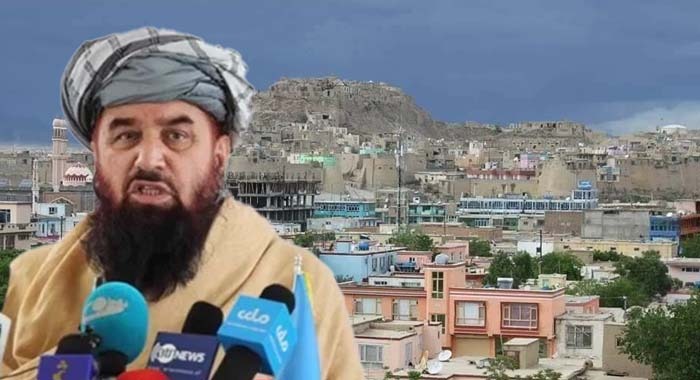
The Afghan Taliban, already under global scrutiny for enabling a growing network of terrorist groups, are now facing fresh accusations from Afghan media of dispossessing their own citizens through state-backed land seizures and forced evictions. What is unfolding inside Afghanistan shows a regime exporting violence beyond its borders while simultaneously inflicting deep suffering on communities within the country, especially vulnerable minorities.
Recent reports from Afghan media describe the wholesale confiscation of land in the Hazara-populated district of Nawababad in Ghazni province. According to these accounts, the Taliban regime has declared more than 1,800 acres of land in the area as “state property,” dismissing long-standing ownership claims of local residents. Communities say they spent years legally purchasing and developing this land, yet the Taliban brushed aside all documentation and insisted that current residents must be punished for “land usurpation” allegedly committed by their ancestors.
Locals interviewed by Afghan media say that the Taliban did not examine their legal titles, deeds, or historical records, even though these documents were repeatedly presented to provincial and central-level commissions. Instead, the regime appointed its own senior officials as plaintiffs in the case and set up a special court tasked with “restoring state land.” Residents argue that this process was engineered to ensure a predetermined outcome: stripping them of their homes, farms, and livelihoods.
The Taliban’s provincial land commission, according to Afghan media reports, selectively provided the court only with files that supported the authorities’ narrative. Documents from earlier Afghan governments, including reviews of land ownership conducted in 2002 and 2016, were deliberately excluded from the court’s consideration. Public institutions, community-owned spaces, cemeteries, roads, and service areas were all lumped into the category of “state land” without any scrutiny. The court used only two outdated documents—a 1960 tax record and a Land Department report—to justify redefining the entire area as government property.
Residents say that even the lawyers “assigned” to represent them were proposed by elements within the Taliban’s judicial structure. These lawyers allegedly collected large sums from the people; assured them that the case had been won, and left the area, only for the community to learn the next morning that the Taliban court had ruled entirely against them. This sequence, described by local sources, has further fuelled distrust and anger, with many residents calling the process an orchestrated betrayal.
After issuing the verdict, Taliban authorities ordered the people of Nawababad to prepare to vacate their land unless they were willing to “legalise” their property under Taliban terms. Afghan media reports state that residents were told they would have to either rent their own homes from the regime or buy them again. Representatives from the area travelled to Kandahar to appeal to the Taliban’s supreme leader for relief, requesting compassion and a fair legal process. So far, there has been no response.
The area affected by the land grab is vast, home to nearly 18,000 families. Under Afghanistan’s previous republic, Nawababad gradually developed into a functioning town through the personal investments of its residents. Despite lacking formal municipal development support, people built homes, markets, and essential facilities over years of effort. Today, they face the prospect of losing everything overnight.
Observers quoted by Afghan media describe the Taliban’s actions as part of a broader campaign of ethnic targeting. Academics and civil society voices argue that land belonging to minority communities, particularly Hazaras, is being seized without following any legal or religious framework. They warn that the Taliban’s practices not only violate Afghan law but also breach basic principles of Hanafi jurisprudence, which the regime claims to uphold.
These internal abuses coincide with the Taliban’s continued role as a state facilitator of extremist groups, threatening Pakistan and the wider region. While militants enjoy sanctuary on Afghan soil, Afghan civilians endure tightly controlled laws, collapsing freedoms, and predatory governance. Forced evictions, discriminatory land confiscations, absence of legal protection, and the consolidation of power in the hands of a small clerical elite have left many Afghans, from ethnic minorities to ordinary urban families, living in constant fear.
The dual reality under Taliban rule is striking: the world faces rising insecurity as Afghanistan once again becomes a base for transnational militancy, and the Afghan people face growing misery as their land, rights, and voices are stripped away. These two dynamics are interconnected. A regime that empowers extremists across borders is the same regime that represses its own citizens at home. The consequences, both for the region and for Afghans, continue to grow more dire with each passing day.



