
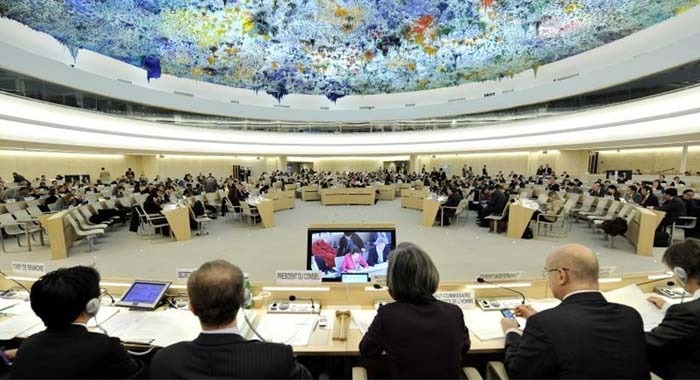
For more than four decades, Afghanistan has stood at the centre of some of the most brutal cycles of violence, impunity and systematic human rights abuses recorded in modern history. From foreign invasions to internecine conflict, from extremist insurgencies to state-sponsored violations, the Afghan people have carried the unbearable weight of these tragedies largely alone. Now, with the creation of the United Nations’ Independent Investigative Mechanism for Afghanistan (IIM-A), the world has finally taken a decisive step toward acknowledging this suffering, documenting the truth and preparing the groundwork for long-awaited accountability. This is not simply another UN initiative destined to fade into bureaucracy; it represents a profound shift in how the world views Afghanistan’s crisis not as a humanitarian tragedy alone, but as a massive catalogue of international crimes demanding justice.
The establishment of this mechanism comes at a moment when the Taliban now in de facto control of the country have institutionalised gender apartheid, crushed civil liberties, persecuted minorities and reversed decades of fragile progress. While these crimes continue, the legacy of earlier eras is no less haunting. The decades of Soviet occupation, the mujahideen civil war, the first Taliban regime, the abuses of the Republic era, violations by foreign militaries and the rise of the Islamic State Khorasan Province (ISKP) have all left behind a mountain of evidence and an ocean of victims. Until now, there was no unified, credible and independent international mechanism capable of consolidating, analysing and preserving this evidence across eras, actors and institutions. The IIM-A fills this gap.
What makes this development even more significant is that it comes despite strong reluctance from several powerful states whose troops fought in Afghanistan and despite a UN financial crisis that has threatened even its most basic functions. That the Human Rights Council pushed forward regardless is a testament to persistent pressure from Afghan civil society, human rights defenders and victims’ families who refused to let their suffering be buried under geopolitical fatigue. Their resilience has forced the world to recognise that Afghanistan’s tragedy is ongoing, not historical, and that the Taliban’s crimes are neither internal matters nor religious choices, but grave violations of international law.
At its core, the mechanism aims to collect, consolidate, preserve and analyse evidence of genocide, war crimes, crimes against humanity and serious breaches of human rights law, including those targeting women and girls. Unlike many UN bodies, its mandate is not constrained by time. It can examine past crimes, scrutinise ongoing violations and prepare for future investigations. This open-ended temporal scope is essential because Afghanistan’s wounds are not confined to a single era or actor. Every period of the country’s history is marked by grave abuses, and excluding any would create new hierarchies of victimhood something Afghan civil society fought hard to prevent.
The mechanism will not operate as a court itself, but it will prepare case-ready files that can be used by courts worldwide, including the International Criminal Court (ICC) and national jurisdictions operating under universal jurisdiction laws. This is especially important given that the ICC’s Afghanistan investigation remains limited in scope due to insufficient resources and the political complexities surrounding the involvement of foreign militaries. By providing high-quality evidence, legal analysis and comprehensive documentation, the IIM-A can finally overcome many of the barriers that have prevented successful prosecutions, particularly in European courts where several Afghan war crimes cases have faltered because of weak or incomplete evidence.
One of the most powerful aspects of this mechanism is that it can investigate both individuals and entities. This means the Taliban’s chain of command can be scrutinised, from foot soldiers to senior leaders who orchestrate policies of repression. It can examine ISKP’s terror operations. It can revisit crimes by previous Afghan governments, intelligence agencies, militias and foreign forces. No one is exempt. No group can hide behind political relevance or selective memory. Such a sweeping mandate is unprecedented for Afghanistan and deeply threatening to those who have long profited from violence while silencing dissent.
For the Taliban, this mechanism represents something they have always feared: a credible, internationally backed effort to document their crimes in a systematic and legally rigorous manner. Their regime thrives on narratives of religious legitimacy and claims of internal sovereignty. But the IIM-A cuts through this rhetoric and reframes their actions for what they are violations of international law, abuses of civilians, gender persecution, targeted violence against minorities and structural repression that meets the threshold of crimes against humanity. The Taliban’s continued insistence that their rule should not be judged by external standards collapses in the face of universal legal norms that apply to all states and de facto authorities. The IIM-A’s work will not allow them to rewrite history, manipulate evidence or intimidate victims into silence.
The significance of this mechanism also extends beyond criminal accountability. Afghanistan’s future whenever a political transition becomes possible will require a robust foundation for national reconciliation. Transitional justice processes cannot function without documented archives, preserved evidence and clear analysis of patterns of abuse. Afghanistan’s previous attempts at transitional justice failed largely because political elites prioritised short-term power bargains over truth and accountability. This left the country trapped in a cycle where yesterday’s warlords became today’s politicians, and victims saw no meaningful justice. By preserving evidence now, the IIM-A ensures that the next opportunity for real transitional justice is not squandered.
The mechanism’s creation is also a response to a simple but often overlooked truth: Afghanistan is not just suffering from a humanitarian crisis; it is suffering from a crisis of justice. Food aid, refugee assistance and economic programmes cannot compensate for decades of unpunished atrocities. Without accountability, cycles of violence will continue, perpetrators will regain power and future generations will inherit the unresolved traumas of their parents. The Taliban themselves are the product of this impunity; they rose from the ashes of unpunished civil war commanders, and if unchecked, they will leave behind yet another generation steeped in resentment and extremism.
Yet while the mechanism marks a historic breakthrough, its success is far from guaranteed. It will face significant obstacles, especially regarding access to witnesses and evidence inside Afghanistan. The Taliban will not allow investigators into the country, nor will they tolerate those who cooperate with international bodies. Afghan civil society which once documented abuses widely is now operating under extreme fear, fragmented, under-funded and in many cases forced into exile. The IIM-A depends on these groups for on-the-ground information, historical archives, digital evidence and survivor networks. But many of these organisations are struggling to survive, let alone continue documentation at the scale required. This paradox expanding investigative ambition while grassroots groups shrink poses a serious operational challenge.
Another looming challenge comes from states whose militaries committed abuses during their operations in Afghanistan. While they initially resisted a mechanism that could potentially expose their troops to investigation, the overwhelming support from other UN members ultimately forced the resolution through. Still, political resistance may continue through backchannel pressure, attempts to narrow the mechanism’s scope or reluctance to cooperate with evidence requests. The credibility of the mechanism will depend on its willingness to resist such political manoeuvring and maintain principled impartiality. Afghan victims did not sacrifice decades waiting for justice only to see it diluted by geopolitical interests once again.
Despite these challenges, the IIM-A has the potential to reshape the global conversation around Afghanistan. For too long, the world has spoken about the country only in the context of humanitarian need, terrorism or geopolitics. Rarely have Afghan victims especially women, minority communities and survivors of torture been placed at the centre of the discussion. This mechanism shifts the focus away from power politics and toward human dignity. By recognising the Taliban’s misogyny not merely as a social policy but as a potential crime against humanity of gender persecution, it sets a powerful precedent. It signals that the international community will no longer accept the erasure of Afghan women and girls under the guise of cultural relativism or political fatigue.
Moreover, the mechanism reinforces the idea that Afghanistan’s crisis is a global concern, not an isolated tragedy. The crimes committed there were enabled by international actors, exacerbated by global indifference and prolonged by strategic miscalculations. The world has a responsibility to confront this legacy honestly. The IIM-A is the first serious attempt to do so.
For Afghan victims, it brings something they have rarely been offered: the possibility of justice not determined by warlords, militias or shifting political alliances, but grounded in international law and universal principles. It offers recognition an acknowledgment that their suffering mattered, that crimes were committed against them, and that the world is no longer prepared to look away.
The Taliban may continue to rule through fear, but they cannot erase the historical record the IIM-A will construct. They may silence voices at home, but they cannot extinguish the global demand for accountability. They may attempt to shield themselves behind claims of sovereignty, but sovereignty does not protect perpetrators of international crimes. The mechanism ensures that whether justice comes tomorrow or twenty years from now, the evidence will remain intact, and the world will know with clarity and certainty who was responsible for Afghanistan’s darkest chapters.
In this sense, the creation of the IIM-A is not merely a bureaucratic achievement; it is a moral milestone. It is a declaration that the world recognises the Taliban’s brutality not as an inevitable cultural reality but as a crime. It is a message to every survivor that their voices matter, and to every perpetrator that their crimes will not be forgotten. It is the beginning perhaps the first real beginning in decades of a path toward justice for Afghanistan.
And justice, long denied, is now finally within reach.



