
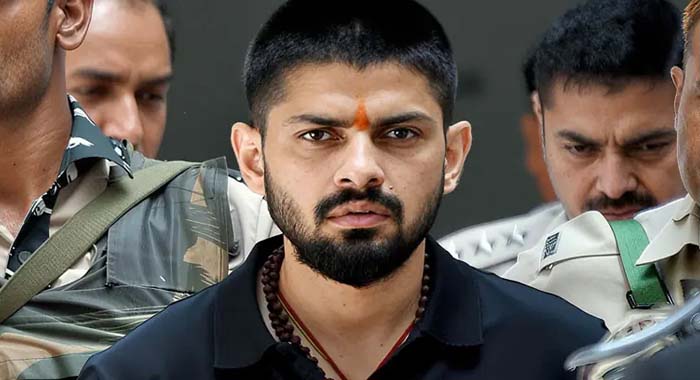
In a major development underscoring rising global concerns over transnational crime and state-linked militancy, Canada has declared the Lawrence Bishnoi group a notorious Indian gang as a terrorist organization. The group, infamous for murder, shootings, arson, and extortion, has also been accused of maintaining ties with India’s ruling Bharatiya Janata Party (BJP).
Canada’s Public Safety Minister Gary Anandasangaree announced the designation on Monday, stressing that the decision equips Canadian authorities with stronger legal tools to dismantle the gang’s operations. The move enables law enforcement agencies to freeze assets, disrupt financial transactions, and criminalize any support to the group within Canada.
“The Bishnoi group was creating an unsafe environment for communities in Canada by deliberately targeting prominent social figures, business leaders, and cultural icons,” Anandasangaree stated. “With this designation, we are closing the space for violent actors who threaten Canadian society.”
The announcement comes against the backdrop of a diplomatic standoff between Ottawa and New Delhi, which intensified last year after Canadian police concluded that Indian authorities had directed the assassination of Hardeep Singh Nijjar, a Canadian citizen and Sikh leader, in British Columbia. Investigators revealed that the Bishnoi network had played a role in facilitating the killing.
Lawrence Bishnoi, considered one of India’s most dangerous mafia bosses, has been imprisoned for nearly a decade, but his influence has grown far beyond prison walls. The gang’s activities have expanded internationally, with its name linked to several high-profile killings, including those of Punjabi singer Sidhu Moosewala and Indian politician Baba Siddique.
Canadian security agencies have repeatedly expressed alarm over the gang’s footprint in the country. In 2023, the Royal Canadian Mounted Police (RCMP) went further, alleging that Indian diplomats in Canada were involved in unlawful operations targeting Sikh figures and confirming that the Bishnoi group maintained contact with Indian government agents.
The terrorist designation makes it illegal for any individual or institution in Canada to provide financial or logistical support to the gang. Authorities have already made significant progress: eight individuals have been arrested in connection with Nijjar’s assassination, while dozens of others face charges of extortion and attempted murder linked to the Bishnoi network.
The World Sikh Organization (WSO) welcomed the Canadian government’s decision, calling it a long-overdue step toward safeguarding vulnerable communities. “For years, countless businesspeople have lived under constant threat and extortion due to the Bishnoi gang’s activities,” the WSO said in a statement. “This designation is a vital step forward, but the masterminds orchestrating this violence must also be held accountable.”
Canada’s move is expected to strain relations with New Delhi further, given the mounting allegations of Indian involvement in extrajudicial operations abroad. By targeting the Bishnoi gang directly, Ottawa has signaled its intent to not only disrupt organized crime but also confront the alleged use of criminal networks as instruments of state policy.



