
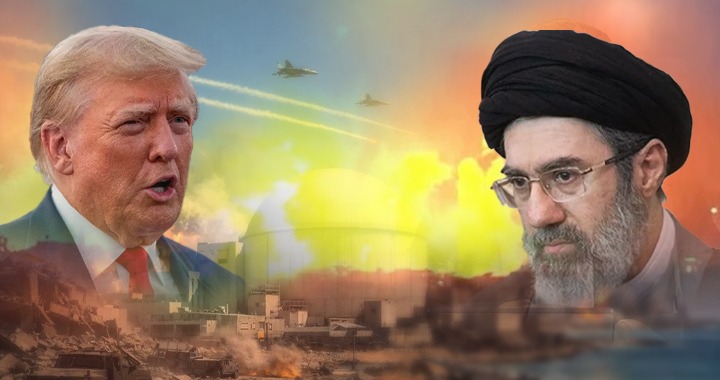
The unfolding crisis between the United States and Iran is no longer a distant geopolitical tremor, it is beginning to resemble a fault line under immense pressure, capable of rupturing without warning.
At the center stands the latest 48-hour ultimatum issued by Donald Trump, a move that significantly raises the stakes. While deadlines and warnings have been part of US-Iran relations for decades, the current tone signals something sharper, less patient, and far more volatile.
Iran’s response has been equally uncompromising. Through its military command and diplomatic channels, Tehran has warned that any further aggression would ignite consequences across the region. This is not mere rhetoric. The Strait of Hormuz, already disrupted, remains a strategic choke point for global energy flows. Any prolonged closure or conflict in this corridor could ripple across continents.
The situation grows even more alarming when viewed through the nuclear lens. Reports of repeated strikes near the Bushehr nuclear facility introduce a dimension that transcends conventional conflict. The warning issued by Abbas Araghchi is not just political messaging, it is a reminder of the catastrophic risks tied to nuclear infrastructure in conflict zones.
The International Atomic Energy Agency has already urged restraint, signaling that the margin for error is dangerously thin.
Where Narratives Collide
What makes this crisis particularly complex is the collision of narratives.
Washington frames its position as pressure for compliance and stability in global trade routes. Tehran, on the other hand, views these actions as coercion and external aggression.
Yet, beyond these official positions lies a deeper concern. Escalation appears to be outpacing diplomacy.
Pakistan’s earlier efforts to facilitate dialogue between the two sides demonstrated that diplomatic pathways do exist. However, those efforts now seem overshadowed by renewed threats and counter-threats.
A Region Holding Its Breath
The Gulf today resembles a tightly wound spring. Military movements, rhetorical escalation, and strategic posturing are all converging at once.
Even a limited miscalculation, a strike gone wrong, an unintended escalation, or a misread signal, could trigger a broader confrontation.
The reported clashes during recovery operations and incidents near critical infrastructure further highlight how quickly situations on the ground can spiral.
The Imperative of Restraint
At this stage, the question is no longer about who escalates next, it is about whether escalation can still be prevented.
All parties involved, directly and indirectly, face a shared responsibility. The cost of miscalculation is no longer confined to borders or battlefields. It carries the potential for economic disruption, environmental catastrophe, and widespread human suffering.
Diplomacy, often slow and frustrating, remains the only viable off-ramp.
Because once the first irreversible step is taken, the region may not just witness conflict, it may inherit consequences that echo for generations.



