
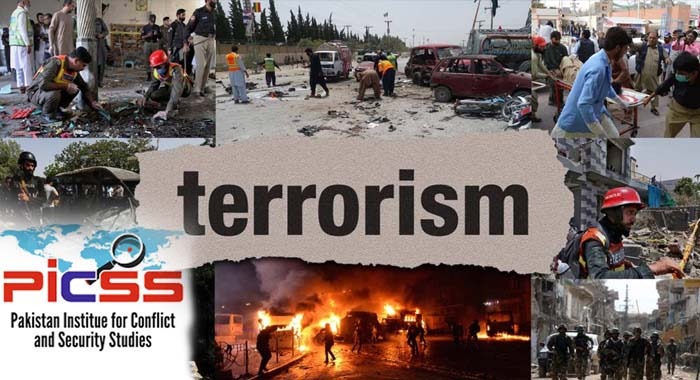
The year 2025 witnessed a significant escalation in Pakistan’s counterterrorism landscape, marking some of the highest levels of violence in recent years, according to data released by the Pakistan Institute for Conflict and Security Studies (PICSS).
Combat-related fatalities rose dramatically, reaching 3,387 in 2025, a 73 percent increase compared to 1,950 deaths in 2024. The figures include 2,115 militants, 664 security personnel, 580 civilians, and 28 members of pro-government peace committees. Militant fatalities alone surged by 122 percent from 951 in 2024, marking the deadliest year for militants since 2015. Security forces suffered their highest annual death toll since 2011, while civilian casualties reached their peak since 2015.
In addition to fatalities, injuries across all groups rose sharply. PICSS recorded 2,263 people injured in 2025, including 1,025 security personnel, 982 civilians, 228 militants, and 28 pro-government peace committee members. This represents a 53 percent increase compared to 2024 and the highest annual figure since 2014. Injuries among security forces jumped 62 percent, civilian injuries increased 40 percent, and militant injuries rose 61 percent over the previous year.
The operational environment for militants also intensified. PICSS documented 1,063 militant attacks in 2025, a 17 percent rise from 908 in 2024, reaching the highest annual total since 2014. Suicide attacks surged by 53 percent, with 26 incidents reported, while the use of small drones, including quadcopters, also showed a growing trend, with 33 incidents recorded in 2025. Security forces likewise increased their use of unmanned aerial vehicles in counterterrorism operations.
Law enforcement efforts saw an uptick, with 497 suspected militants arrested in 2025, representing an 83 percent increase over 272 arrests in 2024, the highest annual total since 2017. Kidnappings rose sharply as well, with militants abducting 215 people compared to 82 in 2024, a 162 percent increase—the highest single-year figure since 2012.
Geographically, violence remained concentrated in Pashtun-majority districts of Khyber Pakhtunkhwa, including the erstwhile tribal districts (FATA), and in Balochistan. These areas continued to bear the brunt of militant activity, placing civilians and security personnel at heightened risk.
PICSS emphasized that the 2025 data reflects an intensifying conflict landscape in Pakistan, highlighting the urgent need for coordinated security strategies to protect civilians, strengthen law enforcement capabilities, and counter evolving militant tactics, including the increased use of drones and targeted attacks.



