(Shamim Shahid)
Pakistan today finds itself standing at a decisive crossroads where internal political paralysis, deepening governance failures, and a rapidly transforming regional geopolitical landscape are intersecting in dangerous ways. The latest signals emerging from Adiala Jail—where former prime minister Imran Khan is incarcerated—have once again reshaped the country’s political temperature. According to party sources, and relayed publicly by Imran Khan’s sister Aleema Khan, Pakistan Tehreek-e-Insaf (PTI) will not engage in any negotiations with the federal government. This categorical refusal has not only shut the door on dialogue but has also set the stage for a renewed phase of agitation, with potentially far-reaching consequences for political stability, internal security, and already-fragile governance structures, particularly in Khyber Pakhtunkhwa and the former tribal areas.
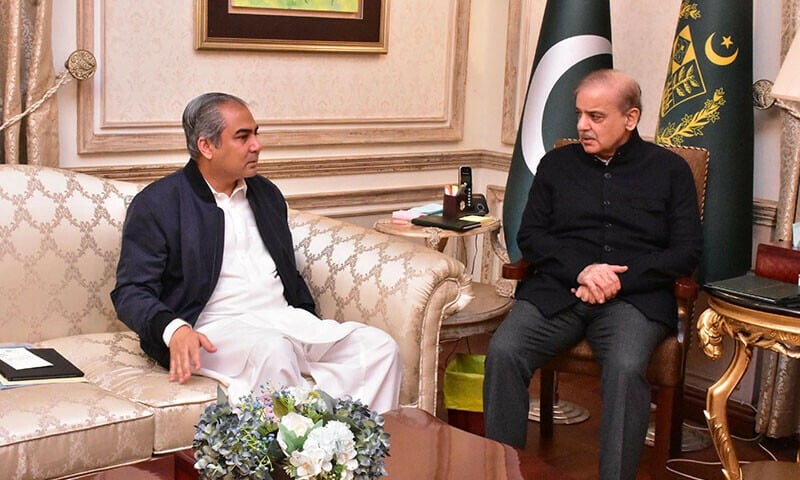
This hardline stance comes at a time when a rare political consensus however tentative had begun to take shape in Islamabad. Just days earlier, a multi-party interaction hosted by veteran politician Mehmood Khan Achakzai brought together representatives of various political parties. Almost unanimously, participants stressed the need for peace, dialogue, and negotiated solutions to Pakistan’s political crises. The federal government responded positively, publicly expressing readiness to negotiate and inviting PTI to constitute its own negotiation team. In ordinary circumstances, this could have been the opening of a badly needed political off-ramp. Instead, it became yet another missed opportunity.
The abrupt rejection of talks highlights a deeper issue within Pakistan’s political culture: the persistent preference for confrontation over compromise. While PTI insists that its position is rooted in principle, critics argue that the decision is less ideological and more strategic designed to sustain political polarization, mobilize street pressure, and keep the party’s support base in a constant state of agitation. The announcement that PTI will launch a protest movement from February 8, led by Khyber Pakhtunkhwa minister Sohaila Faridi, reinforces this perception. Rather than stabilizing governance in a province facing economic decline, administrative decay, and a worsening security environment, the provincial leadership appears poised to divert its energy toward political mobilization.
This raises serious questions about priorities. Khyber Pakhtunkhwa is not just another province; it is Pakistan’s frontline region against militancy, extremism, and cross-border instability. Governance here is not a symbolic exercise—it is a security imperative. Yet the province has increasingly been reduced to a political battleground where administrative continuity is sacrificed at the altar of party strategy. PTI’s frequent reshuffling of party positions, parliamentary leadership, and organizational offices reflects an internal instability that directly translates into governance paralysis.
The implications of this paralysis are most starkly visible in the former Federally Administered Tribal Areas (FATA), merged into Khyber Pakhtunkhwa in 2018 with great promise and even greater expectations. The merger was meant to end decades of systemic injustice under the Frontier Crimes Regulation (FCR), a colonial-era law that collectively punished entire tribes and denied basic legal rights. The people of these regions were promised dignity, development, and integration into Pakistan’s constitutional framework. Seven years on, those promises ring increasingly hollow.
The failure is not merely one of intent but of capacity and political will. Following the merger, it was pledged that Rs100 billion annually would be allocated for the development of the merged districts. In practice, even the reduced funds that were released were only partially utilized. In 2019, barely 50 percent of the allocated amount was spent. Since then, the pattern has largely persisted. Development plans remain stuck on paper, administrative structures are weak, and service delivery is minimal. As a result, public confidence already fragile after decades of neglect has eroded further.
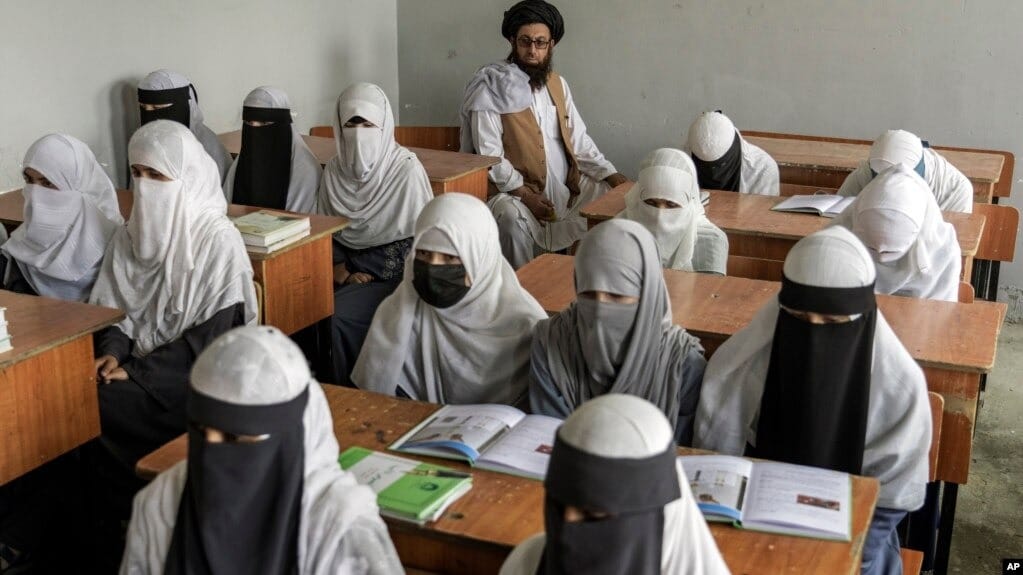
This erosion of trust has dangerous consequences. Among the youth of Khyber Pakhtunkhwa and the tribal districts, frustration is steadily transforming into alienation. Economic opportunities are scarce, trade with Afghanistan has declined sharply, and everyday governance failures from policing to education and health have become routine. In such an environment, extremist narratives find fertile ground. When young people feel abandoned by the state, militant groups step in to offer identity, purpose, and a distorted sense of justice.
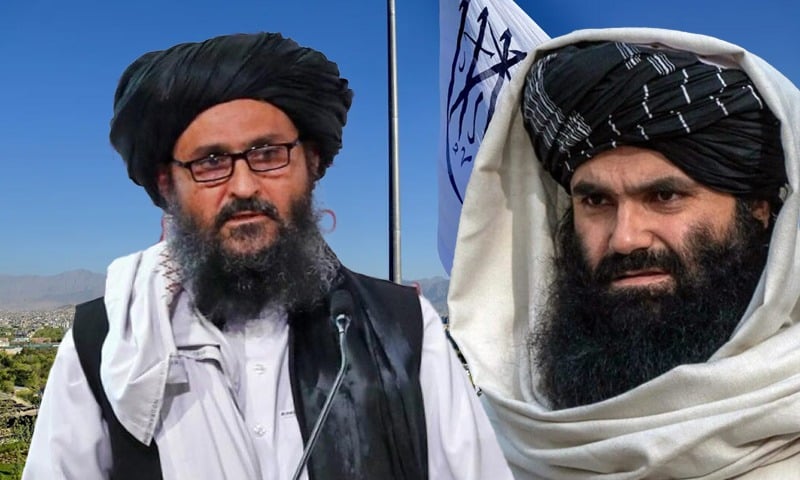
It is within this context that recent remarks by Pakistan’s military leadership pointing to a convergence of anti-state narratives without explicitly naming actors—must be understood. While political parties, militant organizations like Tehreek-e-Taliban Pakistan (TTP), and insurgent groups such as the Baloch Liberation Army (BLA) are fundamentally different in structure and methods, their messaging often overlaps in its hostility toward the state. This does not mean they are the same, but it does mean that sustained political agitation, especially when framed in absolutist and incendiary terms, can inadvertently reinforce extremist sentiments.
The refusal to negotiate, therefore, is not a politically neutral act. It has ripple effects. As PTI shifts toward agitation, the likelihood of intensified rhetoric against state institutions increases. This, in turn, exacerbates polarization, fuels public anger, and creates openings for militant actors to exploit chaos. History offers ample evidence that political instability and militant resurgence are rarely separate phenomena in Pakistan—they are often two sides of the same coin.
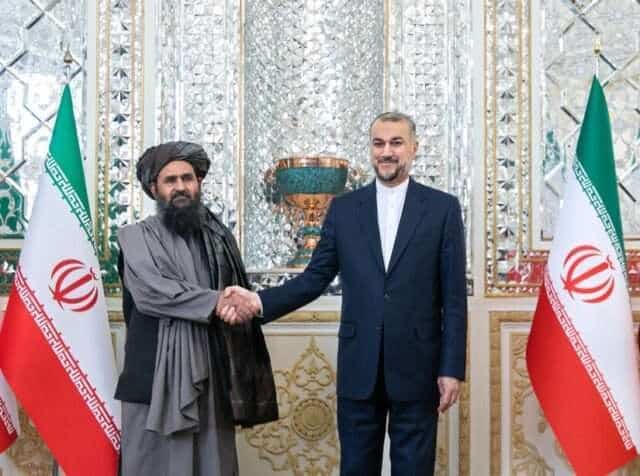
While Pakistan struggles internally, the regional environment around it is undergoing a significant transformation. In a development that has received surprisingly limited attention in domestic discourse, a group of major regional players—China, Russia, Iran, Afghanistan, and several Central Asian states including Uzbekistan, Tajikistan, Kyrgyzstan, Kazakhstan, along with Armenia have agreed on a massive connectivity initiative. The proposed railway and motorway network, with an estimated cost exceeding $30 billion and an initial investment of $5 billion this year alone, aims to link South Asia with Central Asia, the Caucasus, and onward to Europe through Afghanistan.
This project represents more than infrastructure; it signals a strategic realignment of regional trade routes and economic partnerships. Afghanistan, long viewed solely through the lens of conflict, is being repositioned as a transit hub. Goods that once took weeks to move could now reach markets within hours. For Central Asia, it offers access to warm waters; for China and Russia, it strengthens overland trade corridors; for Iran, it enhances regional connectivity. Afghanistan stands to gain enormously through transit revenues and economic integration without having to bear the financial burden of construction.
And Pakistan? Pakistan risks being sidelined.
Historically, Pakistan has been a natural gateway between South Asia, Central Asia, and the Middle East. Rail links once extended from Central Asia to Peshawar before decades of war shut them down. Today, as new corridors are being planned and financed, Pakistan’s internal instability threatens to marginalize it from emerging economic networks. Connectivity is not just about geography; it is about political stability, policy consistency, and the ability to act as a reliable partner. A country perpetually consumed by internal political warfare sends precisely the opposite signal.
The contrast is stark. While regional states are thinking in terms of decades planning railways, trade routes, and economic integration—Pakistan remains trapped in cycles of protest, counter-protest, arrests, and institutional confrontation. Political leaders speak the language of resistance, but governance demands the language of responsibility. Provinces cannot be run on slogans, and regions scarred by war cannot heal through agitation alone.
Ultimately, the choice before Pakistan’s political class is clear. Dialogue is not a concession; it is a necessity. Governance is not optional; it is an obligation. The people of Khyber Pakhtunkhwa and the merged tribal districts do not need perpetual movements they need schools, jobs, security, and justice. The youth of these regions do not need more reasons to be angry; they need reasons to believe in the state.
At the same time, Pakistan must recognize that the world around it is moving on. Regional connectivity, economic integration, and strategic partnerships are shaping a new order in Eurasia. Countries that remain internally divided will not shape this order; they will be shaped by it or excluded altogether.
Pakistan still has a choice. It can remain locked in politics of refusal, or it can step back from the brink and re-engage with the hard, unglamorous work of governance and dialogue. History will judge which path it chose—and at what cost.