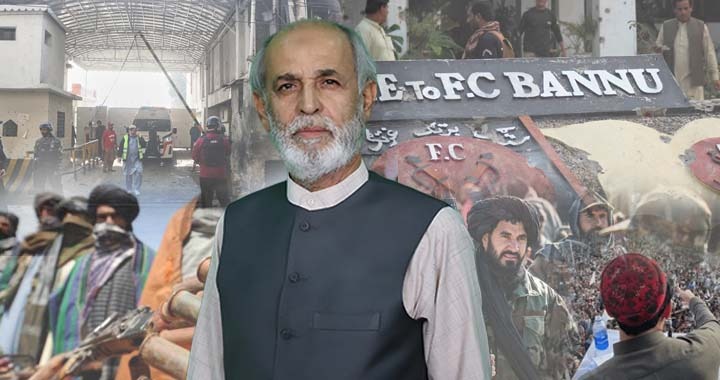
Militancy in Pakistan has never been fully eradicated. Despite claims of counterterrorism successes, extremist networks—particularly those associated with the banned Tehreek-e-Taliban Pakistan (TTP)—continue to operate across the country. Their influence is not confined to Khyber Pakhtunkhwa (KP) alone, though the province remains the primary focus of their activities. Incidents across Lakki Marwat, D.I. Khan, and Bajaur have already demonstrated persistent militant activity, but the recent attack on the Federal Constabulary (F.C.) Headquarters in Peshawar represents a stark escalation, striking a highly sensitive cantonment zone.
The Peshawar attack, carried out early in the morning, shocked security agencies. Despite surveillance cameras and routine deployment of security personnel along multiple access routes, terrorists managed to infiltrate the F.C. compound, employing a combination of suicide bombings and armed assault. Two massive explosions—one at the gate and another inside—were followed by sustained gunfire. Initial reports indicate three to four attackers, all neutralised, including two suicide bombers. Tragically, seven F.C. personnel lost their lives, including six officers and a civilian staff member. Local eyewitnesses reported the intensity of the attack, highlighting the deliberate targeting of an ongoing parade within the headquarters, likely aimed at maximising casualties or taking hostages.
Such incidents mirror recent attacks in Bannu, Lakki Marwat, and Kulachi, where initial suicide bombings were followed by armed confrontations with security forces. Today, coordination between the police and the F.C. managed to contain and neutralise the attackers within an hour, demonstrating that improved inter-agency collaboration can significantly reduce the impact of such assaults.
It is critical to distinguish KP’s situation from Balochistan. In Balochistan, insurgency is fuelled by armed Baloch groups demanding separation, whereas KP enjoys strong local support for the state. Political parties, tribal groups, and civil society in KP are overwhelmingly pro-Pakistan and do not challenge state authority. While the Baloch insurgency must also be condemned, it differs fundamentally from the ideologically-driven terrorism threatening KP.
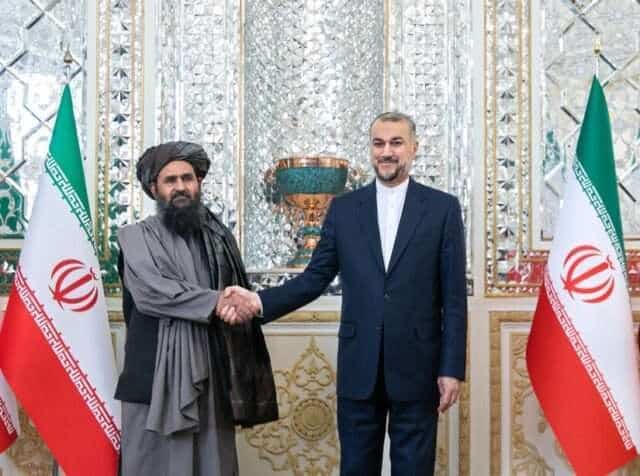
Peace talks between Pakistan and the Afghan Taliban remain stalled, despite efforts by Iran to mediate. Although a ceasefire is technically in place, unresolved trade disputes have strained relations between Pakistan and Afghanistan. Iran, alongside Russia and Turkey, seeks regional stability, but also views severed Pak-Afghan trade routes as leverage. This highlights the complex regional interplay that must be navigated to secure lasting peace.
KP faces a dual challenge: persistent terrorism and economic dependency on Pak-Afghan transit trade. Attacks, such as the recent F.C. bombing, not only claim lives but disrupt business activity, block transportation, and create social anxiety. The local population suffers from both direct violence and the indirect economic consequences of instability.
The speaker also criticises certain intellectual positions that misrepresent the TTP or Pashtun issues. Specifically, statements suggesting that the TTP and the Pashtun Tahafuz Movement (PTM) should redirect efforts against Pakistan rather than each other are deemed both misleading and detrimental to the interests of Pakistani Pashtuns. TTP and PTM are pressure groups, not representatives of the broader Pashtun community. Calls for intellectuals to publicly clarify and apologise for such positions emphasise the importance of responsible discourse in national security matters.
Historically, TTP has been active since 2005, originating in Swat and Waziristan, and continues to function today, expanding networks across Pakistan. Their operations are financially supported by sympathetic madrassas in Karachi, Peshawar, Nowshera, and even Punjab. Past interactions reveal that militants in North Waziristan were fluent in Urdu and maintained direct lines of communication, illustrating the extensive operational networks that still exist within the country. Disrupting these support channels is essential to curbing TTP’s influence.
TTP’s activities also intersect with proxy conflicts, sometimes fighting wars on behalf of external actors. Without a coordinated regional strategy to target funding sources and operational support, this threat will persist. Experts warn that unless powerful platforms like the G-8 or regional coalitions establish clear red lines for Taliban-linked groups and their financiers, terrorism will remain a critical, enduring threat for Pakistan, rooted within its own borders.
Finally, the European Union (EU) can play a constructive role by facilitating dialogue between Pakistan, Afghanistan, and key regional stakeholders, including Iran and China. A multilateral consensus on terrorism eradication, coupled with proactive measures to secure borders and dismantle extremist networks, is essential to reduce both domestic and cross-border threats.
In conclusion, Pakistan faces a multidimensional security challenge. The persistence of TTP militancy, economic disruption, stalled regional diplomacy, and ideological subversion underscores the need for a strategic, coordinated response. Strong inter-agency coordination, coupled with regional engagement and international support, remains crucial to protecting both national security and public welfare.