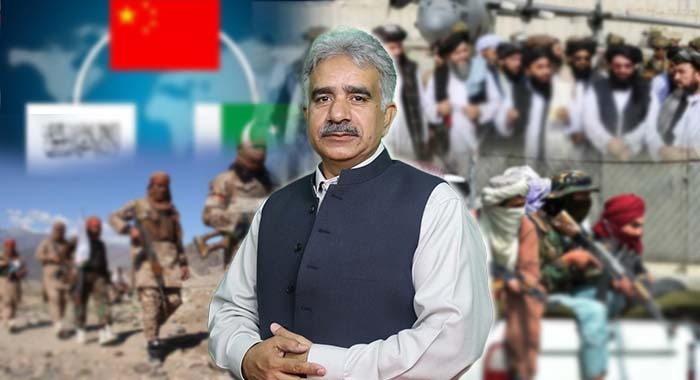
( Zahir Shah Sherazi)
The evolving dynamics between Pakistan and Afghanistan have once again entered a critical phase one that carries profound implications not only for bilateral relations but for the broader stability of the region. Recent engagements in Urumqi, China, have brought to the surface long-standing concerns, hardened positions, and a narrowing window for diplomatic maneuver. At the heart of this tension lies a fundamental question: can Afghanistan’s current leadership reconcile ideological loyalties with the practical necessities of statehood, or will the region drift further toward instability?
Pakistan’s position, as articulated in recent discussions, is neither ambiguous nor unprecedented. It revolves around three core demands: the formal designation of Tehrik-i-Taliban Pakistan (TTP) and similar groups as terrorist organizations, the dismantling of their operational infrastructure within Afghan territory, and the provision of verifiable, documentary evidence of action taken against them. These demands are not merely diplomatic talking points; they reflect deep-seated security concerns shaped by years of cross-border militancy, loss of civilian and military lives, and a persistent erosion of trust.
From Islamabad’s perspective, the issue is existential. No sovereign state can tolerate armed groups operating from a neighboring country with impunity, especially when those groups explicitly target its institutions and citizens. The argument is straightforward: if Afghanistan seeks international legitimacy, economic assistance, and regional integration, it must demonstrate a clear and actionable commitment to counterterrorism. Words, as recent history has shown, are no longer sufficient.
Yet, the challenge for Afghanistan’s leadership is layered and complex. The Taliban’s rise to power was not merely a political transition but the culmination of decades of ideological struggle, alliances, and battlefield cooperation. Many of the groups now under scrutiny were once considered allies in a shared cause. This legacy complicates any attempt at decisive action. Declaring such groups as terrorists would not only signal a policy shift but could also trigger internal dissent and fracture the delicate balance of power within the Afghan leadership itself.
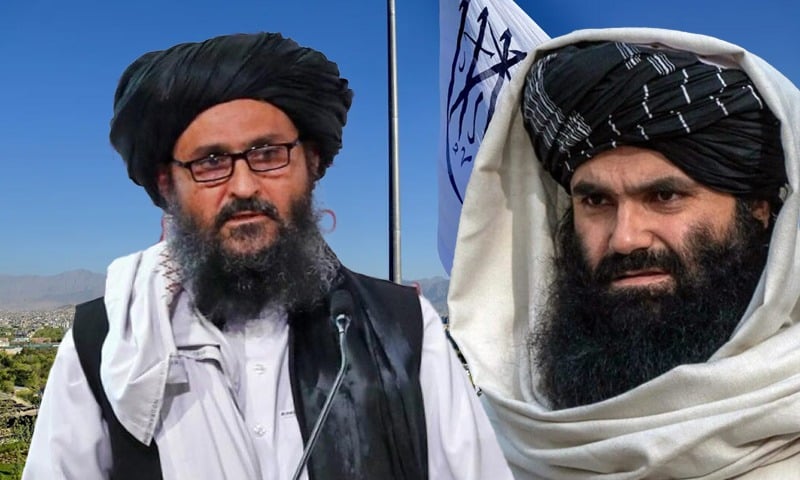
This internal fragmentation is becoming increasingly visible. The growing distance between Kabul and Kandahar is not just geographical it reflects diverging priorities and competing visions for Afghanistan’s future. On one side, there are elements advocating for international engagement, economic development, and a moderated approach to governance. On the other, hardline factions remain wary of external influence and resistant to policy changes that could be perceived as ideological compromise.
The role of influential figures within the Afghan power structure further complicates the equation. Some leaders have openly emphasized the need for improved relations with Pakistan, recognizing the economic and strategic benefits of cooperation. Others, however, maintain closer ties with militant networks, viewing them as strategic assets rather than liabilities. This duality creates a policy paralysis where commitments are made but not fully implemented, and where actions on the ground often contradict official statements.
China’s involvement introduces another critical dimension to this unfolding scenario. Beijing’s interests in the region are primarily economic and strategic, centered around connectivity, infrastructure, and access to Central Asian markets. The success of these ambitions hinges on one indispensable factor: stability. Persistent insecurity in Afghanistan not only threatens Chinese investments but also raises concerns about the spillover of militancy into its own territory and neighboring states.
For China, therefore, the stakes are high. Its engagement with both Pakistan and Afghanistan positions it as a potential mediator, but also as a stakeholder with clear expectations. The message from Beijing is increasingly firm—regional cooperation must be underpinned by tangible security guarantees. Without this, the vision of interconnected trade corridors and economic integration remains unattainable.
Beyond China, other regional actors share similar concerns. Iran, Central Asian states, and even Russia view the resurgence of militant networks with apprehension. The fear is not confined to immediate security threats but extends to the long-term destabilization of an already fragile region. In this context, Pakistan’s demands resonate beyond its own borders; they align with a broader regional consensus on the need to curb militancy and establish a framework for sustainable peace.
However, the path forward is fraught with challenges. Afghanistan’s economic situation is precarious, its governance structures are still evolving, and its international isolation limits access to resources and support. These constraints make it difficult to undertake large-scale security operations or implement comprehensive counterterrorism strategies. At the same time, failure to act risks further isolation and the loss of potential economic opportunities.
One of the most pressing humanitarian dimensions of this crisis is often overshadowed by geopolitical considerations. Border closures, military operations, and escalating tensions directly impact ordinary citizens on both sides. Trade disruptions lead to shortages of essential goods, while insecurity hampers access to basic services. The people of Afghanistan, in particular, bear the brunt of these challenges, facing a combination of economic hardship and limited international assistance.
It is important to recognize that the conflict is not between the people of Pakistan and Afghanistan. Historical, cultural, and familial ties bind communities across the border. The current tensions are rooted in policy decisions and security concerns, not in any inherent animosity between the populations. This distinction is crucial, as it underscores the need for solutions that prioritize human welfare alongside strategic objectives.
Looking ahead, the question remains whether the current moment represents an opportunity for recalibration or a prelude to further deterioration. For Afghanistan, the choice is stark. It can either take decisive steps to address the concerns raised by Pakistan and the broader international community or risk deepening its isolation and instability. This is not merely a matter of external pressure; it is about defining the country’s trajectory in a rapidly changing geopolitical landscape.
For Pakistan, the challenge lies in balancing firmness with flexibility. While its security concerns are legitimate, the approach must also account for the complexities within Afghanistan. A purely coercive strategy may yield short-term gains but could exacerbate long-term instability. Diplomatic engagement, confidence-building measures, and economic incentives should complement security measures to create a more holistic approach.
The role of international actors, particularly those with influence in the region, cannot be overlooked. Coordinated efforts to support stability in Afghanistan, encourage policy reforms, and facilitate economic development are essential. However, such efforts must be grounded in realism and respect for regional dynamics, avoiding the pitfalls of past interventions that often prioritized short-term objectives over sustainable outcomes.
In this intricate web of interests and challenges, one factor stands out as both a necessity and a possibility: cooperation. The interconnected nature of the region means that instability in one country inevitably affects others. Conversely, progress in one area can create positive ripple effects across borders. Initiatives that promote trade, infrastructure development, and people-to-people exchanges have the potential to transform the current narrative from one of conflict to one of collaboration.
The vision of a connected region linking South Asia, Central Asia, and the Middle East through trade corridors and economic partnerships is not merely aspirational. It is grounded in tangible opportunities that can drive growth and development for all involved. However, this vision can only be realized in an environment of trust and security. Without addressing the underlying issues of militancy and cross-border tensions, such ambitions remain out of reach.
At this critical juncture, leadership on both sides of the border must rise above immediate pressures and adopt a long-term perspective. Decisions made today will shape the region’s future for decades to come. The costs of inaction or miscalculation are too high to ignore.
Ultimately, the situation demands a pragmatic approach one that acknowledges realities, prioritizes stability, and seeks common ground. The challenges are immense, but so are the opportunities. Whether the region moves toward peace and prosperity or remains trapped in a cycle of conflict will depend on the choices made in the coming months.
The test before Pakistan and Afghanistan is not just about resolving current tensions; it is about redefining their relationship in a way that reflects the aspirations of their people and the demands of a changing world. It is a test of leadership, vision, and the ability to translate rhetoric into action. The outcome will determine not only the fate of these two nations but also the future of an entire region poised at the crossroads of history.