(Shamim Shahid)
In recent weeks, the diplomatic spotlight has once again fallen on Afghanistan and not for reasons that will bring relief to its traumatized people or stability to a beleaguered region. A heated exchange in the United Nations Security Council has laid bare the geopolitical fault lines that surround the conflict, exposing not only deep disagreements between Pakistan and India but also the limits of international influence over an isolated Afghan leadership.
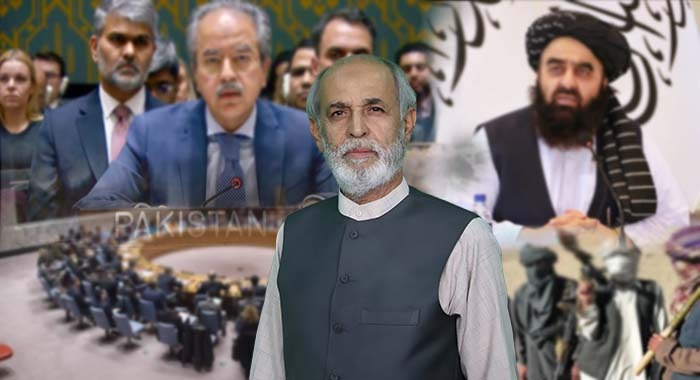
At the heart of this diplomatic skirmish was Pakistan’s representative, Asim Iftikhar Ahmad, who mounted a vigorous defence of his country’s security policies vis‑à‑vis Afghanistan, while rejecting accusations that Islamabad has failed to prevent militant activities spilling across its western border. In the same debate, India challenged Pakistan’s stance, accusing it implicitly and at times explicitly of undermining regional stability through the safe haven it provides to extremist elements operating from Afghan soil.
The confrontation was predictable in its contours two historic rivals, each accusing the other of fuelling instability yet the implications extend far beyond a bilateral dispute. China, too, weighed in, albeit more cautiously, warning that extremist groups in Afghanistan pose a “serious threat” to neighbouring states including itself. Beijing highlighted that Chinese citizens have been killed in Afghanistan, a stark reminder that the fallout from the Afghan conflict is not confined to Kabul and Kandahar, but resonates across the region, affecting global interests.
Perhaps most intriguing was a statement made or at least widely interpreted as supportive of Pakistan by Marco Rubio, purportedly on behalf of the United States. Rubio’s remarks, critical of terrorism emanating from Afghanistan, were seen by Islamabad’s supporters as a diplomatic nod in its favour, even as the broader U.S. focus continues to shift toward the Middle East and the conflict in Gaza.
These competing narratives raise a vital question: Can Pakistan, China, and the United States collectively influence Afghanistan’s policies or is the Taliban leadership impervious to external pressure?
To understand why change is unlikely, one must first acknowledge the ideological and structural nature of the current Afghan leadership. The Taliban are not a conventional political entity; they are a militarized movement rooted in rigid interpretations of religious doctrine. Their governance model is characterised by control, not consent; dogma, not diplomacy. This is not to suggest that Afghan leaders are monolithic or without nuance, but rather to underscore that the incentives that drive them are not aligned with the political norms of the international community.
When international actors voice concerns be it at the UN or in capitals from Washington to Islamabad the Taliban appear largely unaffected. They have weathered global isolation for years, their resistance to external standards so entrenched that even direct criticism or sanctions rarely compel behavioural change. The restrictions imposed by the United Nations on Afghan ministers’ international travel, for example, have done little to move the Taliban toward moderation, let alone democratic reform.
This persisting isolation has consequences. Afghanistan is not recognised broadly on the world stage. Only a handful of states maintain formal diplomatic relations with the Taliban government. This diplomatic ostracism has, in many ways, become a self‑fulfilling cycle: the Taliban reject international norms, the world withholds recognition, and Afghanistan remains economically and politically adrift.
Even when powerful states like China voice concerns, the response is tempered by realpolitik. Beijing’s statement at the UN, while critical of terrorism, was notably measured far softer than one might expect given direct threats to Chinese nationals. This reflects China’s strategic calculus: it seeks stability, not confrontation, in a region that is crucial to its economic ambitions, particularly under initiatives like the China‑Pakistan Economic Corridor (CPEC).
China’s investments and long‑term planning for connectivity across Central and South Asia mean it cannot afford to antagonise the Taliban, nor can it jeopardise relations with Islamabad. Beijing’s approach is therefore one of cautious diplomacy; a balancing act between condemning threats and preserving its strategic interests. What China does not want is a broader conflict that could disrupt its economic networks or force it to choose sides in a proxy confrontation between Pakistan and India.
Indeed, India’s involvement in the UN debate highlights how external powers often use Afghanistan as a stage for broader strategic rivalry. India’s criticism of Pakistan’s security policies underscores Delhi’s longstanding concerns about cross‑border militancy and Islamabad’s alleged support for anti‑India groups. But despite the rhetoric, India’s statements failed to dominate the international conversation, reflecting a reality that global attention is increasingly diverted by other crises, such as conflicts in the Middle East.
This shifting focus has real implications. While Islamabad, Beijing, and Washington may all articulate a desire to curb terrorism and stabilise the region, their priorities are unevenly distributed. Iran and the United States, for instance, are locked in strategic tension that absorbs vast amounts of diplomatic energy and media attention. Amid this backdrop, South Asian security concerns are often relegated to secondary status.
From Pakistan’s perspective, the UN debate was an opportunity to push back against what it views as unfair accusations and to reframe the narrative around cross‑border terrorism. Islamabad insists that it has been a victim of militant violence emanating from Afghanistan, and that its security policies are defensive rather than provocative.
Yet critics argue that Pakistan’s influence over the Taliban is limited at best and inconsistent at worst. While Islamabad leveraged ties with the Taliban to secure strategic depth in the past, the current dynamics are far more complex. The Afghan leadership’s insistence on autonomy even from those who once supported it underlines how much agency the Taliban believe they have, regardless of external pressures.
The border closure between Pakistan and Afghanistan since February is a case in point. What began as a temporary security measure has morphed into a prolonged shutdown, affecting not only trade but the lives of ordinary Afghans who rely on cross‑border movement for work, healthcare, and family ties. Pakistan’s decision, while framed as security‑driven, exacerbates humanitarian strains and underscores the absence of functional diplomacy between the two neighbours.
Amid geopolitical manoeuvring, the human toll is too often overlooked. The closure of borders, the imprisonment of thousands of Afghan nationals in Pakistan, and the broader economic collapse in Afghanistan have created a situation in which ordinary people suffer the most. There is a danger that international debates focused on state interests obscure this basic reality: that millions of Afghans are caught in a cycle of deprivation and instability.
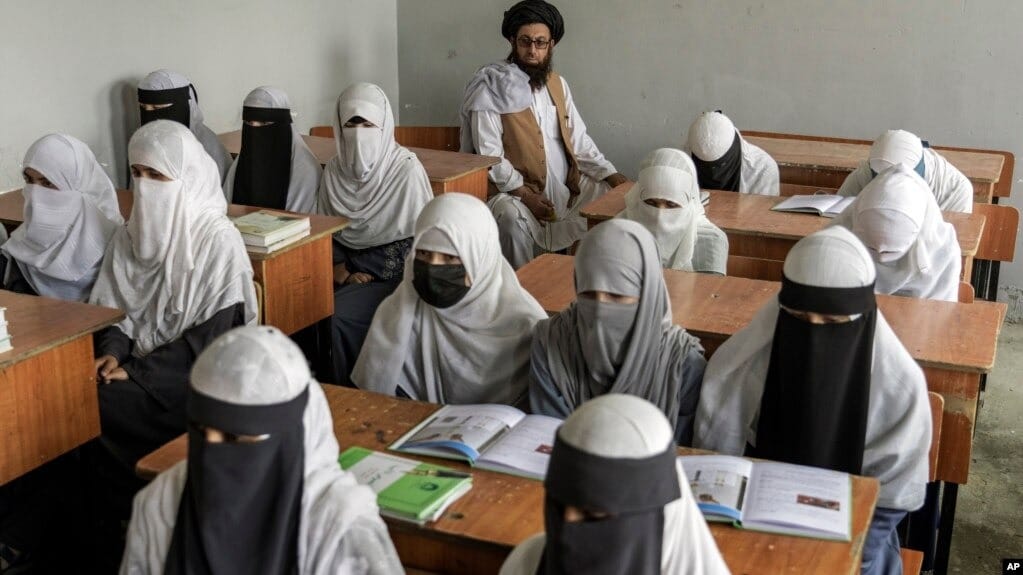
One might hope that multilateral pressure from the UN, China, the U.S., and regional states could compel the Taliban to reconsider policies that isolate Afghanistan further. Yet that hope is tempered by the ideological rigidity of the current leadership and the competing agendas of external actors. The Taliban have shown little appetite for reform, be it in women’s rights, education, or governance. Their dismissive attitude toward international norms suggests that criticism alone will not be enough to alter their course.
If direct pressure is unlikely to reshape Taliban policy, what then? The answer may lie in engagement, but not as conventional diplomacy. Rather, it might require a combination of indirect incentives and localized peacebuilding efforts initiatives that acknowledge the tribal, religious, and social fabric of Afghan society.
Religious leaders, tribal elders, and civil society actors might yet offer channels for dialogue that formal state diplomacy cannot. There are historical precedents for such mediation in South Asian conflicts, and while they are difficult and uncertain, they offer a glimmer of possibility where formal negotiations have stagnated.
Moreover, Pakistan and Afghanistan share cultural and social linkages that cannot be undone by state animosity. While official relations may be frozen, people‑to‑people ties though strained persist. These connections could serve as the foundation for future reconciliation, provided both sides can bridge the deep mistrust that now defines their interactions.
The debate at the United Nations Security Council revealed more than just competing national narratives; it exposed the limits of global influence over a leadership that feels insulated and defiant. Pakistan’s defensive posture, India’s strategic signalling, China’s cautious diplomacy, and the U.S.’s diverted focus all reflect broader geopolitical currents that will shape Afghanistan’s future but none of them, on their own, are likely to compel a strategic rethink in Kabul.
For the world, the challenge will be to find ways to engage Afghanistan that transcend blame and geopolitical posturing. That requires creative diplomacy, inclusion of non‑state actors, and an unwavering focus on the welfare of ordinary Afghans.
Without such efforts, Afghanistan will remain a theatre where external interests collide and local suffering persists a conflict that is discussed in global capitals but experienced in the daily lives of millions who simply want peace.