(Shamim Shahid)
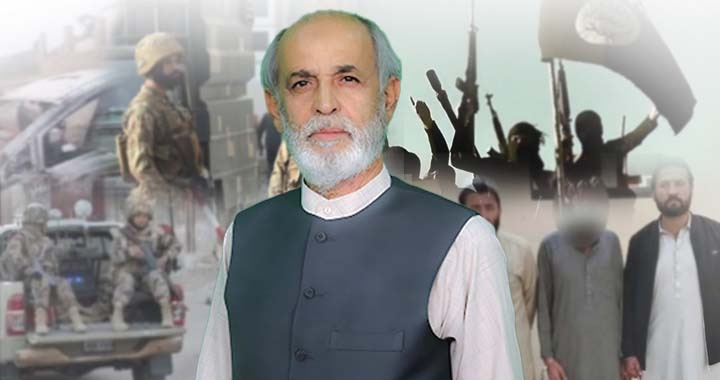
The arrest of a highly wanted terrorist in Bajaur, Gulistan-e-Johar, Karachi, by the Rangers is a significant development, but it is only a small piece of the larger security puzzle facing Pakistan today. This individual, accused of attacking government officials in Khyber Pakhtunkhwa and implicated in numerous violent incidents in Karachi, highlights the persistent challenges posed by militancy, even in our urban centers. The fact that such a person could operate freely for so long points to gaps in intelligence coordination, law enforcement, and governance issues that have plagued Pakistan for decades.
But the security threats in our country are not limited to terrorists alone. We are now witnessing the emergence of what can only be described as parallel forces politically motivated groups being trained and organized under the guise of “release forces” or protection units for specific political leaders. Recently, the announcement that a force will be prepared to secure the release of Imran Khan has sparked serious concern. This force, reportedly comprising workers, youth organizations, and traders affiliated with Pakistan Tehreek-e-Insaf (PTI), raises profound questions about accountability, legality, and the very nature of state authority.
In Pakistan’s history, similar forces have existed. The Pakistan People’s Party once created the Patriot Security Force, while the National Awami Party established the Pakhtun Zalmeh. Other organizations, including Harqat-ul-Islam and MKM, maintained their own parallel structures. These forces, while politically motivated, were notorious for resorting to violence, creating disorder, and undermining state institutions. The lessons from history are clear: issuing special cards or granting authority to politically aligned groups transforms them into de facto parallel governments, capable of arresting, intimidating, or even killing citizens under the pretext of legality. The consequences are predictable—chaos, lawlessness, and the erosion of trust in the state.
The timing of this announcement is equally troubling. It comes after the failure of the eighth Paruri General Strike, and specifically after the roads were blocked on February 13, resulting in widespread disruption and suffering in Khyber Pakhtunkhwa. While leaders attempted to portray these actions as demonstrations of political power, the reality was starkly different. In Sawabi, for example, five members of the National Assembly, two provincial assembly members, and three senators did not participate, with one member openly condemning the strike. This disunity not only weakened the strike but also exposed internal fissures within the party and undermined public confidence in political mobilization.
The failure of these strikes demonstrates a deeper problem: mobilization without discipline and accountability leads only to public inconvenience and institutional stress. When political groups attempt to fill the vacuum left by state institutions, the results are invariably destructive. If the proposed “release force” moves forward without oversight, it risks repeating the same mistakes anarchy in the streets and lawlessness in offices, further aggravating an already fragile security environment.
The security situation in Khyber Pakhtunkhwa and across Pakistan is deteriorating. Terrorist attacks remain frequent, governance is weak, and the police are overstretched. The combination of political maneuvering and security vacuums makes Pakistan vulnerable not just to domestic militancy, but also to regional instability. From 2005 to 2015, despite a wave of terrorist activity in Pakistan, trade and economic activity continued, largely because the state and business sectors managed to operate under difficult conditions. Similarly, in Afghanistan, despite rampant terrorism, commerce did not come to a halt. But this does not diminish the fact that terrorism thrives in an environment of mistrust, weak governance, and political fragmentation.
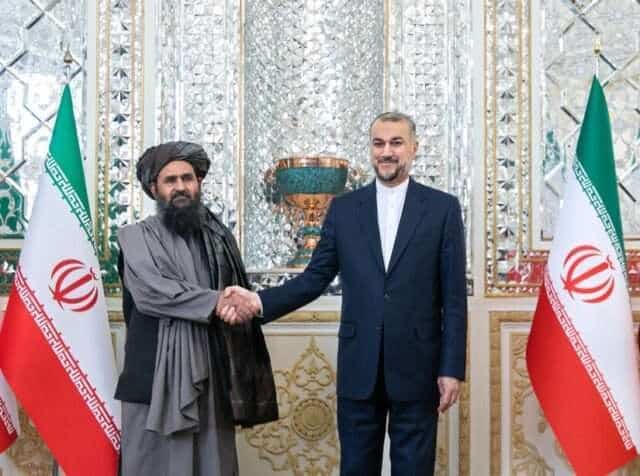
Building trust between Pakistan and Afghanistan is central to ending this cycle of violence. Historical experience shows that threats and coercion cannot establish security; only mutual cooperation and shared objectives can do so. Both countries have suffered from political and religious extremism, with militants exploiting weak institutions to pursue their agendas. Without trust, counterterrorism efforts will remain fragmented, ineffective, and prone to failure.
We must also consider the broader implications of politicized security forces within Pakistan. History has repeatedly shown that groups like the FSF, Pakhtun Zalmeh, and others do not limit their actions to defensive or political objectives they have often resorted to targeted violence, intimidation, and even murder. Introducing a new force without robust legal frameworks, oversight mechanisms, or accountability measures risks replicating these historical patterns. Citizens, already weary from terrorism and poor governance, may find themselves caught between state failure and politically motivated violence.
Moreover, such actions have serious legal and constitutional implications. Authorizing individuals to operate with quasi-police powers undermines the monopoly of the state over coercive force, which is a cornerstone of law and order. This creates a parallel power structure, erodes the legitimacy of official law enforcement, and can provoke confrontations with established institutions. The consequences of such a path are severe, including public unrest, political instability, and international scrutiny.
The political context cannot be ignored either. Internal differences within PTI, highlighted by failed strikes on February 8 and 13, reveal both a lack of cohesion and a vulnerability to operational failure. Announcing a release force without addressing these internal fissures risks another high-profile failure, with consequences not just for PTI but for the broader political landscape. A disciplined, accountable, and legally sanctioned mechanism is essential if any form of mobilization is to succeed without descending into chaos.
Pakistan’s security challenges are further complicated by cross-border dynamics. The recent death of a Saudi delegation that had traveled to Kabul and Islamabad underscores the delicate nature of diplomatic and political interactions in the region. Engagement between Pakistan and Afghanistan, particularly on issues of trade, governance, and security, requires careful handling. Threat-based interactions, unilateral actions, and political posturing only serve to deepen mistrust. For genuine progress, Pakistan must pursue policies grounded in mutual respect, coordination, and long-term stability, rather than short-term political theatrics.
From 2005 to 2015, despite severe terrorist attacks in Pakistan, trade and economic activity continued. Similarly, in Afghanistan, terrorism did not halt commerce entirely. This demonstrates a critical point: while terrorism creates fear and insecurity, it does not automatically paralyze society. Political will, public resilience, and institutional coordination can mitigate its impact. Yet, without trust between neighboring countries and within Pakistan’s own institutions, terrorism will continue to exploit gaps and weaknesses.
Ultimately, the situation demands clarity of purpose, discipline, and legal oversight. The creation of politically aligned forces, without clear accountability, risks repeating the mistakes of the past. Citizens must not be placed in a position where political loyalty determines their safety. Law enforcement must remain impartial, professional, and under the control of the state, while political groups pursue their objectives through legitimate channels. Anything else is a recipe for anarchy, legal ambiguity, and further deterioration of governance.
In conclusion, Pakistan is at a crossroads. The arrest of terrorists in Karachi shows that law enforcement can succeed, but the emergence of politically sanctioned parallel forces threatens to undermine these gains. Political posturing, failed strikes, and fragmented mobilization only exacerbate the existing security crisis. Pakistan’s path forward requires a firm commitment to legal accountability, disciplined governance, and trust-based regional diplomacy. Security cannot be achieved through threats, coercion, or parallel structures; it can only be built on the foundation of state authority, institutional integrity, and cooperative engagement, both domestically and with neighboring countries.
The creation of any new force, whether for the release of a political leader or otherwise, must be carefully scrutinized. Without checks and balances, history tells us that it will not serve justice, but chaos. Pakistan cannot afford to repeat the mistakes of the past. Political ambitions and security needs must align with the law, public interest, and the principles of governance, or the country will continue to face an unstable and violent future.
Security, governance, and trust are intertwined. Without one, the others falter. Pakistan’s political and security elites must recognize that lessons from history are not optional they are imperative. Only by adhering to legal frameworks, promoting accountability, and building trust domestically and regionally can Pakistan hope to achieve stability, end terrorism, and safeguard the rights and safety of its citizens.