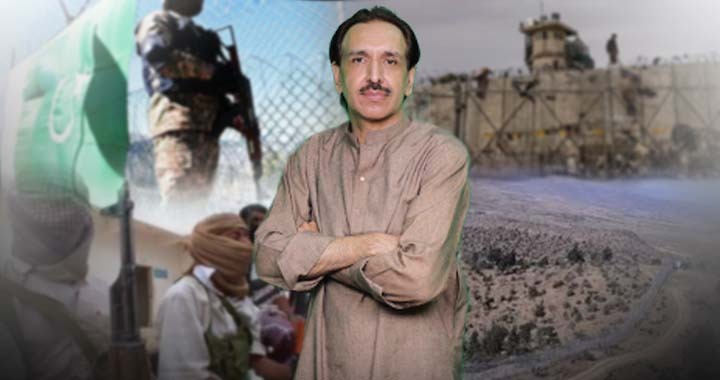
(Aqeel Yousafzai)
Afghanistan once again stands at the center of a rapidly evolving and deeply troubling security environment. Years after the withdrawal of international forces and the return of the Taliban to power, the country is facing a reality that extends far beyond its borders. What is emerging is not simply an internal security challenge, but a complex web of militant activity with regional and global implications.
The concern today is not just about the presence of militant groups in Afghanistan, but about their growing coordination, geographical spread, and ability to project violence into neighboring countries. This situation has raised alarm in Pakistan, China, Central Asia, and among international observers who fear that Afghanistan may once again become a hub for transnational militancy.
Afghanistan is currently home to multiple militant organizations, each with distinct agendas but overlapping operational spaces. Among the most prominent are Tehreek-e-Taliban Pakistan (TTP), Islamic State Khorasan Province (ISKP), and the East Turkestan Islamic Movement (ETIM). In addition, there are elements linked to Baloch insurgent groups that operate primarily against Pakistan.
The TTP has intensified its focus on Pakistan, particularly targeting regions such as Khyber Pakhtunkhwa and the former tribal areas. ISKP, by contrast, maintains a broader vision, seeking to conduct attacks not only in Afghanistan but also in Pakistan and potentially beyond. ETIM remains a major concern for China, given its historical links to militancy in Xinjiang.
What makes this situation particularly dangerous is not just the presence of these groups, but the possibility of cooperation and shared infrastructure among them. Training camps, recruitment networks, and logistical support systems appear to overlap, creating a more resilient and adaptive militant environment.
The eastern provinces of Afghanistan Nangarhar, Kunar, and Nuristan have become key centers of militant activity. These areas are characterized by rugged terrain, limited state control, and proximity to international borders, making them ideal for insurgent operations.
Nuristan, in particular, has emerged as a significant hub for training fighters, including individuals from Central Asia. Militants from countries such as Uzbekistan and Tajikistan have reportedly established a presence there, bringing with them experience, networks, and ideological alignment with broader militant causes.
These networks provide more than just shelter. They enable cross-border movement, facilitate attacks in neighboring regions, and serve as operational bases for planning and coordination. From these networks, militants can threaten multiple countries simultaneously, turning Afghanistan into a strategic launchpad for regional instability. The current situation cannot be understood without examining its historical context. Militant networks in Afghanistan have evolved over decades, shaped by war, foreign intervention, and shifting alliances.
Even before the emergence of ISKP or the formal establishment of the TTP, Central Asian militant groups were active in the region. These groups operated across Afghanistan, Pakistan, and beyond, often adapting to changing circumstances and forming new alliances.
The international military presence after 2001 disrupted some of these networks, but it did not eliminate them. Instead, many groups went underground or relocated, only to re-emerge later. The withdrawal of foreign forces created a vacuum that allowed these organizations to regroup and expand. The return of the Taliban to power has further complicated the situation. While the Taliban seek international recognition, their ability or willingness to confront other militant groups remains a subject of intense debate.
One of the central questions facing the region is the role of the Afghan Taliban in relation to these militant groups. Neighboring countries, particularly Pakistan, have expressed concern that Afghan territory is being used to plan and execute attacks across borders.
Reports of TTP leadership operating Inside Afghanistan have fueled these concerns. The movement of key figures between provinces suggests a level of freedom that raises questions about enforcement and oversight. The Taliban have denied providing support to foreign militant organizations. However, the continued presence and activity of these groups have made it difficult for many observers to accept these assurances at face value.
The issue is not only whether the Taliban actively support such groups, but whether they have the capacity to control them. Governance challenges, internal divisions, and limited resources all play a role in shaping this dynamic. The implications of Afghanistan’s militant landscape extend well beyond its borders. Pakistan faces a direct threat from TTP attacks, which have increased in frequency and intensity. This has led to a shift in Pakistan’s security strategy, including cross-border operations targeting militant infrastructure.
China is also closely monitoring the situation, particularly in relation to ETIM. The possibility that Afghan-based militants could target Chinese interests has become a significant concern for Beijing. Central Asian countries, including Uzbekistan and Tajikistan, are similarly vulnerable. Historical ties between militants in Afghanistan and these regions create the potential for cross-border influence and instability.
At the global level, there is growing reports that Afghanistan could once again serve as a base for international militant activity. While the current focus is regional, the interconnected nature of these networks means that their reach could expand over time. Afghanistan’s current political situation adds another layer of complexity. The Taliban government remains largely unrecognized by the international community, limiting its ability to engage in formal diplomatic and security cooperation.
Economic challenges, humanitarian concerns, and governance issues have further isolated the country. This isolation reduces the Taliban capacity to address militant threats effectively, as they lack both resources and international support. Some countries have attempted to use diplomatic and economic pressure to influence Taliban policies, particularly regarding militant groups. However, the results have been mixed, and there is little evidence of a coordinated international strategy.
Pakistan’s response to the situation reflects a significant shift in approach. Faced with increasing attacks, Islamabad has moved away from reliance on dialogue and toward more assertive measures, including targeted strikes. This strategy is aimed at pressuring the Taliban to take concrete action against groups like the TTP. The message is clear: the use of Afghan territory against Pakistan will not be tolerated.
However, this approach is not without risks. Military escalation could further destabilize the region and strain relations between Pakistan and Afghanistan. It also raises questions about the long-term effectiveness of force as a solution to a deeply rooted problem. The possibility of negotiations between Pakistan and the Taliban remains uncertain. While there have been indications that some Taliban representatives are willing to offer assurances, trust remains a major obstacle.
Past agreements have often failed to produce lasting results, leading to skepticism on both sides. For Pakistan, assurances without enforcement mechanisms are unlikely to be sufficient. For the Taliban, external pressure may be seen as a challenge to their authority. Any meaningful progress will likely require a broader framework involving regional and international stakeholders. Without such a framework, bilateral efforts may struggle to achieve lasting stability.
The current situation represents a pivotal moment for Afghanistan and its neighbors. The choices made now will have lasting consequences for regional security and stability. If militant groups continue to operate with relative freedom, the risk of wider conflict will increase. On the other hand, a coordinated effort to address the issue combining security measures with diplomatic engagement could help prevent further escalation.
Afghanistan today is at the heart of a complex and dangerous security environment. The presence of multiple militant organizations, combined with political isolation and governance challenges, has created a situation with far-reaching implications. For neighboring countries, the threat is immediate. For the international community, the risks are significant. The challenge lies in finding a path forward that addresses both the symptoms and the root causes of militancy.
This will not be easy. It will require cooperation, strategic patience, and a willingness to confront difficult realities. But without such efforts, the consequences of inaction may prove far more costly than the challenges of engagement.