The attack on the Federal Constabulary headquarters in Peshawar Cantonment, in which three FC officers were martyred, immediately raised a series of hard and unavoidable questions. Who were the attackers? Were they all suicide bombers? Where did they come from? Which organisation did they belong to? Where did they stay, and with whom? As investigations moved forward, the answers began to take shape with disturbing clarity.
Initial findings confirmed that the attackers were part of an organised terrorist network, the banned Tehreek e Taliban Pakistan. They did not simply arrive and strike. They stayed in Peshawar, familiarised themselves with multiple routes, and planned the operation locally. Their presence was not accidental, it was the result of structured planning. They had facilitators on the ground. For several days, they remained embedded in the city, studying movement patterns and routines. They chose their path and, crucially, their timing. Their objective was to strike when FC personnel would be gathered for routine assembly, parade, or physical training, a moment designed to maximise casualties. The plan was to breach the headquarters and inflict maximum damage. They were stopped at the gate, which limited the scale of destruction, but the intent was unmistakable.
As the investigation expanded, around 150 individuals were questioned, their statements recorded, interrogations carried out, and a large body of information compiled. The picture that emerged left little ambiguity about who carried out the attack and who supported them. Many names have deliberately not been disclosed, a tactical decision to prevent suspects from going underground. In that sense, this case has become a test case for law enforcement agencies. An attack on such a sensitive institution, in a city like Peshawar, raises fundamental questions. Where was the planning done? Who financed it? Who were the local facilitators? Who came from outside? The investigation process has shed light on all these aspects.
What is equally clear is that while the operational command and ideological direction came from Afghanistan, there is no denying the local presence of these networks inside Pakistan. Government officials, security institutions, and even the Inspector General of Police have publicly acknowledged this reality. If attackers can enter Peshawar, stay there, plan meticulously, and strike, it means they have a footprint, however covert. Their strategy is simple and ruthless. If they decide to target a place, they will reach it. Difficulties exist, but they adapt and overcome them.
This reality is no longer being discussed only in Pakistan. At the United Nations, similar concerns have been voiced by China and Iran. Pakistan has been raising these alarms consistently. Now others are doing the same. Even the US Director of National Intelligence, Tulsi Gabbard, has openly stated that terrorist organisations are operating in Afghanistan. Reports from the Biden era suggest that among Afghan migrants to the United States, around 2,000 individuals have suspected links to terrorist groups. This raises a fundamental question. If such discussions are taking place at the highest international forums, what is America’s policy going to be towards Afghanistan?
The United States has its own history of responding decisively when attacks occur on its soil and foreign involvement is established. Contacts are traced, communications analysed, networks mapped. The concerns expressed by the Director of Intelligence are alarming precisely because they suggest that terrorist networks may have reached American territory. Are these individuals planning attacks? Do they intend to target sensitive installations? What is their purpose? These are questions that US authorities will have to answer through investigation. The pattern seen in Pakistan shows how such networks operate. They rely on facilitators, they stay connected, and they move quietly until they strike.
For years, Al Qaeda was seen as the primary threat to the United States. Today, the banned TTP is also viewed with growing concern. The TTP does not possess the capability to launch attacks directly from Afghanistan onto US soil. Its potential pathway lies elsewhere, through facilitators among Afghan migrants who may have ideological or operational links. Through them, the TTP could attempt to extend its reach. Against this backdrop, the tone of US statements suggests that a line has been drawn for the Islamic Emirate. Choose a side. The Taliban either comply with international expectations or face isolation. The Doha agreement, signed over four years ago, was violated, or at least not honoured in spirit. Trust has eroded. Any future engagement will come with explicit warnings and little tolerance for ambiguity.
Pakistan’s position, meanwhile, is unambiguous. There will be no mercy for terrorist organisations, their facilitators, financiers, or those who provide them shelter. Everyone involved will be punished. However, this brings us to a second, equally critical front, the courts. Cases registered under the Anti Terrorism Act inevitably land before Anti Terrorism Courts. In Khyber Pakhtunkhwa, the performance of these courts is deeply troubling. The conviction rate is not even one percent. If FIRs are filed, evidence presented, and yet decisions take four, five, or six years, responsibility does not lie only with investigators. When security forces and police are making daily sacrifices, and the judicial process stalls indefinitely, institutional accountability becomes unavoidable.
This is why calls for reform of Anti Terrorism Courts are growing louder. Swift trials are not a luxury in terrorism cases, they are a necessity. Justice delayed in such cases weakens deterrence and undermines the sacrifices made on the ground.
Regionally, pressure on the Afghan Taliban is increasing. For a long time, they believed Pakistan was isolated and manageable. Growing ties with India reinforced that illusion, with Delhi offering encouragement and assurances. That perception has shifted. After the events of May 9 and 10, Pakistan’s image as a formidable regional power was reinforced. It became clear that Pakistan is not alone. Iran, China, Tajikistan, Russia, the United States, all are broadly aligned against terrorism. The Taliban have realised that aligning solely with India carries costs. The region wants trade, connectivity, and stability, not militancy.
This leaves little room for double standards. Recent gathering of Afghan scholars in Kabul, though unofficial, sent a positive signal by issuing a decree banning any war outside Afghanistan. The subsequent statement by Foreign Minister Amir Muttaqi regarding Pakistan was also encouraging. But statements alone are not enough. The real test lies ahead.
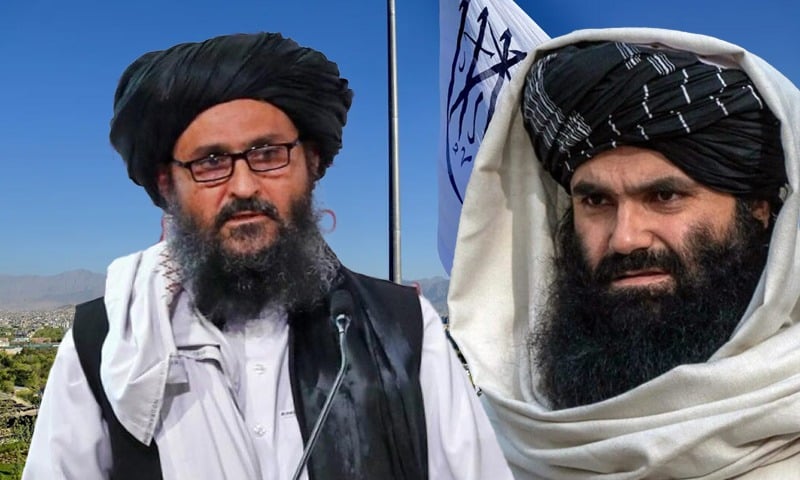
If the Taliban attempt to draw artificial distinctions, claiming that religious decrees apply only to Afghans while excluding the banned TTP on the grounds that its fighters claim origins in Waziristan, Mohmand, or Bajaur, it will be a grave mistake. Allowing militants to operate from Afghan soil against Pakistan under such pretexts would invite severe consequences. Amir Muttaqi holds a key position. Sirajuddin Haqqani is an influential figure. The decisive factor will be whether the Taliban leadership, including their supreme leader Sheikh Hibatullah, enforces these positions in practice.
If the fatwas and statements translate into real action, particularly a genuine crackdown on the banned TTP, it would be a positive and necessary step. If they remain mere words, then the consequences for the Afghan Taliban will be serious and unavoidable. The choice, at this stage, is stark.