(Shamim Shahid)
Terrorism has long been Pakistan’s most enduring and devastating challenge, one that has shaped its internal security policies, foreign relations and political discourse for more than two decades. While successive governments have tried different strategies military operations, negotiations, intelligence-led actions and regional diplomacy the problem has refused to disappear. Instead, it has evolved, adapted and, at times, returned with greater ferocity. Recent developments in Pakistan-Afghanistan relations once again underline a hard truth: wishful thinking, selective narratives and political expediency cannot substitute for realism when dealing with terrorism.
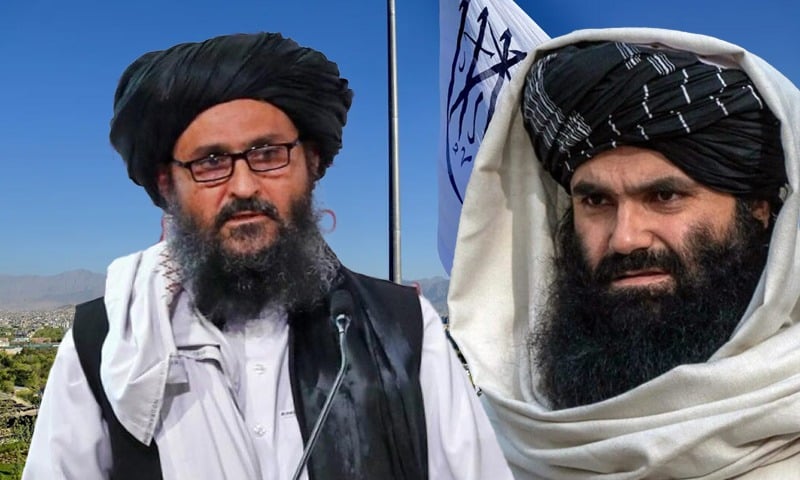
Only days ago, there appeared to be cautious optimism in Islamabad. Statements attributed to Afghanistan’s Interior Minister, Sirajuddin Haqqani, suggested that Afghan soil would not be allowed to be used against any other country. Similar balanced remarks were echoed by the Afghan foreign minister. These comments were interpreted by many as a sign of thaw in relations after months of tension, particularly following border incidents and diplomatic friction. Traders, industrialists and border communities hoped that crossings closed for security reasons would reopen from January 1, reviving bilateral trade and easing economic pressure on both sides.
That optimism did not last long.
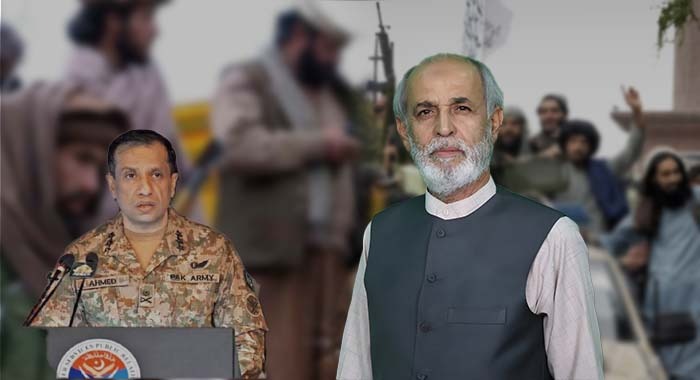
The press conference by the DG ISPR shattered these assumptions. The tone was unusually blunt, even by military standards. Terrorism was addressed not in abstract terms but in clear, unambiguous language. Afghan soil was directly linked to militant operations inside Pakistan. The statement went further, grouping the Pakistani Taliban (TTP), Daesh, Al-Qaeda, Uzbek militants and others into a single ideological and operational ecosystem. Most strikingly, it declared that “all Taliban are one,” identifying the Afghan Taliban as the ideological fountainhead of multiple terrorist outfits active in the region.
This was unprecedented in Pakistan’s official discourse.
For the first time, the state publicly rejected the long-maintained distinction between “good” and “bad” Taliban, between Afghan Taliban and Pakistani militants, or between local and foreign terrorist groups. The implication was clear: terrorism in Pakistan is not an isolated internal problem but a regional phenomenon sustained by ideological affinity, shared networks and cross-border sanctuaries. The response from Kabul was equally sharp. Taliban spokesperson Zabihullah Mujahid dismissed the allegations, advising Pakistan to focus on its “internal problems” and denying any Afghan involvement in militant violence across the border.
This exchange marked more than a diplomatic spat; it signalled the collapse of backdoor diplomacy.
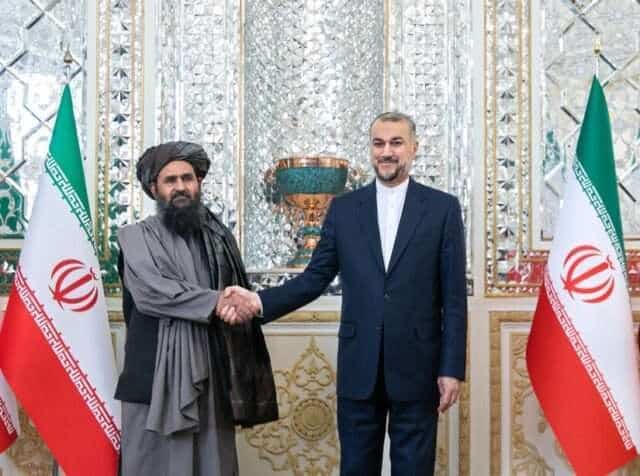
Since the deterioration of ties in October, Islamabad and Kabul had quietly attempted to manage tensions through indirect channels. Meetings in Iran and other regional forums were meant to restore working relations without public confrontation. These efforts failed. The press conference was not merely a reaction; it was an admission that quiet engagement had produced no tangible results. When diplomacy behind closed doors yields nothing, states resort to public messaging and public messaging is rarely gentle.
At the heart of this crisis lies a fundamental contradiction. On the one hand, Afghan authorities claim neutrality and deny facilitating militancy. On the other, Pakistan continues to present evidence that major terrorist attacks — including incidents such as the Wana school attack are planned, directed or supported from across the border. This is not a new claim, nor is it unique to Pakistan. International reports, including those by the United Nations, have repeatedly noted the presence of TTP leadership and infrastructure inside Afghanistan since 2021.
Denial does not change geography, and rhetoric does not dismantle networks.
It is also important to understand why Pakistan’s narrative has hardened. Internally, the country has witnessed a troubling resurgence of militant violence, particularly in Khyber Pakhtunkhwa and Balochistan. Attacks on security forces, police and civilians have increased, stretching the state’s capacity and testing public patience. In such an environment, ambiguity becomes politically and strategically costly. The state cannot afford mixed signals when soldiers and policemen are dying.
This is where the domestic political dimension enters the debate.
The DG ISPR’s remarks were not limited to external actors. They also addressed internal criticism and controversy, particularly surrounding Pakistan Tehreek-e-Insaf (PTI). Over the past months, PTI has faced accusations — fair or otherwise — of maintaining an ambiguous position on militant groups. Statements by certain PTI figures questioning the label of “terrorist” for the Taliban, or advocating negotiations under current conditions, have been seized upon as evidence of ideological overlap or political opportunism.
The issue is not whether PTI formally supports terrorism it does not but whether its rhetoric, timing and alliances inadvertently strengthen extremist narratives. Terrorist groups thrive on political confusion. When mainstream actors appear divided on the nature of the threat, militants exploit these cracks to legitimise themselves.
There is historical context to this controversy. The TTP has never been a monolithic organisation. Since its formation in 2007, it has splintered into factions driven by leadership rivalries, territorial control and access to resources. Figures such as Baitullah Mehsud, Hakimullah Mehsud, Qari Hussain and others represented different phases of this evolution. Internal clashes, defections and mergers have been constant. These divisions persist today, particularly among groups sheltering in Afghanistan.
Yet, as history shows, when Pakistan’s security forces launch operations, these factions temporarily set aside differences and unite against a common enemy. Tactical fragmentation does not mean ideological moderation.
Pakistan can, in theory, exploit these internal rifts. Intelligence-based operations, targeted engagement and regional leverage can weaken militant cohesion. But this requires consistency, political unity and a clear national narrative all of which are undermined when terrorism becomes a partisan issue.
Another uncomfortable truth must be acknowledged. After the Taliban takeover of Afghanistan in 2021, negotiations with the TTP led to the release of a significant number of convicted militants. Whether the number was four or closer to a hundred, as various sources claim, the outcome is undeniable: violence increased. Militants returned to the field emboldened, better organised and ideologically validated. This episode reinforced the belief within Pakistan’s security establishment that negotiations without enforceable guarantees are counterproductive.
The Afghan Taliban’s role in this cannot be ignored. While Kabul may deny operational involvement, ideological sympathy and logistical tolerance are difficult to dismiss. Statements portraying militants as “misguided brothers” or framing terrorism as a purely internal Pakistani issue do little to build trust. Statehood demands responsibility, not plausible deniability.
The economic fallout of this standoff is equally severe. Border closures have crippled trade, hurting Pakistani and Afghan traders alike. Border communities, already vulnerable, bear the brunt of these decisions. While business groups on both sides lobby for reopening crossings, security concerns now override economic logic. As the DG ISPR’s statement made clear, borders will remain closed as long as Pakistan perceives a direct threat to its citizens.
Looking ahead, the prospects are grim. Escalation appears more likely than reconciliation. Without a fundamental shift in Afghan policy towards militant groups not statements, but actions relations will remain strained. Pakistan, too, must address its internal vulnerabilities, dismantle local support networks and ensure political consensus on counterterrorism.
This moment demands clarity, not confusion; unity, not division.
Terrorism is not a talking point for television debates or a tool for political scoring. It is an existential threat. The collapse of illusions about easy solutions may be painful, but it is necessary. Only by confronting realities — regional, ideological and political — can Pakistan hope to move beyond this cycle of violence and denial.