(Mushtaq Yusufzai)
Pakistan today stands at a decisive juncture where internal security, regional diplomacy and state authority intersect in ways that can no longer be managed through ambiguity or half measures. Recent developments Chief of Army Staff General Asim Munir’s candid address in Islamabad, his high-profile visit to Saudi Arabia, renewed diplomatic engagement with Iran, and the worsening security situation in Khyber Pakhtunkhwa together form a single, coherent narrative. That narrative is about a state under pressure, a region in flux, and an urgent need for clarity in policy, especially towards Afghanistan.
General Asim Munir’s address was significant not merely for its tone but for its bluntness. When he stated that Afghanistan must choose between harbouring terrorist organisations or maintaining relations with Pakistan, it was not rhetorical bravado. It was an articulation of a reality that Pakistan has been absorbing for years, often silently, sometimes defensively, but always at a high cost. Terrorism has surged again, and the data presented in that address cannot be brushed aside as political messaging. According to security assessments, a large proportion of those involved in attacks on Pakistan’s police, paramilitary forces and security personnel are Afghan nationals or militants operating from Afghan soil. This is not an allegation made in isolation; it aligns with regional intelligence reports and assessments shared at international forums.
The uncomfortable truth is that almost all major militant outfits threatening Pakistan today enjoy sanctuaries in Afghanistan. These include the Tehreek-e-Taliban Pakistan, Al-Qaeda affiliates, Daesh and other splinter jihadist groups. Some operate independently, others in loose coordination, but all benefit from the same permissive environment. Reports submitted to the United Nations by regional security bodies have repeatedly highlighted this reality. Afghanistan’s de facto authorities may deny state sponsorship, but the inability or unwillingness to act against these groups amounts to the same outcome.
What is particularly alarming is the evolution of jihadist movements within Afghanistan itself. Al-Qaeda in the Indian Subcontinent, sometimes referred to as Al-Qaeda Bar-e-Sagheer, is increasingly being described by analysts as one of the most dangerous emerging threats. Rivalries between militant factions are intensifying, but that does not make the region safer; it makes it more volatile. Competing jihadist groups do not cancel each other out they escalate violence to assert relevance and dominance.
This volatility is not Pakistan’s problem alone. Iran, China, Central Asian states and even Russia are deeply concerned. That is precisely why regional consultative mechanisms have emerged. Yet Afghanistan’s refusal to participate in recent regional security meetings, despite prior commitments, speaks volumes. When neighbouring states are discussing shared threats and Afghanistan opts out, it reinforces the perception that Kabul is either isolated by choice or constrained by internal contradictions.
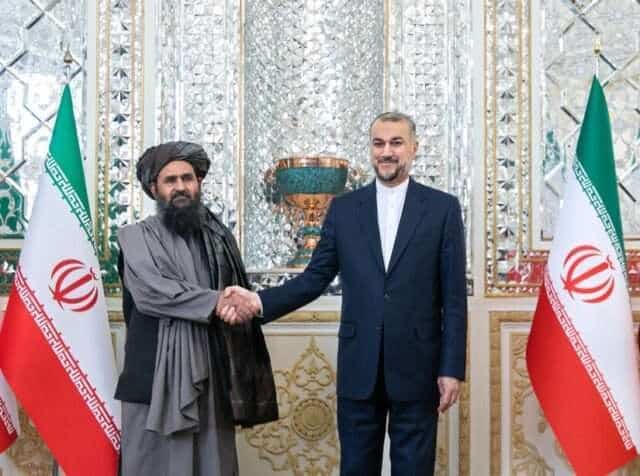
Against this backdrop, Pakistan’s diplomatic outreach to Iran gains added importance. Deputy Prime Minister and Foreign Minister Ishaq Dar’s telephonic conversation with his Iranian counterpart on regional security and trade was a timely step. Pakistan and Iran share a long and porous border a reality that has historically been exploited by smugglers and militant networks. This border can either remain a liability or be transformed into an economic and security asset.
The tragedy is that relations between neighbouring states in this region have rarely reached their true potential. Geography demands cooperation, yet politics has often ensured mistrust. Iran and Pakistan can benefit enormously from structured trade, energy cooperation and regulated cross-border movement. Goods that are affordable and high in quality can flow legally; livelihoods can replace lawlessness. But this requires sustained political will, not sporadic statements.
Security, however, remains the foundation upon which all such cooperation rests. Militancy thrives in ungoverned or weakly governed spaces, and Pakistan’s internal debate over counterterrorism operations reflects this dilemma. Intelligence-based operations have intensified under General Asim Munir’s command, and by most professional assessments, they have yielded results. High-value targets have been neutralised, networks disrupted and operational capabilities degraded without the widespread displacement that accompanies full-scale military campaigns.
This approach also explains why Pakistan has resisted calls for indiscriminate, large-scale operations in places like Tirah or Bannu. History offers sobering lessons. Past operations in North and South Waziristan inflicted severe social and economic damage. Markets were destroyed, homes flattened, and communities uprooted. Compensation was delayed or insufficient, leaving resentment that militant propagandists were quick to exploit. Military success on paper does not automatically translate into sustainable peace on the ground.
Tirah, in particular, presents a complex challenge. Its mountainous terrain borders Afghanistan’s Nangarhar province, making cross-border movement relatively easy for militants. Its proximity to Peshawar adds another layer of risk. Over the years, as security tightened in Charsadda and Shabqadar, militant groups shifted their operational bases to Tirah. Today, multiple armed outfits reportedly maintain a presence there, not merely for ideological reasons but for financial gain. It is a lucrative zone, and that economic incentive cannot be ignored in any security calculus.
Yet the problem is not purely military. Civil administration has consistently failed to consolidate gains after operations. Without governance, policing, development and justice, cleared areas relapse into lawlessness. This institutional weakness has undermined previous sacrifices and continues to complicate present decisions. Security forces can clear territory, but only the state in its civilian capacity can hold it.
Politicisation of counterterrorism has further muddied the waters. In Khyber Pakhtunkhwa, the war against militancy has often been framed as a controversial or partisan issue rather than a collective necessity.
For years, political leadership insisted that dialogue with the Afghan Taliban would resolve Pakistan’s security problems. Jirgas were proposed, delegations planned, expectations raised. Nothing materialised. Meanwhile, militant influence expanded in Bajaur, Mohmand, Khyber, North and South Waziristan, and later in settled districts like Bannu, Lakki Marwat and Kohat.
Peace cannot be outsourced, nor can it be postponed indefinitely. At the same time, it cannot be imposed in a manner that alienates the very citizens it seeks to protect. This is the tightrope the Pakistani state must walk. Internationally, however, there is little doubt about the direction Pakistan’s security policy under General Asim Munir. His visit to Saudi Arabia and the reception accorded to him underscore the respect Pakistan’s military continues to command. Saudi Arabia has long valued Pakistan’s armed forces for their professionalism, discipline and reliability. Strategic cooperation, defence collaboration and mutual security assurances are not ceremonial gestures; they are reflections of trust built over decades.
In a region destabilised by conflicts stretching from Gaza to the Red Sea, Pakistan’s role as a responsible military power matters. Its stance against allowing any militant group to use Pakistani soil against another country is not only principled but strategically essential. This policy enhances Pakistan’s credibility at a time when global and regional actors are reassessing security partnerships.
Looking ahead, the path is fraught but not hopeless. The Pakistani state remains resilient. When it asserts its writ decisively and coherently, no non-state actor can challenge it indefinitely. But confrontation must be avoided where dialogue is possible, and force must be precise where it is unavoidable. The ultimate objective should not be victory over militants alone, but restoration of normalcy for ordinary citizens.
Pakistan today grapples with poverty, unemployment and insecurity pressures that no security doctrine can ignore. Leadership, both civilian and military, must prioritise governance, economic relief and social stability alongside counterterrorism. Political point-scoring over security issues only weakens the collective response. Afghanistan, too, faces a choice. Continued denial of the militant presence on its soil will deepen its isolation and strain relations with every neighbour. Cooperation, however difficult, offers the only viable path forward.
The region is watching. History will judge whether this moment was met with clarity and courage, or lost to hesitation and division.